


💛 A quick favor, if you've got a second.
We're really happy that you chose to read one of our stories and sincerely hope you'll stick around to read more. We took our paywall down — for now — but that won't last forever, and when the gate goes back up, we'd love for you to already be on the inside.
It's free. So please enter your email here and don't forget to like and follow us on all of your favorite Social Media platforms!
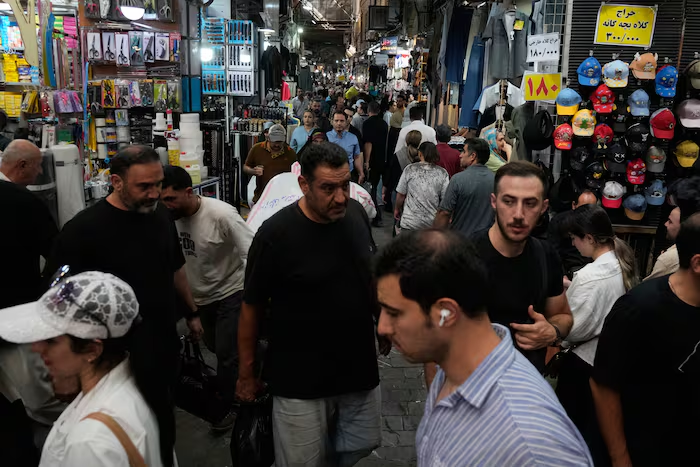
Iran’s economy is deteriorating rapidly as families across the country confront skyrocketing prices and dwindling purchasing power, nearly six months into an escalating conflict with the United States and Israel. While supermarket shelves remain stocked with goods, ordinary Iranians have drastically reduced consumption of essential items, with many cutting out meat, fruit and other proteins to stretch limited household budgets. The combination of strict sanctions and a naval blockade targeting the nation’s oil exports has severely constrained the country’s ability to generate revenue from its most valuable commodity.
Ahmad Karimi, a 52-year-old taxi driver supporting two children, has increased his work to 15-hour days in an effort to maintain his family’s standard of living. “We have virtually given up on many things,” Karimi said, describing how his family has eliminated leisure activities and now works weekends to cover basic expenses. The value of wages has plummeted by roughly 50 percent compared to a year earlier, forcing difficult choices between necessities.
Prices for fundamental goods have surged dramatically since the war began on Feb. 28. Rice costs 60 percent more than pre-war levels, while beef has become 150 percent more expensive, driving shoppers toward Tehran’s Grand Bazaar in search of more affordable items. A northern Iranian mother of two paid approximately $65 for milk, eggs, toilet paper and other basics—without any meat—highlighting the constraints families now face when purchasing food.
The International Monetary Fund projects inflation in Iran will reach nearly 70 percent by year’s end, while the nation’s economy is expected to contract by more than 5 percent. The decade of prior sanctions had already weakened the economy before the current conflict began, and additional hardship appears inevitable. Even government-subsidized gasoline, one of the few affordable commodities, may face price increases as domestic production falls short of consumption demands.
Unemployment officially stands at 9.1 percent according to government figures, though state media outlets suggest the actual rate is substantially higher. A Labor Ministry official reported that more than 1 million jobs were lost in just the first three months of the war through late May. Despite widespread economic distress, many Iranians have directed their frustrations toward foreign powers rather than their own government, according to Tehran-based economist Hassan Golmoradi.
Iran has developed methods to partially circumvent sanctions over years of international restrictions, including expanding domestic manufacturing, utilizing informal cross-border trading networks, and operating a shadow fleet for oil transport. Experts warn that President Donald Trump may underestimate Iran’s capacity to endure prolonged economic pressure. Hadi Kahalzadeh, an Iran economy specialist at Brandeis University, noted that “Iran’s resistance capacity not only avoids collapse, it also prevents the economic pain from translating into the political pressure and changes that the U.S. expects.”
Trump vowed on social media Wednesday to implement the “most crushing economic operation ever taken against any country” against Iran and threatened secondary sanctions against nations and companies maintaining business ties with Tehran. The United Arab Emirates announced this week it was halting all trade with Iran, following a call between Trump and UAE leader Sheikh Mohammed bin Zayed Al Nahyan. Iran’s elected President Masoud Pezeshkian has expressed support for negotiating an end to the conflict to address deteriorating living conditions.
However, the Revolutionary Guard, Iran’s most powerful institution, has strengthened its position after surviving U.S. and Israeli airstrikes and is pushing for greater concessions including control over the Strait of Hormuz and war reparations. Supreme Leader Ayatollah Mojtaba Khamenei recently appointed a former Revolutionary Guard commander to lead the Supreme National Security Council, signaling preference for the hard-line faction opposing compromise negotiations. With diplomatic talks stalled, Iran’s leadership remains divided between those seeking negotiated settlement and those betting the nation can outlast its adversaries economically.

More Stories
Colombia backs Trump security push while limiting U.S. role in anti-gang operations
Chicago Mayor Issues Executive Order Requiring Contractor Diversity Disclosures and ICE Ties Reporting
Federal Prosecutors Convene Special Grand Jury to Investigate D.C. Schools’ Attendance and Graduation Practices