


💛 A quick favor, if you've got a second.
We're really happy that you chose to read one of our stories and sincerely hope you'll stick around to read more. We took our paywall down — for now — but that won't last forever, and when the gate goes back up, we'd love for you to already be on the inside.
It's free. So please enter your email here and don't forget to like and follow us on all of your favorite Social Media platforms!
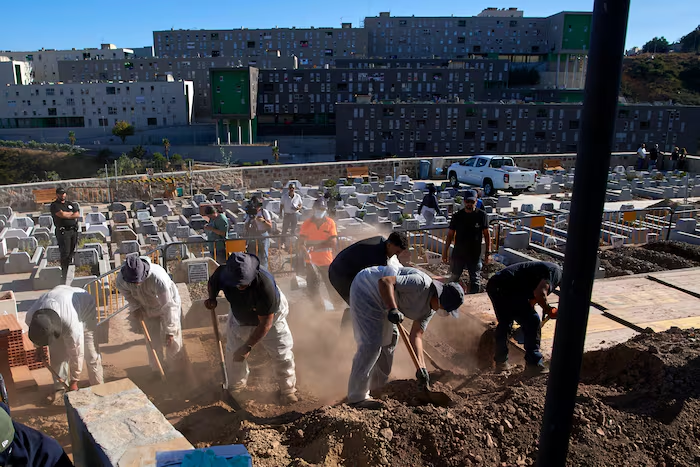
In a solemn ceremony at a Muslim cemetery in the Spanish territory of Ceuta, gravediggers interred the first four unidentified migrants who perished during a catastrophic border crossing attempt three weeks earlier. Eighteen bodies were laid to rest on Friday as an Islamic cleric chanted prayers, with funeral workers swiftly lowering white body bags into cinderblock graves marked only by numbered stones. The dead represent a fraction of the more than 90 migrants killed during what stands as Spain’s deadliest border crisis in recent memory.
The tragedy unfolded when more than 72,000 people, driven by misinformation, economic desperation, and limited prospects, attempted to breach Ceuta’s borders from neighboring Morocco in late July. Dozens drowned or died in a stampede at a breakwater barrier near a checkpoint as migrants sought entry to the Spanish enclave on the North African coast. The scale of the incident has sparked international scrutiny over migration enforcement and humanitarian concerns.
The Moroccan Association for Human Rights has demanded that burial operations cease pending positive identification of all victims and their repatriation to families. The organization characterized the interments as a “new human tragedy,” compounding what it described as a broader “disaster of displacement and missing persons.” Morocco’s foreign ministry has not responded to requests for comment regarding allegations that the government is obstructing the return of identified remains.
Ceuta’s municipal government stated last week that repatriation paperwork had been completed, though Morocco’s authorities have not accepted the documentation, according to a city spokesperson. Cemetery manager Said Mohammed confirmed that all individuals buried Friday were male and that numbered grave markers will allow families to claim bodies if they come forward. Under Islamic tradition, each deceased person was positioned facing Mecca, even as the Mediterranean Sea beyond symbolized the European destination many would never reach.
Local authorities estimate that between 5,000 and 10,000 migrants, including women and children, remain in Ceuta following the crisis, straining the small city’s resources and infrastructure. Spain’s national government places the figure at approximately 5,000. Both Moroccan and Spanish officials have attributed the disaster to social media misinformation and human smuggling networks, while migrants themselves cited joblessness and inadequate wages as motivations for the dangerous crossing.

More Stories
Christa Pike Survives Botched Double Execution Attempt; Tennessee Halts Remaining 2026 Executions
Tennessee’s Lone Death Row Female is Scheduled for Execution Wednesday for 1995 Torture/Murder
Federal voting arrest in New Jersey adds new pressure point in Sherrill-Trump standoff