


💛 A quick favor, if you've got a second.
We're really happy that you chose to read one of our stories and sincerely hope you'll stick around to read more. We took our paywall down — for now — but that won't last forever, and when the gate goes back up, we'd love for you to already be on the inside.
It's free. So please enter your email here and don't forget to like and follow us on all of your favorite Social Media platforms!
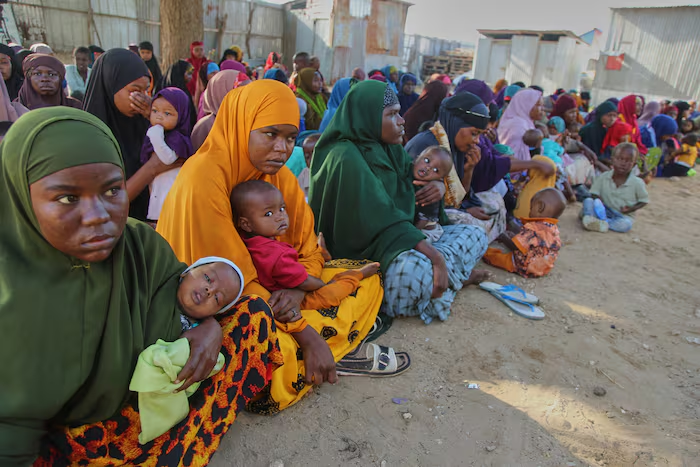
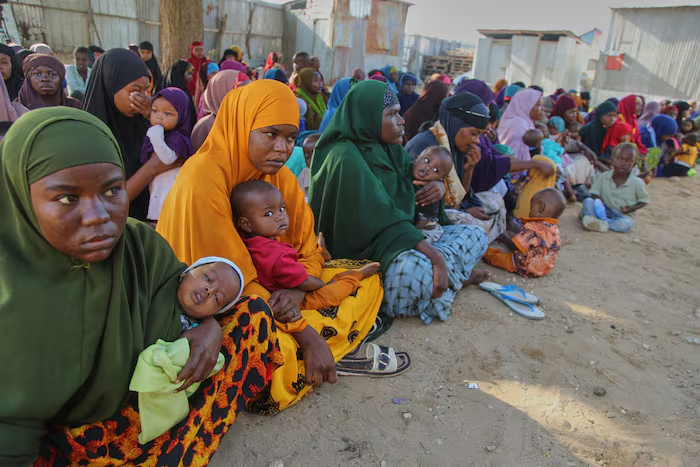
The World Food Program finds itself severely constrained in its ability to address a mounting hunger emergency in Somalia, with funding slashed to just 10 percent of what the agency deployed in 2022 when it successfully prevented famine across the drought-ravaged nation. According to WFP executive director Carl Skau, approximately six million Somalis currently face acute food insecurity, yet the organization can only provide minimal assistance to the most vulnerable populations, particularly malnourished children.
The agency projects that 1.9 million children under five will experience acute malnutrition this year, with nearly 500,000 requiring immediate intervention for severe acute malnutrition. Overall, roughly 30 percent of Somalia’s population confronts critical food insecurity levels, compounded by ongoing drought, active conflict, and mass displacement that continues to destabilize the region.
During a Wednesday visit to a nutrition center in Mogadishu’s Kahda district, Skau emphasized the disparity between present capabilities and past resources. “We had 10 times more resources than now,” he stated, noting that international aid cuts and the reallocation of funds toward other global humanitarian emergencies have severely hampered the WFP’s operational scope in Somalia.
At the Feynuus Health Center, staff members screen dozens of patients daily—predominantly displaced women and children from rural regions—using limited therapeutic food supplies. Abdirahman Barkhad, program director of Youth Link Somalia, which operates the facility, reported that approximately 10 nearby health and nutrition centers have shuttered due to reduced funding, placing enormous strain on remaining operations.
Halima Mohamed Hassan, a pregnant mother of six, walked nearly three kilometers to seek treatment for her malnourished four-year-old after fleeing the Lower Shabelle region four months earlier. She had not eaten in two days and described a harrowing journey: her family walked for four nights before reaching an internally displaced persons camp on Mogadishu’s outskirts following her husband’s death from malnutrition.
Somali Disaster Management Agency commissioner Mohamud Moallim Abdulle characterized the country’s food situation as “extremely alarming,” estimating that 1.85 million children suffer malnutrition while six million people are affected by drought. An additional two million require urgent humanitarian assistance, according to his assessment.
Insecurity stemming from Somalia’s 20-year conflict with the al-Shabab militant group compounds the crisis by driving up operational costs and limiting humanitarian access. WFP operations increasingly depend on aircraft transport in areas deemed too dangerous for ground-based staff and supply movements, while rising fuel and food prices—exacerbated by Middle East tensions—further constrain available resources.

More Stories
Christa Pike Survives Botched Double Execution Attempt; Tennessee Halts Remaining 2026 Executions
Tennessee’s Lone Death Row Female is Scheduled for Execution Wednesday for 1995 Torture/Murder
Colombia backs Trump security push while limiting U.S. role in anti-gang operations