


💛 A quick favor, if you've got a second.
We're really happy that you chose to read one of our stories and sincerely hope you'll stick around to read more. We took our paywall down — for now — but that won't last forever, and when the gate goes back up, we'd love for you to already be on the inside.
It's free. So please enter your email here and don't forget to like and follow us on all of your favorite Social Media platforms!
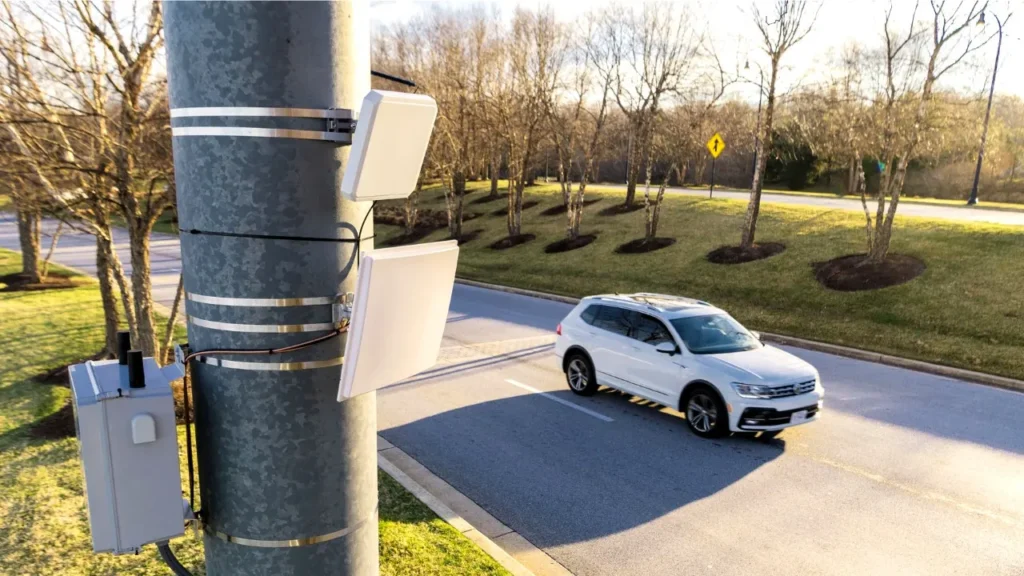
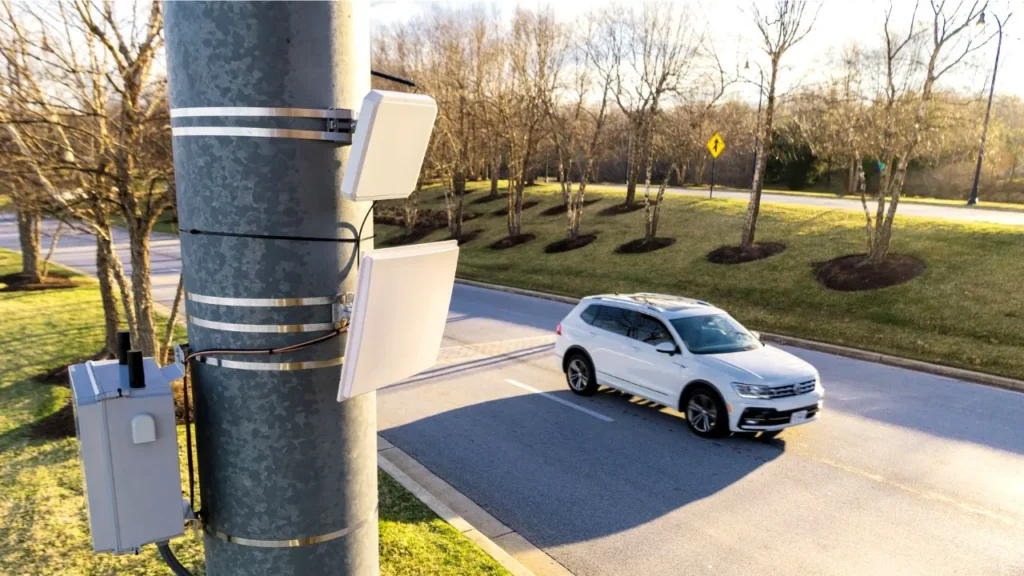
A surveillance technology called SignalTrace, developed by security company Leonardo, enables law enforcement to create electronic profiles of vehicles by detecting and correlating wireless signals from nearby devices such as smartphones, smartwatches and vehicle electronics. The system operates alongside automatic license plate reader technology, adding a digital layer to traditional vehicle tracking by identifying patterns of signals that repeatedly travel together and associating those patterns with specific license plates and locations.
The technology works by detecting wireless signals publicly broadcast by consumer devices, then using software to identify recurring patterns and create what Leonardo terms an electronic fingerprint. Once this digital signature is established, investigators can later search for that pattern, potentially identifying vehicles even when their license plates are obscured. The system does not decrypt communications or access stored information on devices, Leonardo stated, nor does SignalTrace itself identify individuals by name.
However, the company confirmed that investigators can correlate electronic signatures with license plates and subsequently consult vehicle registration records to determine registered owners, subject to applicable laws and agency policies. Leonardo emphasized that any identification would result from separate investigative steps rather than SignalTrace itself, and that the technology should serve as an investigative lead rather than proof of identity or involvement in a crime.
Privacy advocates and researchers point to a critical vulnerability in this approach: data appearing anonymous initially can become identifying when combined with other information. A Scientific Reports study examining mobility data from 1.5 million people found that merely four time-and-place data points were sufficient to uniquely characterize 95 percent of movement traces in the dataset, demonstrating how location patterns can become distinctive without containing personal names.
Association patterns present an additional privacy concern, as repeated proximity between devices can reveal social relationships and connections. Research published in the Proceedings of the National Academy of Sciences showed that Bluetooth proximity data could accurately classify 95 percent of reciprocally reported friendships among study participants, raising questions about what SignalTrace patterns might inadvertently expose about relationships and affiliations.
Recent Supreme Court decisions have begun establishing privacy protections for location data. In 2018, Carpenter v. United States established that individuals possess reasonable privacy expectations in historical cellphone location records held by wireless carriers. This June, the Supreme Court decided Chatrie v. United States, ruling that obtaining cellphone location data from Google constituted a Fourth Amendment search, though the court did not determine whether the specific geofence warrant satisfied probable cause and particularity requirements.
The implications for SignalTrace remain legally unsettled. While the Supreme Court has not ruled that SignalTrace collection itself constitutes a Fourth Amendment search, the recent decisions establish a broader privacy conversation surrounding device-based law enforcement investigations. At large public gatherings or protests where SignalTrace sensors operate, devices appearing repeatedly near other monitored devices could generate investigative leads without proving the device owners knew each other or engaged in wrongdoing.
Leonardo reports that SignalTrace remains in early adoption stages with limited current deployments, though the company indicated growing interest extends beyond law enforcement to parking management, traffic monitoring and commercial automotive applications. The firm did not specify the exact number of agencies or locations currently using the technology.
Individuals seeking to limit digital exposure can disable Bluetooth when unnecessary, restrict location access in app settings, and review their phone’s location history retention policies. However, no single phone setting can guarantee protection against all roadside sensor detection, as SignalTrace encompasses more than just Bluetooth signals. Citizens concerned about these surveillance capabilities should investigate whether their local police department publishes policies addressing automatic license plate reader data retention, access and sharing practices with other agencies.

More Stories
Federal voting arrest in New Jersey adds new pressure point in Sherrill-Trump standoff
Colombia backs Trump security push while limiting U.S. role in anti-gang operations
Former NFL cheerleader and ex-aide face off in close Rhode Island GOP primary