

💛 A quick favor, if you've got a second.
We're really happy that you chose to read one of our stories and sincerely hope you'll stick around to read more. We took our paywall down — for now — but that won't last forever, and when the gate goes back up, we'd love for you to already be on the inside.
It's free. So please enter your email here and don't forget to like and follow us on all of your favorite Social Media platforms!
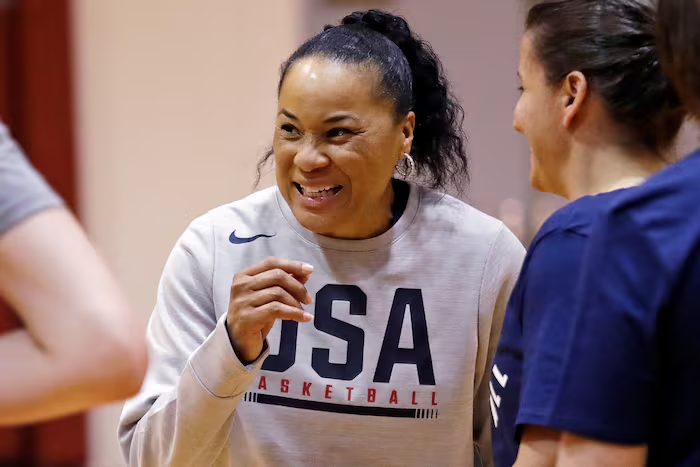
Hall of Famers being inducted this weekend in Uncasville, Connecticut are attempting to reframe the intense scrutiny surrounding the WNBA as evidence of the league’s expanding influence rather than a fundamental problem. The focus on basketball itself has been overshadowed by heated discussions centered on racial issues, gender representation and athlete sexuality, creating a backdrop of controversy during the league’s 30th season.
Dawn Staley, who is being inducted Saturday alongside the 1996 Olympic women’s basketball team, drew parallels between current WNBA challenges and obstacles the NBA faced during its early growth. She characterized the turbulent conversations as “badges of honor,” noting that the NBA navigated similar conflicts and emerged stronger. Staley suggested the women’s league would ultimately move past its current controversies through perseverance.
The WNBA recently has been consumed by debate over whether transgender women should compete in the league, despite no transgender women currently playing. The league has had players assigned female at birth who later came out as transgender or nonbinary. This specific issue has generated polarized public discourse.
Nneka Ogwumike, president of the WNBA players’ union, expressed concern that discussions about transgender inclusion may harm longtime supporters of the league who belong to marginalized communities. She suggested an underlying agenda was being pursued through women’s sports to advance broader ideological goals. Ogwumike acknowledged a difficult balance between addressing off-court issues and maintaining focus on athletic performance.
Viewership has climbed 17 percent above last season’s record numbers, yet increased visibility has brought a surge in social media harassment directed at players. Hall of Famer Candace Parker noted that threatening comments once went unaddressed but are now being documented and resulting in consequences. She described the current climate as particularly harsh for women athletes.
Chamique Holdsclaw reflected on her playing years from 1999 to 2010, when locker room disputes remained private rather than spilling into public forums dominated by social media. She emphasized that team cohesion depended on keeping internal disagreements away from public scrutiny. Modern sports leagues now grapple with players airing conflicts and personal positions openly online.

More Stories
Indiana coach Curt Cignetti tells restless Hoosiers fans not to gripe over 38-0 win
Packers Running Back Josh Jacobs Placed on Commissioner Exempt List Pending Misdemeanor Charges
Denver Broncos Linebacker Jonathon Cooper Placed on Commissioner’s Exempt List Amid Domestic Violence Charges