


💛 A quick favor, if you've got a second.
We're really happy that you chose to read one of our stories and sincerely hope you'll stick around to read more. We took our paywall down — for now — but that won't last forever, and when the gate goes back up, we'd love for you to already be on the inside.
It's free. So please enter your email here and don't forget to like and follow us on all of your favorite Social Media platforms!
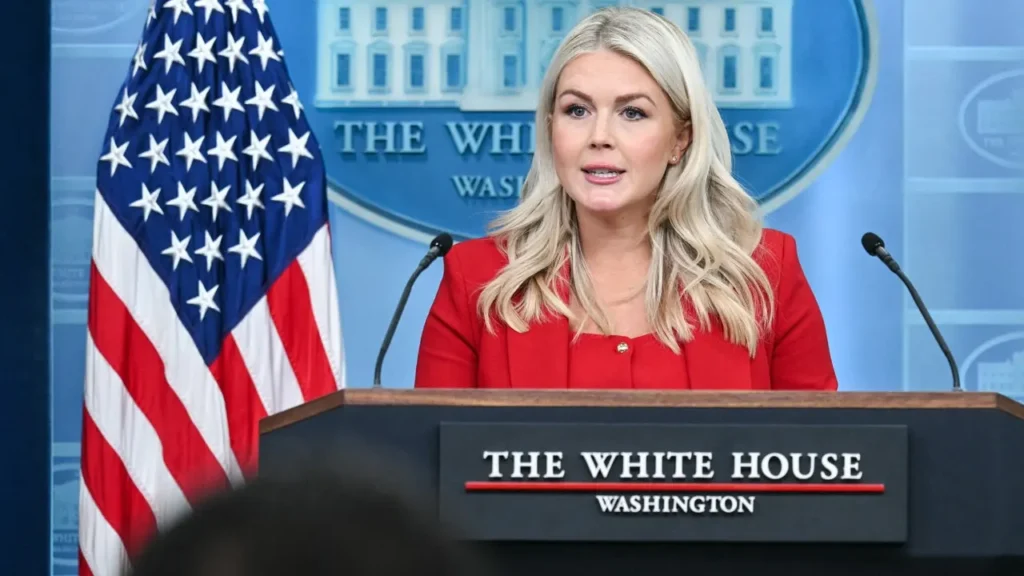
Karoline Leavitt’s departure as White House press secretary at month’s end caps what many observers regard as one of the most distinguished tenures in the office’s 97-year history. Her most significant contribution extends beyond her day-to-day communications duties, representing instead a fundamental shift in how the administration engages with the broader media landscape.
Throughout her tenure serving President Donald Trump, Leavitt demonstrated an uncommon ability to manage the demands of communicating for a prolific public speaker. She maintained composure and strategic messaging while avoiding conflicts that might overshadow the president’s agenda. Her demeanor—marked by confidence and occasional humor—proved effective even in contentious exchanges with journalists.
The cornerstone of Leavitt’s legacy lies in her commitment to including independent news outlets and social media influencers in White House briefings. The establishment of a “new media seat” at press conferences, now a standard fixture, initially drew skepticism from traditional journalists who viewed the practice as diluting the briefing room’s credibility.
Leavitt recognized that contemporary media ecosystems have fundamentally changed. Independent creators and niche outlets now command audiences comparable to legacy publications, particularly among younger demographics. By granting access to these voices, she acknowledged a democratic principle: that the briefing room functions as a two-way channel between the White House and the public.
The integration proved consequential. Independent journalists have broken stories regarding government fraud involving billions of dollars, while alternative media figures have documented law enforcement operations against extremist groups. These outlets brought questions and investigative focus that mainstream media often overlooked, not through malice but through the constraints of their editorial mandates.
Industry observers predict this structural change will outlast both Leavitt’s tenure and the Trump administration itself. Future administrations, regardless of party, will face significant political resistance to excluding media outlets the public has grown accustomed to hearing from, making the innovation likely permanent.
While Leavitt’s communications skills merit comparison to celebrated predecessors like Tony Snow and Ari Fleischer, her transformation of media access to the president represents her most consequential achievement—one that will shape how the White House interacts with the press corps for decades ahead.

More Stories
Colombia backs Trump security push while limiting U.S. role in anti-gang operations
Trump Threatens FCC Action Against NBC’s Welker Over Endorsement Coverage
Chicago Mayor Issues Executive Order Requiring Contractor Diversity Disclosures and ICE Ties Reporting