

💛 A quick favor, if you've got a second.
We're really happy that you chose to read one of our stories and sincerely hope you'll stick around to read more. We took our paywall down — for now — but that won't last forever, and when the gate goes back up, we'd love for you to already be on the inside.
It's free. So please enter your email here and don't forget to like and follow us on all of your favorite Social Media platforms!
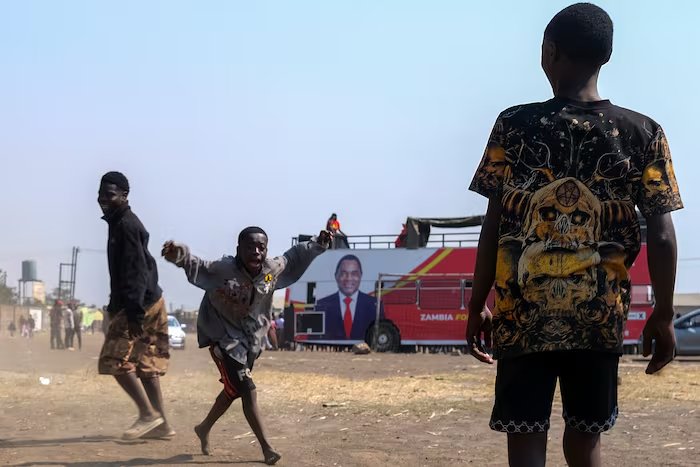
Voting began Thursday across Zambia as approximately 8 million registered voters from the nation’s 22 million population participated in a single-day presidential election. The ballot also determined parliamentary seats and local council representatives, with the electoral commission expected to announce results by Monday. The election carries significant weight as a test of President Hakainde Hichilema’s tenure since taking office in 2021.
Hichilema is competing against 13 other candidates, with Brian Mundubile of an opposition alliance emerging as the primary contender. To secure the presidency outright, candidates must obtain more than 50 percent of the vote; otherwise, the race advances to a runoff. The incumbent is seeking a second term after asserting he inherited a severely weakened economy and has since implemented debt restructuring, fostered economic expansion, and attracted foreign investment.
Despite the administration’s economic accomplishments, many citizens remain unconvinced about their personal benefit. High unemployment, elevated food costs, and unreliable power supplies continue pressuring household finances. Hichilema has pledged another five years to generate employment opportunities, modernize infrastructure, and enhance government services.
International observers are monitoring the election closely given Zambia’s status as a major copper producer targeting a production increase to 3 million metric tons annually by 2031. China maintains the largest foreign investment stake and extensive mining operations in the country, while the United States seeks expanded influence to diversify its critical mineral sourcing and reduce Chinese dependence. Hichilema has cultivated relationships with both superpowers to advance production ambitions.
Law enforcement heightened security measures in election week, deploying additional officers and warning against violence, polling disruptions, and fraudulent result dissemination. Opposition groups have alleged the government exploited state mechanisms to suppress political opponents—claims the administration denies—while the Tonse Alliance contended a recent police raid on its headquarters was politically driven.
Zambia has maintained democratic stability relative to regional peers, completing two prior opposition-led power transitions since 1991. Hichilema’s 2021 victory represented the third such transfer, though political friction has intensified following former President Edgar Lungu’s death in South Africa last year and ensuing disputes between his family and the government regarding funeral arrangements.

More Stories
Colombia backs Trump security push while limiting U.S. role in anti-gang operations
Former NFL cheerleader and ex-aide face off in close Rhode Island GOP primary
Federal Prosecutors Convene Special Grand Jury to Investigate D.C. Schools’ Attendance and Graduation Practices