


💛 A quick favor, if you've got a second.
We're really happy that you chose to read one of our stories and sincerely hope you'll stick around to read more. We took our paywall down — for now — but that won't last forever, and when the gate goes back up, we'd love for you to already be on the inside.
It's free. So please enter your email here and don't forget to like and follow us on all of your favorite Social Media platforms!
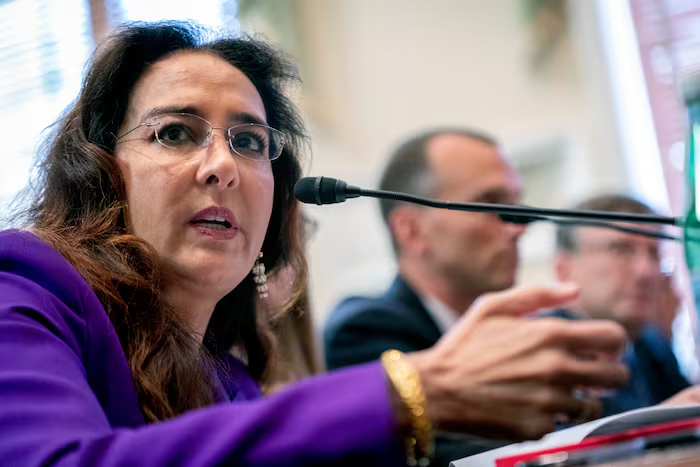
The U.S. Department of Justice released findings Thursday documenting systematic failures by California’s corrections system to safeguard incarcerated women from sexual misconduct perpetrated by correctional officers. The investigation revealed that victims faced significant barriers to reporting abuse without fear of retaliation and that personnel responsible for investigating allegations were themselves sometimes accused of sexual abuse or harassment.
Two state facilities served as the focus of the federal probe, which commenced during the Biden administration: the Central California Women’s Facility in Chowchilla and the California Institution for Women in Chino. Investigators discovered numerous cases of guards engaging in sustained sexual abuse of female prisoners, including one officer convicted of decade-long patterns of misconduct who received a 224-year prison sentence.
A significant impediment to reporting involved the online system used to document misconduct, which lacked confidentiality protections and granted accused officers access to submissions, according to Harmeet K. Dhillon, assistant attorney general for the Justice Department’s Civil Rights Division. Dhillon noted this structural flaw discouraged women from coming forward with complaints about misconduct.
At least one sergeant assigned to investigate violations was himself sentenced to 15 years after pleading guilty to possessing child sexual abuse material while employed at the facility. Federal officials characterized the prison system’s mechanisms for deterring, identifying and penalizing sexual assault as fundamentally inadequate.
California officials have 49 days to address the deficiencies outlined in the investigation or face potential civil action from the federal government. Required measures include expanded surveillance systems, improved confidential reporting mechanisms and reformed investigative procedures.
U.S. Attorney Bill Essayli, appointed by President Donald Trump to lead federal prosecution in Los Angeles, stressed the urgency of systemic reform. He stated the state must confront persistent employee failures and the institutional breakdowns that permitted abuse to continue unchecked.
More Stories
Federal voting arrest in New Jersey adds new pressure point in Sherrill-Trump standoff
Colombia backs Trump security push while limiting U.S. role in anti-gang operations
Former NFL cheerleader and ex-aide face off in close Rhode Island GOP primary