


💛 A quick favor, if you've got a second.
We're really happy that you chose to read one of our stories and sincerely hope you'll stick around to read more. We took our paywall down — for now — but that won't last forever, and when the gate goes back up, we'd love for you to already be on the inside.
It's free. So please enter your email here and don't forget to like and follow us on all of your favorite Social Media platforms!
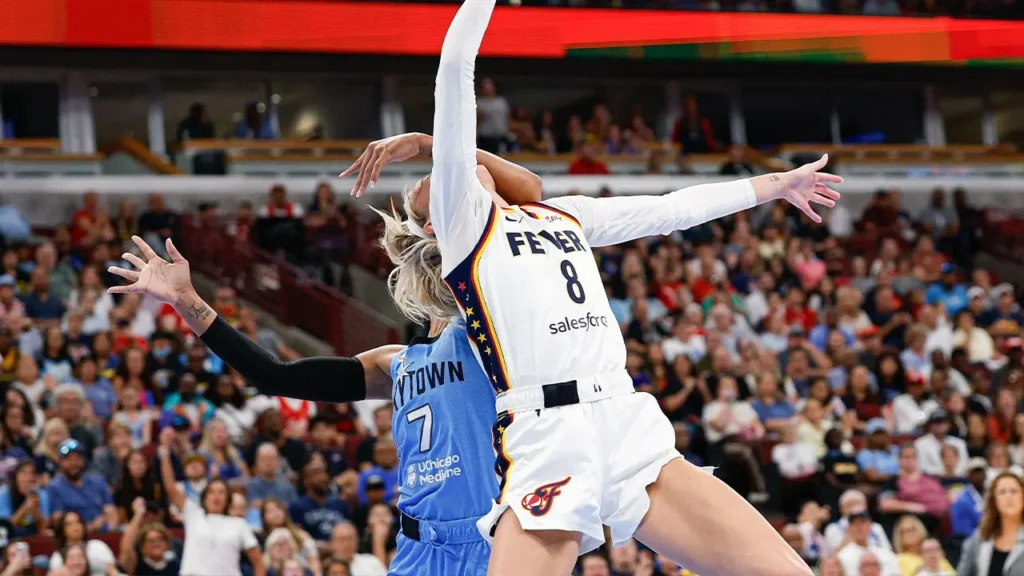
A controversial incident in the WNBA has spiraled into a debate over meaning and accountability after DiJonai Carrington’s post-game social media comment drew widespread scrutiny. Carrington was ejected for a flagrant 2 foul against Indiana Fever guard Sophie Cunningham, striking her in the face hard enough to cause bleeding. The incident alone generated significant discussion, but Carrington’s subsequent social media post saying “White privilege” reignited the controversy.
Most observers initially interpreted Carrington’s post as an accusation that her ejection resulted from racial bias, suggesting she faced harsher punishment because of her race or Cunningham’s. The WNBA has largely declined to comment publicly on the matter. When Carrington addressed the backlash herself, she argued that observers had misunderstood her intent, claiming she never suggested the foul assessment involved White privilege and asserting she had studied the subject at an elite university.
Sports analyst Jemele Hill claimed Monday that Carrington’s meaning was “pretty clear” to her and that the player “wasn’t talking about the foul.” However, when multiple people—including Emmanuel Acho and media outlets—asked Hill to clarify what Carrington actually meant, Hill declined to provide specifics. She only reiterated her assertion that she understood Carrington’s intent without explaining it.
Hill’s single elaboration referenced Cunningham not receiving a technical foul for her reaction to being struck. Yet officials explained that Cunningham’s reaction was deemed acceptable given the severity of contact that left her bleeding. The claim becomes harder to sustain when examining league data: Caitlin Clark leads the WNBA with seven technical fouls, while Cunningham has three and Carrington has one.
Nearly a week after Hill’s assertion, the actual meaning of Carrington’s post remains unexplained. Carrington has not provided the “proper evidence” she said would substantiate her claim, and Hill continues to insist she understands while offering no clarification to resolve the confusion.
More Stories
Indiana coach Curt Cignetti tells restless Hoosiers fans not to gripe over 38-0 win
Packers Running Back Josh Jacobs Placed on Commissioner Exempt List Pending Misdemeanor Charges
Denver Broncos Linebacker Jonathon Cooper Placed on Commissioner’s Exempt List Amid Domestic Violence Charges