

💛 A quick favor, if you've got a second.
We're really happy that you chose to read one of our stories and sincerely hope you'll stick around to read more. We took our paywall down — for now — but that won't last forever, and when the gate goes back up, we'd love for you to already be on the inside.
It's free. So please enter your email here and don't forget to like and follow us on all of your favorite Social Media platforms!
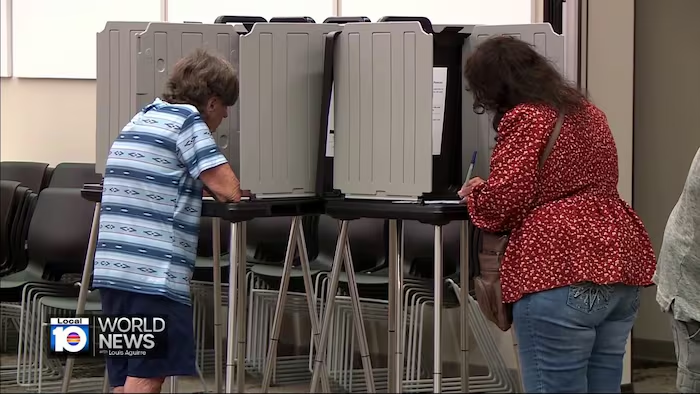
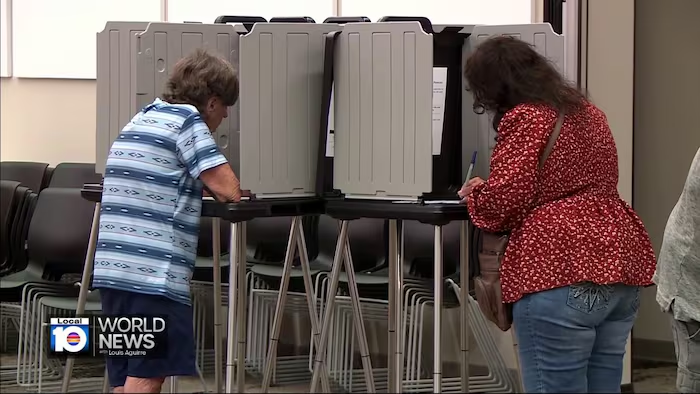
Democratic voters have demonstrated a consistent preference for fresh leadership and systemic change during recent primary contests, though their appetite for ideological revolution remains more complicated. Victories for progressive challengers in Michigan and Minnesota, combined with the ousting of a 26-year incumbent in Connecticut, paint a picture of a party base increasingly frustrated with establishment politics rather than unified around a specific ideological vision.
In Michigan’s Senate primary, Asm. Abelardo Salazar El-Sayed defeated incumbent Rep. Elissa Slotkin, who enjoyed backing from Democratic leadership. Minnesota voters selected Lt. Gov. Peggy Flanagan over U.S. Rep. Angie Craig, despite Craig’s endorsements from House Democratic Leader Hakeem Jeffries and other party establishment figures. Meanwhile, Connecticut Democrat Luke Bronin, 47, toppled 78-year-old Rep. John Larson, who had held his seat since 1998.
These outcomes underscore a political dynamic extending beyond simple left-versus-center positioning. Lis Smith, a prominent Democratic strategist, characterized the results as reflecting “impatience with this political system that feels disconnected from the urgency voters feel,” noting that demands for change transcend traditional party divisions.
Wisconsin’s gubernatorial primary offered a more nuanced picture of progressive strength and limitations. Democratic socialist candidate Francesca Hong lost narrowly to Milwaukee County Executive David Crowley, who benefited from endorsements by outgoing Gov. Tony Evers. Hong’s defeat followed renewed scrutiny of past comments, including statements about defunding police and criticism of Thanksgiving traditions, neither of which she received support from national progressive figures including Sen. Bernie Sanders or Rep. Alexandria Ocasio-Cortez to counter.
Sanders indicated his lack of endorsement stemmed from resource constraints rather than substantive disagreement, telling the Associated Press that his organization cannot “get involved in every single race.” He nevertheless acknowledged Hong’s “very strong grassroots campaign” generated significant enthusiasm among voters.
The tension reveals an ongoing challenge for the party’s progressive wing. Candidates emphasizing populist economic messages and anti-corruption themes have gained traction, yet certain cultural positions associated with the progressive movement remain liabilities among voters anxious about general election viability. David Axelrod, former adviser to President Barack Obama, observed that candidates focusing on economic and corruption issues rather than cultural battles “are going to be able to accumulate” larger voter bases.
Generational change emerged as perhaps the most explicit and consistent theme across recent contests. El-Sayed, Flanagan, and Crowley are 41, 46, and 40 years old respectively, representing a younger cohort than their opponents. Larson’s loss makes him the seventh Democratic House incumbent to lose a primary this year, with many defeats occurring at the hands of younger challengers spanning the ideological spectrum.
The push for new leadership intensified following 2024, when concerns about President Joe Biden’s age ended his reelection bid and prompted broader Democratic discussions about aging party leadership. Connecticut voter Dan Schnaidt, 73, articulated this sentiment clearly, saying the district needed “new blood, for new ideas” despite appreciating Larson’s decades of service.
Younger voters demonstrated particular enthusiasm for progressive insurgent candidates. A 35-year-old Michigan software engineer who voted for El-Sayed noted he chose the candidate he “most wanted to win rather than the one he considered most electable,” a shift from past voting patterns. College-heavy areas provided substantial margins for progressive challengers: El-Sayed won Washtenaw County by 25 points and Ingham County by 23 points, while Hong captured Madison by nearly 7 points.
The immediate test for Democrats involves channeling voter frustration with their own party establishment into opposition to Republicans during the general election. Longer term, these primary results will shape competition within the party heading toward the 2028 presidential race, when a new generation of leaders will compete to define its future direction.
More Stories
Federal voting arrest in New Jersey adds new pressure point in Sherrill-Trump standoff
Colombia backs Trump security push while limiting U.S. role in anti-gang operations
Former NFL cheerleader and ex-aide face off in close Rhode Island GOP primary