


💛 A quick favor, if you've got a second.
We're really happy that you chose to read one of our stories and sincerely hope you'll stick around to read more. We took our paywall down — for now — but that won't last forever, and when the gate goes back up, we'd love for you to already be on the inside.
It's free. So please enter your email here and don't forget to like and follow us on all of your favorite Social Media platforms!
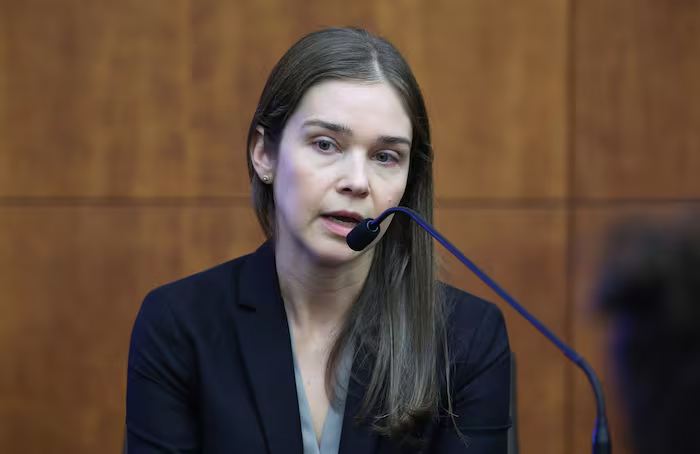
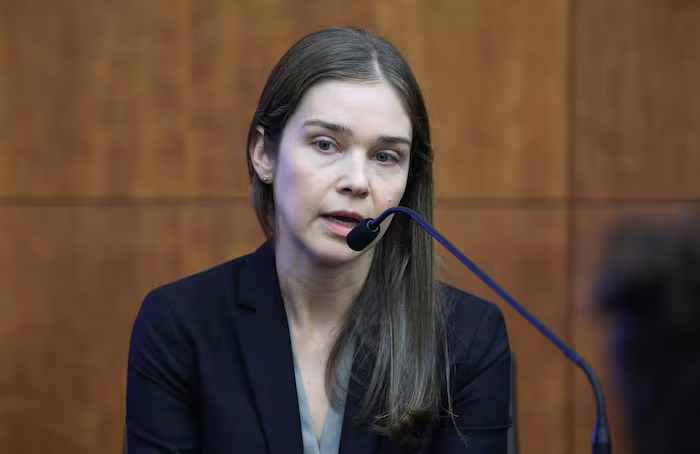
The defense team for Lindsay Clancy launched a pointed scrutiny of her psychiatrist’s clinical judgment and treatment methods Monday, arguing that inadequate mental healthcare may have contributed to the Massachusetts mother’s deterioration before she killed her three young children. Attorney Kevin Reddington’s cross-examination of Dr. Jennifer Tufts zeroed in on abbreviated video sessions lasting 25 minutes, computerized documentation practices, and a succession of psychiatric medications prescribed despite reported side effects and patient concerns.
Reddington characterized the care Clancy received not as standard practice but as insufficient and detached, at one point suggesting Tufts operated more as a mechanical “robot” than engaged clinician. During discussion of a visit roughly two months before the January 24, 2023 killings, he pressed Tufts on why she never recommended in-person appointments despite Clancy expressing feelings of hopelessness. Tufts countered that video consultations presented no apparent barriers and she saw no signs she was missing critical information.
Clancy, 35, has pleaded not guilty to murdering her three children — Callan, Dawson, and Cora, ages 8 months to 5 years — found in the basement of their Duxbury home. The mother was discovered in the yard after jumping from a second-story window, and remains paralyzed from the waist down. Prosecutors contend she intentionally strangled the children with exercise bands after deliberately sending her husband away on errands.
The defense does not dispute Clancy’s actions but argues she should not face criminal conviction due to severe mental illness. Her attorneys contend she suffered from bipolar disorder and postpartum psychosis, a rare postpregnancy condition affecting reality perception. A forensic psychiatrist made these diagnoses after the killings, though Tufts had diagnosed only generalized anxiety disorder and adjustment disorder with depressed mood during their treatment relationship beginning September 2022.
Clancy’s legal team maintains she pursued help aggressively: consulting multiple providers, complying with medication regimens, contacting a suicide crisis line, visiting an emergency room, and briefly hospitalizing herself. Yet her condition deteriorated on an ever-changing pharmaceutical combination, some problematic for bipolar patients, according to her attorneys and family members. Tufts testified Monday that Clancy never disclosed manic episodes, auditory hallucinations, or other psychotic symptoms, nor did she report thoughts of harming her children.
Reddington questioned Tufts’ experience with postpartum mental health conditions. Tufts completed her psychiatric residency in July 2022 and joined private practice the month before treating Clancy. Tufts stated she was “not negligent” in her care as Clancy also pursues civil litigation against her and other practitioners.
A conviction on murder charges would result in a life sentence without parole. An acquittal based on lack of criminal responsibility would commit Clancy to a state mental health facility instead.



More Stories
Federal voting arrest in New Jersey adds new pressure point in Sherrill-Trump standoff
Packers Running Back Josh Jacobs Placed on NFL Commissioner’s Exempt List Following Domestic Arrest
Federal Prosecutors Convene Special Grand Jury to Investigate D.C. Schools’ Attendance and Graduation Practices