



💛 A quick favor, if you've got a second.
We're really happy that you chose to read one of our stories and sincerely hope you'll stick around to read more. We took our paywall down — for now — but that won't last forever, and when the gate goes back up, we'd love for you to already be on the inside.
It's free. So please enter your email here and don't forget to like and follow us on all of your favorite Social Media platforms!
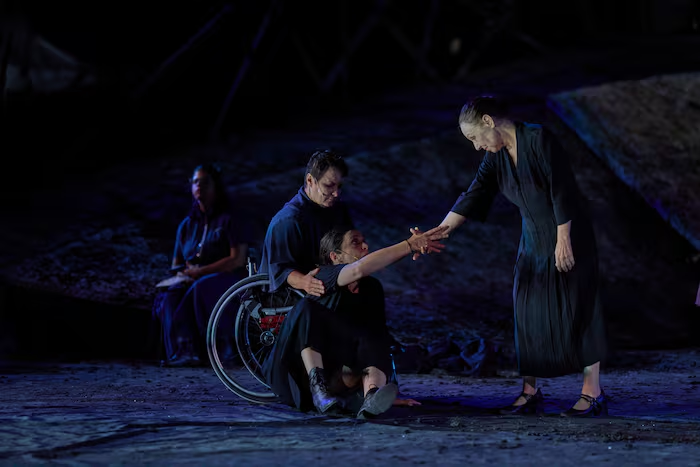
A groundbreaking theatrical production at Epidaurus in southern Greece featured 22 performers—both disabled and non-disabled—telling the untold stories of war’s aftermath. The National Theater of Greece’s staging of “The Trojan Women” marked a watershed moment for the ancient open-air stone arena, which had never before offered comprehensive accessibility accommodations in its 2,300-year history.
While Christopher Nolan’s recent film adaptation of Homer’s epic has captivated global audiences with tales of heroic warriors returning home, this ancient Greek play by Euripides shifts focus entirely. Rather than celebrating triumphant heroes, the production explores the devastation experienced by women left behind in Troy’s ruins, many forced into exile and slavery.
The August 2 performance provided extensive accessibility features designed by the nonprofit Liminal with backing from Greece’s Alpha Bank. Blind attendees received Braille programs, tactile models, and live audio description, while deaf spectators accessed overhead titles. Physical adaptations throughout the venue ensured full site accessibility.
For cast members like 58-year-old wheelchair user Eirini Kourouvani, performing on the ancient stage carried symbolic weight. She had never entered the theater before, describing the experience as transformative. “I feel my heart opening up as wide as this theater is,” she said.
Blind psychologist Ioanna-Maria Gertsou attended with her guide dog Babu, emphasizing the significance of equal cultural participation. National Theater artistic director Argyro Chioti called the production’s model essential for major venues, acknowledging that accessibility requires planning, resources, and specialized expertise that should become standard practice.


More Stories
Colombia backs Trump security push while limiting U.S. role in anti-gang operations
Modern Science Finally Supports & Strengthens Biblical Account of the Crucifixion of Jesus Christ
Federal Prosecutors Convene Special Grand Jury to Investigate D.C. Schools’ Attendance and Graduation Practices