


💛 A quick favor, if you've got a second.
We're really happy that you chose to read one of our stories and sincerely hope you'll stick around to read more. We took our paywall down — for now — but that won't last forever, and when the gate goes back up, we'd love for you to already be on the inside.
It's free. So please enter your email here and don't forget to like and follow us on all of your favorite Social Media platforms!
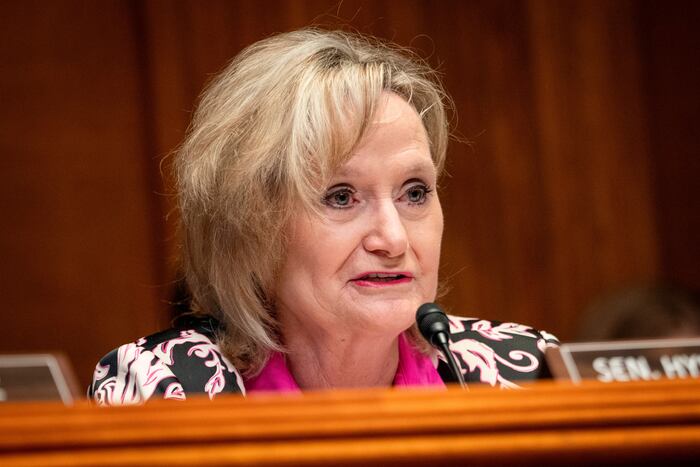
Mississippi has emerged as an unlikely flashpoint in the fight for Senate control, with Democratic nominee Scott Colom mounting a challenge against Republican incumbent Cindy Hyde-Smith as she pursues a second full term. Party operatives acknowledge that flipping the deeply conservative state would mark a significant achievement, yet Colom’s campaign has generated genuine competitive interest as the broader Senate map expands beyond traditional battlegrounds.
Democrats must secure at least four additional seats to capture the majority, a calculation that becomes more challenging if they lose any currently held positions. Maryland Sen. Angela Alsobrooks, campaigning in Mississippi on Colom’s behalf, framed the party’s advantage around economic hardship facing voters nationwide. She pointed to grocery and gas price inflation, along with housing affordability crises, as drivers of voter dissatisfaction that could benefit Democratic candidates across multiple states.
Colom, currently a district attorney, would become Mississippi’s first Black senator since Reconstruction and the first Democratic senator from the state since the 1940s if elected. His strategy relies on modest increases in Black voter turnout and improved Democratic performance among white voters—a dual challenge he attributes to opposition to Hyde-Smith’s consistent alignment with Trump administration policies and their economic consequences for Mississippi.
Republicans maintain confidence in their Senate prospects despite the widened competitive map. Senate Majority Leader John Thune wrote to donors that Democrats’ stretched resources across multiple races could ultimately work in Republicans’ favor, making it difficult for the party to consolidate support where needed most.
Iowa presents a different dynamic following Republican Sen. Joni Ernst’s decision to retire rather than seek reelection. Democrats nominated state legislator and wheelchair basketball star Josh Turek, 47, while Republicans selected U.S. Rep. Ashley Hinson, 43, who carries Trump’s endorsement. The state’s rightward drift in rural areas has been offset by Trump’s struggles with college-educated voters and continued Democratic strength in urban centers like Des Moines and Iowa City.
Kansas, a Republican stronghold that has not sent a Democrat to the Senate since the 1930s, nonetheless presents an opening for Democratic nominee Adam Hamilton. The 62-year-old United Methodist megachurch minister and author has built a biography centered on community care rather than partisan warfare. Republican Sen. Roger Marshall, seeking reelection for the first time since his 2020 victory, faces an opponent with genuine appeal to culturally conservative but economically troubled voters.
Nebraska’s race features an unconventional dynamic: there is no official Democratic nominee, but national Democrats are backing independent Dan Osborn, a former labor union leader challenging Republican Sen. Pete Ricketts. Osborn previously lost a 2024 Senate race to Republican Deb Fischer by 7 points, though Fischer underperformed Trump’s margin significantly. The contrast between Osborn’s union background and Ricketts’ billionaire family wealth—his father founded TD Ameritrade and the family owns the Chicago Cubs—underscores differing economic philosophies.
These four races reflect broader uncertainty about the Senate’s direction heading into the general election. While Republicans maintain structural advantages, Democratic operatives argue that voter frustration with inflation, healthcare costs and Trump’s tariff policies has created opportunities well beyond the party’s traditional competitive map.



More Stories
Colombia backs Trump security push while limiting U.S. role in anti-gang operations
Former NFL cheerleader and ex-aide face off in close Rhode Island GOP primary
Chicago Mayor Issues Executive Order Requiring Contractor Diversity Disclosures and ICE Ties Reporting