



💛 A quick favor, if you've got a second.
We're really happy that you chose to read one of our stories and sincerely hope you'll stick around to read more. We took our paywall down — for now — but that won't last forever, and when the gate goes back up, we'd love for you to already be on the inside.
It's free. So please enter your email here and don't forget to like and follow us on all of your favorite Social Media platforms!
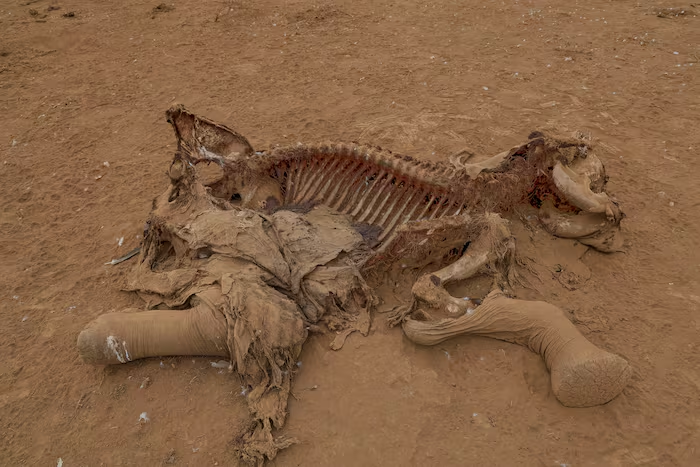
Fifteen elephants have died in Kenya’s Amboseli National Park ecosystem following suspected cyanide poisoning after consuming contaminated tomatoes from nearby farms, according to the Kenya Wildlife Service announcement last month. Preliminary laboratory tests detected cyanide in the animals’ systems, while postmortem examinations revealed tomatoes in their stomachs, though further testing continues to determine toxin concentration levels.
The elephants exhibited signs of paralysis and difficulty breathing before their deaths, according to Dr. Isaac Lekolool, head of veterinary services at Kenya’s wildlife agency. Blood sample analysis remains ongoing to confirm the cause, and officials acknowledge uncertainty regarding the origin of the cyanide found in the ecosystem where domestic agriculture and wildlife coexist.
Local farmers actively dispute the cyanide poisoning narrative, with two-decade resident Elvis Muchai expressing skepticism that agricultural chemicals from the region could be responsible. Muchai stated he has never encountered cyanide among pesticides sold to farmers in the Kimana area and questioned why only elephants were affected when goats, cattle, and gazelles also graze on nearby vegetation.
Kimana borders Amboseli and functions as one of Kenya’s most productive agricultural zones, generating tomatoes, onions, and French beans for distribution to Nairobi markets. Expanded farming operations near the park have intensified human-wildlife conflict, which remains the second leading cause of elephant deaths after poaching, with at least 1,160 elephants killed between 2000 and 2020 during self-defense or retaliatory incidents.
The International Fund for Animal Welfare called for urgent investigation into the incident and emphasized the need for coexistence solutions protecting both wildlife and farming communities. The organization stressed the importance of strict control over toxic substances to prevent environmental contamination in regions where human settlement and wildlife habitat overlap.
Kenya has rebuilt its elephant population to more than 36,000 individuals through poaching reduction and wildlife protection efforts, making these recent deaths a setback for conservation gains. Farmers report significant crop losses from elephants crossing the park’s electric fence during dry seasons, with Muchai noting elephants destroyed approximately half an acre of his tomato crop last season, costing an estimated 500,000 Kenya shillings, approximately $3,800.



More Stories
Colombia backs Trump security push while limiting U.S. role in anti-gang operations
Federal Prosecutors Convene Special Grand Jury to Investigate D.C. Schools’ Attendance and Graduation Practices
State Department Reissues Level 3 Travel Advisory for Israel Amid Terrorism and Armed Conflict Concerns