



💛 A quick favor, if you've got a second.
We're really happy that you chose to read one of our stories and sincerely hope you'll stick around to read more. We took our paywall down — for now — but that won't last forever, and when the gate goes back up, we'd love for you to already be on the inside.
It's free. So please enter your email here and don't forget to like and follow us on all of your favorite Social Media platforms!
Artificial intelligence systems have become central to national conversations ranging from employment and infrastructure to healthcare and security. Yet a critical oversight persists: whether AI models will deliver factual information or conceal political leanings within ostensibly objective responses. Major testing by The Washington Post and MIT’s Center for Constructive Communication documented that leading AI systems consistently favor left-leaning perspectives while presenting them as neutral, with pronounced bias evident on climate, energy and labor-related topics.
The scale of potential harm has intensified as Americans increasingly turn to AI chatbots for guidance on voting decisions and political understanding. A New York Times report documented that voters are adopting these systems as neutral research tools in place of traditional news sources and voter guides. This reliance becomes problematic when models encode undisclosed ideological preferences that subtly steer users toward predetermined conclusions while maintaining an appearance of impartiality.
State legislatures in New York and California have begun pursuing AI regulation modeled after Colorado’s framework, though the Federal Trade Commission has warned such approaches may incentivize companies to alter or suppress accurate information to avoid legal penalties. The FTC under Chairman Andrew Ferguson has instead proposed a federal standard applying existing consumer protection law to undisclosed model bias, asserting that AI systems presented as neutral sources while systematically filtering information would constitute deceptive practices.
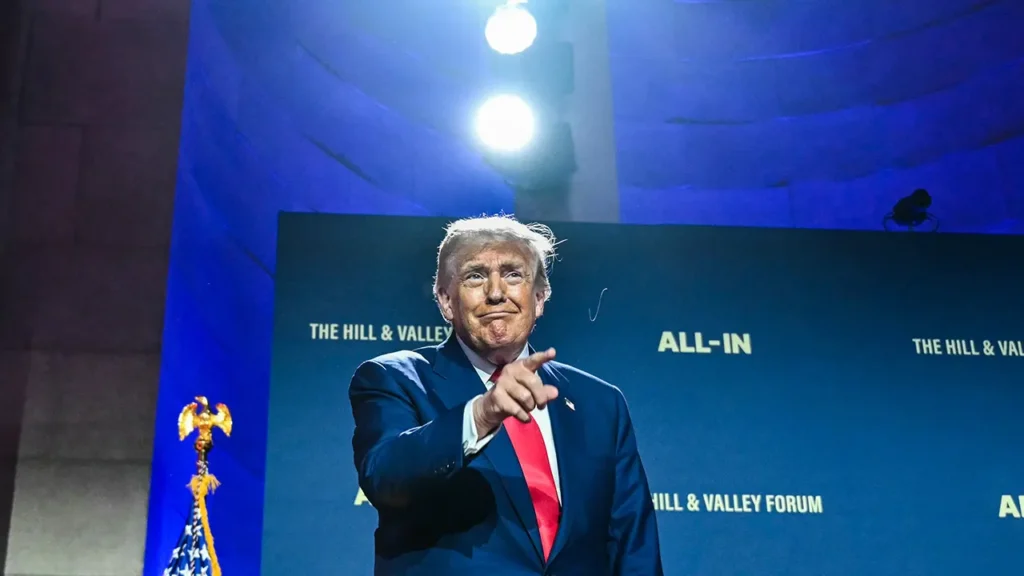
The Trump administration’s AI Action Plan emphasizes that American AI systems must prioritize “objective truth rather than social engineering agendas,” with subsequent executive orders blocking federal procurement of biased models and establishing uniform accuracy standards. Ferguson’s proposal would require disclosure of hidden biases or risk violation of federal consumer protection law, applying a single national standard similar to existing regulations for automobiles and pharmaceuticals rather than allowing a patchwork of state rules.


More Stories
Federal voting arrest in New Jersey adds new pressure point in Sherrill-Trump standoff
Colombia backs Trump security push while limiting U.S. role in anti-gang operations
Former NFL cheerleader and ex-aide face off in close Rhode Island GOP primary