

💛 A quick favor, if you've got a second.
We're really happy that you chose to read one of our stories and sincerely hope you'll stick around to read more. We took our paywall down — for now — but that won't last forever, and when the gate goes back up, we'd love for you to already be on the inside.
It's free. So please enter your email here and don't forget to like and follow us on all of your favorite Social Media platforms!
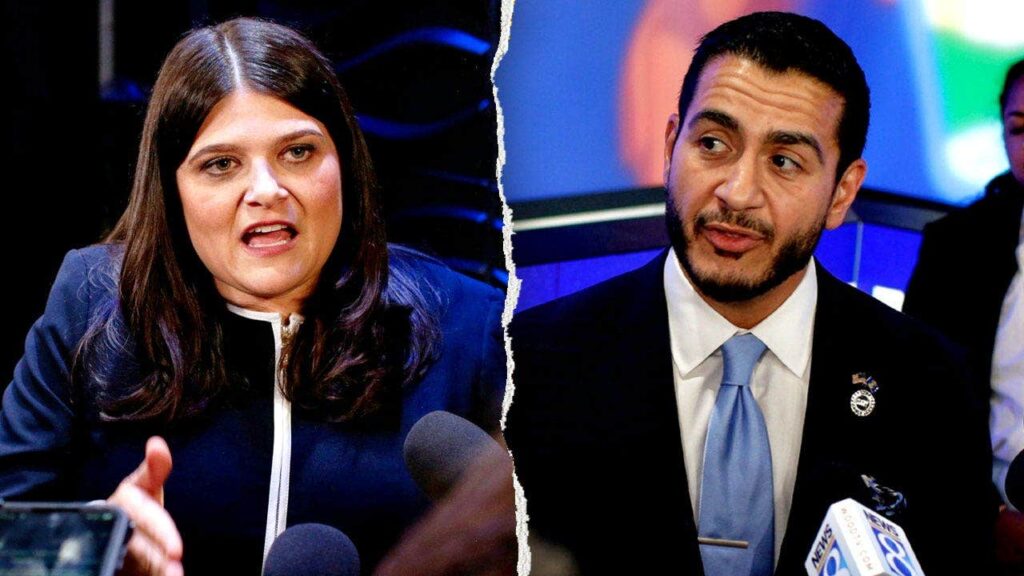
The outcome of Michigan’s Democratic Senate primary hung in the balance early Wednesday as votes continued to be tallied in one of the nation’s most contentious and expensive nomination battles. The race pitted progressive candidate Abdul El-Sayed, a former Wayne County health director, against Rep. Haley Stevens, a more centrist contender, in what became the focal point of an escalating ideological clash within the party.
El-Sayed held a narrow lead as counting proceeded, backed by prominent progressives including Sen. Bernie Sanders of Vermont and Rep. Alexandria Ocasio-Cortez of New York. Stevens drew support from establishment figures, most notably Sen. Chuck Schumer of New York, the Senate Democratic leader, and retiring incumbent Sen. Gary Peters, whom she is positioned to succeed.
The contest to fill Peters’ seat stands as a crucial battleground for Democrats in a cycle expected to determine control of the Senate. Both candidates urged supporters to remain focused on defeating Republican nominee Mike Rogers in the general election, emphasizing party unity despite the bitter primary fight.
El-Sayed, an epidemiologist and 2018 gubernatorial insurgent candidate, would become the nation’s first Muslim senator if elected to the upper chamber. His platform centers on “Medicare for All,” the abolition of Immigration and Customs Enforcement, and criticism of Israel’s military actions in Gaza, which he has characterized as genocide.
More than $80 million was spent on the Democratic primary nomination, making it the most expensive in party history. The United Democracy Project, a super PAC aligned with the American Israel Public Affairs Committee, emerged as the largest spender, directing roughly $70 million against El-Sayed or supporting Stevens.
Establishment Democrats view Stevens as more electable given certain controversial remarks from El-Sayed’s past. Stevens flipped a Republican-held congressional district in 2018, her first election to the House, demonstrating broad appeal across ideological lines.
The progressive-versus-establishment conflict extended across multiple Michigan races Tuesday. William Lawrence, a Sunrise Movement co-founder backed by Sanders and progressive groups, narrowly won the Democratic nomination in the state’s competitive 7th Congressional District, setting up a general election matchup against Republican Rep. Tom Barrett.
In Missouri’s heavily Democratic 1st Congressional District, Rep. Wesley Bell defeated former Rep. Cori Bush, a onetime “Squad” member and Democratic Socialists of America-backed candidate, in a rematch of their 2024 primary battle. Bell received substantial support from House Democratic Leader Hakeem Jeffries and benefited from major spending by outside groups aligned with establishment interests.
Bush criticized Bell for skipping candidate forums and alleged he was beholden to wealthy donors. She had been among the first House Democrats to accuse Israel of committing genocide against Palestinians during its conflict with Hamas in Gaza.
Despite the progressive wing’s hopes for a transformative night, centrist candidates secured wins in several Michigan statewide contests. Secretary of State Jocelyn Benson captured the Democratic gubernatorial primary to succeed term-limited Gov. Gretchen Whitmer, while Attorney General Dana Nessel won renomination to her position.
Matt Bennett, a leader at the Third Way, a center-left Democratic organization, suggested the results indicated the party may not have shifted dramatically leftward. He characterized the Michigan Senate contest as potentially reflecting “a unique situation where candidates matter,” with voters expressing anger at former President Trump by challenging establishment figures.
On the Republican side, former President Donald Trump demonstrated continued political clout as his endorsed candidates secured gubernatorial nominations in both Michigan and Kansas. Rep. John James, a West Point graduate and two-time Senate nominee backed by Trump, defeated businessman Perry Johnson in Michigan’s GOP gubernatorial primary.
In Kansas, Trump-endorsed state Senate President Ty Masterson prevailed in a crowded Republican gubernatorial field. Both states present significant pickup opportunities for Republicans, with Democratic governors in each state reaching term limits.



More Stories
Federal voting arrest in New Jersey adds new pressure point in Sherrill-Trump standoff
Colombia backs Trump security push while limiting U.S. role in anti-gang operations
Former NFL cheerleader and ex-aide face off in close Rhode Island GOP primary