
💛 A quick favor, if you've got a second.
We're really happy that you chose to read one of our stories and sincerely hope you'll stick around to read more. We took our paywall down — for now — but that won't last forever, and when the gate goes back up, we'd love for you to already be on the inside.
It's free. So please enter your email here and don't forget to like and follow us on all of your favorite Social Media platforms!
The author, a former collegiate volleyball player, reflects on how athletic competition shaped her character and resilience despite standing at just five feet tall and competing at a small college. She attributes her success in the legal profession today to the grit and discipline instilled through her early athletic experiences, though she never aspired to be a Division I star. Rather, she participated in sports simply because she loved the game.
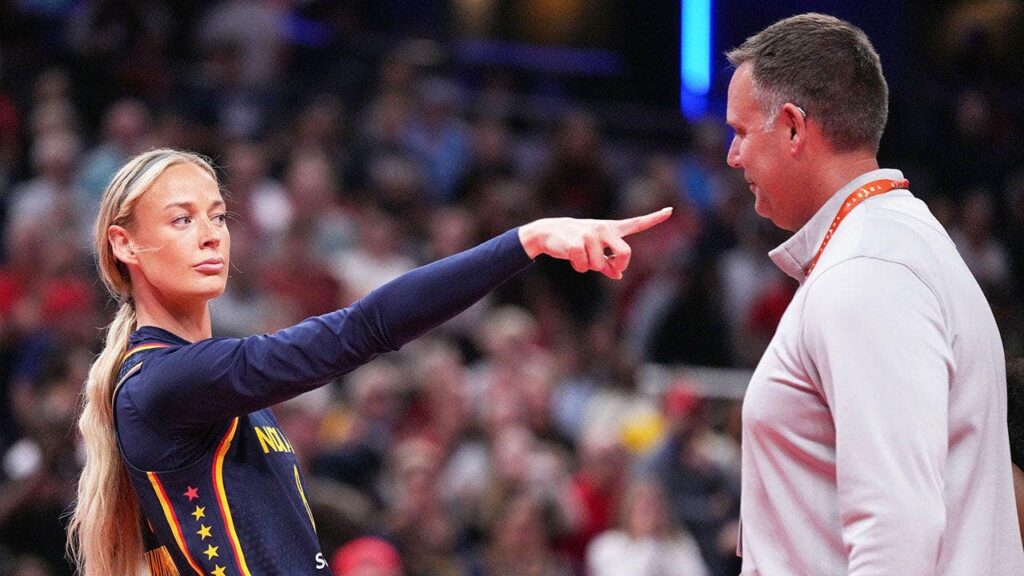
Indiana Fever guard Sophie Cunningham has thrust herself into a contentious national debate by publicly stating her belief that biological sex matters in women’s sports, specifically saying young girls should not compete against biological males. Her remarks during an ESPN interview, where she described herself as politically moderate, sparked widespread backlash from media outlets and advocacy groups. Cunningham refused to apologize, instead doubling down on her position and posting on social media that she said “what I said.”
The Supreme Court’s unanimous ruling in two cases litigated by Alliance Defending Freedom, backed by Idaho Attorney General Raúl Labrador and West Virginia Attorney General JB McCuskey, affirmed that states can protect women’s sports under Title IX. This decision affects 27 states, but leaves 23 others without explicit protections for female athletes competing against biological males. The author argues the ruling’s impact remains limited for athletes in unprotected jurisdictions.
Several female athletes including Kallie Keeler, Selina Soule, Chelsea Mitchell, Alanna Smith, and Ashley Nicoletti continue facing unfavorable competitive circumstances in states lacking such protections. The author contrasts Cunningham’s courage with what she views as cowardice from other prominent female athletes with substantial platforms. She criticizes a suspended Seattle Storm co-owner for berating girls holding signs thanking Cunningham for advocating for fair competition.
The author calls on more female athletes to use their influence to defend women’s sports and speak truthfully about biological sex differences in competition. She contends that every girl deserves fair play regardless of her state of residence and that aspiring female athletes need more public figures willing to take principled stands. The article concludes by challenging women in sports to inspire the next generation through honest advocacy rather than silence.

More Stories
Federal voting arrest in New Jersey adds new pressure point in Sherrill-Trump standoff
Indiana coach Curt Cignetti tells restless Hoosiers fans not to gripe over 38-0 win
Colombia backs Trump security push while limiting U.S. role in anti-gang operations