

💛 A quick favor, if you've got a second.
We're really happy that you chose to read one of our stories and sincerely hope you'll stick around to read more. We took our paywall down — for now — but that won't last forever, and when the gate goes back up, we'd love for you to already be on the inside.
It's free. So please enter your email here and don't forget to like and follow us on all of your favorite Social Media platforms!
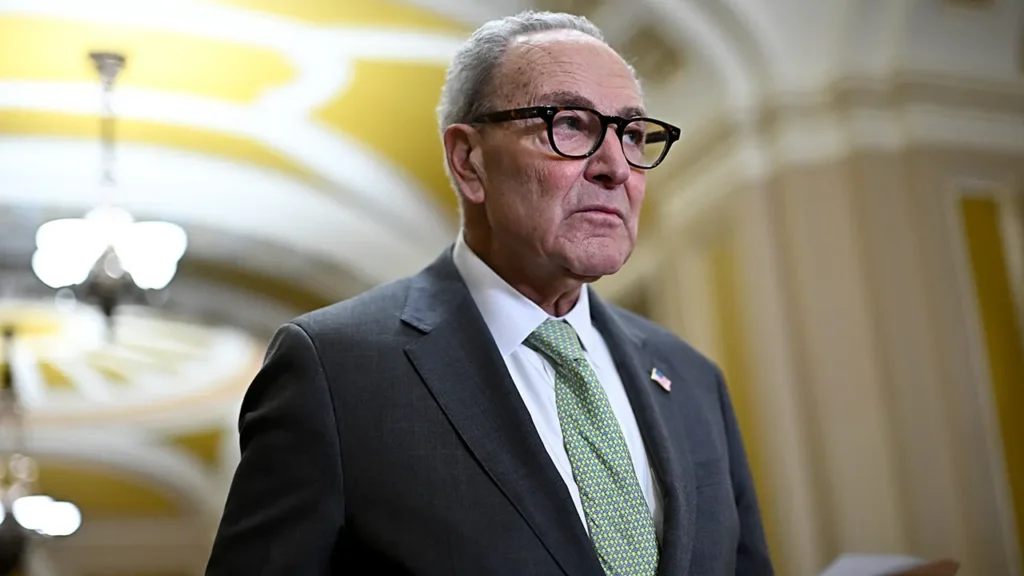
Rep. Seth Moulton of Massachusetts declared Monday during a Senate primary debate that he would not back Senate Minority Leader Chuck Schumer for the party’s top post if voters send him to the upper chamber. Moulton’s commitment to oppose Schumer represents a significant break from the current Democratic hierarchy and signals deepening fissures within the party ahead of November’s elections.
“The first vote that I take when I get to the United States Senate will be for not Senator Schumer, because we need new leadership at the top as well,” Moulton stated during the debate. His remarks pointed toward the internal voting process by which each party selects its leadership ranks following the general election.
Moulton’s primary opponent, incumbent Sen. Ed Markey, D-Mass., similarly declined to explicitly endorse Schumer during the debate, though he has backed the leadership in the past. Markey called for “a big debate about new leadership in the Senate – the direction of the Senate,” signaling his own reservations about the current power structure.
The Massachusetts Senate race has devolved into contentious attacks from both candidates. Moulton has targeted Markey, 80, for accepting donations from fossil fuel companies and criticized his lengthy congressional career, while Markey has assailed Moulton for investing in defense firms under his committee jurisdiction and past comments on transgender youth sports participation.
Moulton has a track record of challenging party leadership. In 2018, he spearheaded an internal effort to remove then-Speaker Nancy Pelosi from her position, and later described Democratic leadership as “failing” to confront President Donald Trump.
The primary fight reflects a broader national struggle within the Democratic Party, with younger candidates pressing the establishment on policy direction. “If you think the Democratic establishment is winning for Massachusetts, if you think it’s fine that the Democratic establishment has allowed a second term of Donald Trump, then vote for the status quo,” Moulton said.
Schumer faces no re-election until 2028 but must secure support from fellow Senate Democrats every two years to retain his leadership role. Other younger Democrats, including Sen. Chris Murphy of Connecticut, have expressed reservations about the current structure when questioned, while Michigan Senate candidate Abdul El-Sayed and Sen. Elissa Slotkin have openly called for new leadership.

More Stories
Federal voting arrest in New Jersey adds new pressure point in Sherrill-Trump standoff
Colombia backs Trump security push while limiting U.S. role in anti-gang operations
Former NFL cheerleader and ex-aide face off in close Rhode Island GOP primary