



💛 A quick favor, if you've got a second.
We're really happy that you chose to read one of our stories and sincerely hope you'll stick around to read more. We took our paywall down — for now — but that won't last forever, and when the gate goes back up, we'd love for you to already be on the inside.
It's free. So please enter your email here and don't forget to like and follow us on all of your favorite Social Media platforms!
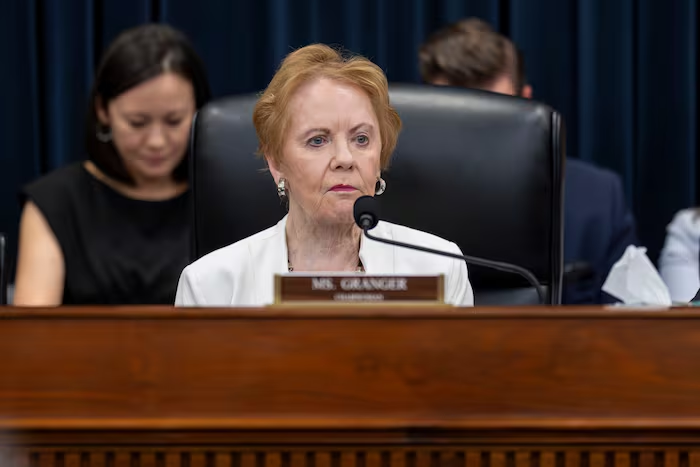
Kay Granger, who broke new ground as the first Republican woman from Texas elected to the U.S. House of Representatives and represented her district for nearly 30 years, died Sunday at 83, according to her son J.D. Granger. House Speaker Mike Johnson mourned her passing on social media, calling her “a dear friend” whose career demonstrated her commitment to advancing women in government.
Granger’s political resume included multiple historic achievements beyond her congressional service. She became Fort Worth’s first female mayor, serving from 1991 to 1995, and later made history again by chairing the House Appropriations Committee—one of Congress’s most influential panels—when Republicans gained the majority in 2023.
Originally trained as a high school English literature and journalism teacher, Granger spent nine years in the Birdville school district before pivoting to entrepreneurship. After her divorce, she built a successful insurance business from her home over two decades while raising three children with support from her mother, Alliene Mullendore.
First elected to Congress in 1996, Granger initially served on the Budget, House Oversight, and Transportation and Infrastructure committees before moving to Appropriations. She prioritized defense spending initiatives, notably supporting F-35 Joint Strike Fighter production in Fort Worth. Health challenges prompted her decision not to seek reelection in 2024, and she ceased voting after July of that year.
Her tenure as Fort Worth’s mayor attracted national recognition. Her “Code: Blue” public safety initiative, which combined citizen patrols with private-sector partnerships, reduced crime significantly and revitalized the city’s struggling economy. Both major parties had actively recruited her to run for Congress in 1996, and she ultimately chose the Republican banner.


More Stories
Former NFL cheerleader and ex-aide face off in close Rhode Island GOP primary
Trump Threatens FCC Action Against NBC’s Welker Over Endorsement Coverage
Chicago Mayor Issues Executive Order Requiring Contractor Diversity Disclosures and ICE Ties Reporting