

💛 A quick favor, if you've got a second.
We're really happy that you chose to read one of our stories and sincerely hope you'll stick around to read more. We took our paywall down — for now — but that won't last forever, and when the gate goes back up, we'd love for you to already be on the inside.
It's free. So please enter your email here and don't forget to like and follow us on all of your favorite Social Media platforms!
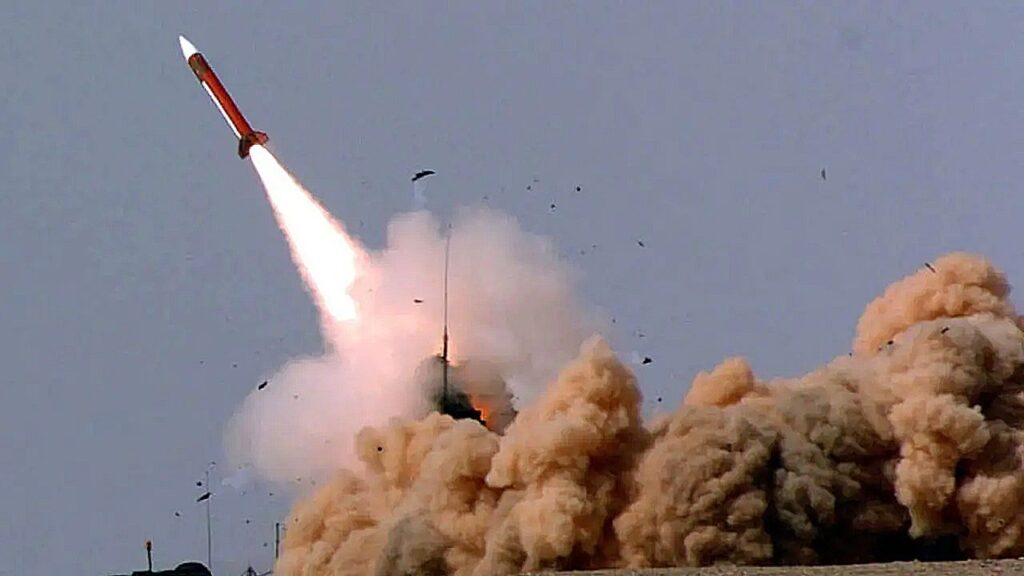
The Defense Department faces mounting pressure to replenish weapons systems severely depleted by months of military operations in the Middle East. According to the Center for Strategic and International Studies, U.S. Patriot interceptor inventories have plummeted from approximately 2,300 units before recent conflict to fewer than 827, while THAAD interceptor supplies have declined from 452 to fewer than 278 units. Military strategists are now questioning whether current operational tempos remain sustainable given the accelerating consumption rates.
Rebuilding these critical stockpiles could require three years or more, raising significant concerns about America’s ability to defend bases and forces globally should additional major conflicts emerge, particularly in the Pacific region. Kelly Grieco, a missile specialist at the Stimson Center, emphasized that more than half of the global Patriot inventory has been consumed in Middle East operations, severely constraining U.S. capacity to defend forces in Europe and the Indo-Pacific. The situation underscores a broader vulnerability in American military readiness across multiple theaters simultaneously.
The Pentagon’s proposed $67 billion emergency funding request for fiscal 2026 includes $18.2 billion specifically for replacing advanced Patriot missiles, Navy Tomahawks, and Army THAAD systems. However, production challenges remain significant: these sophisticated weapons require two to three years from contract award to assembly line completion because they are essentially hand-crafted, highly intricate systems. Pentagon officials recently convened a dozen major Silicon Valley defense contractors, including Shield AI and Anduril, to discuss urgently scaling production of next-generation, lower-cost munitions.
Brandon Tseng, founder of Shield AI and former Navy SEAL, demonstrated how emerging defense technologies can reduce costs while maintaining effectiveness. His V-BAT autonomous targeting system, currently deployed in Ukraine, performs missions equivalent to $40 million Predator or Reaper drones at roughly $1 million per unit. The system operates independently even when GPS and communications are jammed, utilizing artificial intelligence capabilities for extended-range intelligence, surveillance, reconnaissance, and targeting missions.
Iran’s strategic approach deliberately targets U.S. bases to force defensive missile interceptions, systematically depleting American stockpiles. CENTCOM Commander Admiral Brad Cooper has developed a 10- to 14-day intensive air campaign option designed to neutralize Iran’s missile capabilities, reflecting acknowledgment that the current exchange cycle has become operationally unsustainable. Iranian leadership views the conflict as existential, betting that escalating costs—particularly human casualties—will eventually exceed American commitment to continued operations.
By 2031, the Pentagon projects that 70 percent of purchased munitions will be low-cost alternatives valued at $600,000 or less, representing a fundamental shift in procurement strategy. Jerry McGinn, tracking the defense industrial base at CSIS, cautioned that while emerging defense firms possess commercial technologies and prototypes, their capacity for large-scale production remains unproven. The Pentagon’s urgent need for replenished stockpiles now collides with the reality that traditional high-performance systems were engineered for precision rather than rapid manufacturing scalability.

More Stories
Colombia backs Trump security push while limiting U.S. role in anti-gang operations
Chicago Mayor Issues Executive Order Requiring Contractor Diversity Disclosures and ICE Ties Reporting
Federal Prosecutors Convene Special Grand Jury to Investigate D.C. Schools’ Attendance and Graduation Practices