



💛 A quick favor, if you've got a second.
We're really happy that you chose to read one of our stories and sincerely hope you'll stick around to read more. We took our paywall down — for now — but that won't last forever, and when the gate goes back up, we'd love for you to already be on the inside.
It's free. So please enter your email here and don't forget to like and follow us on all of your favorite Social Media platforms!
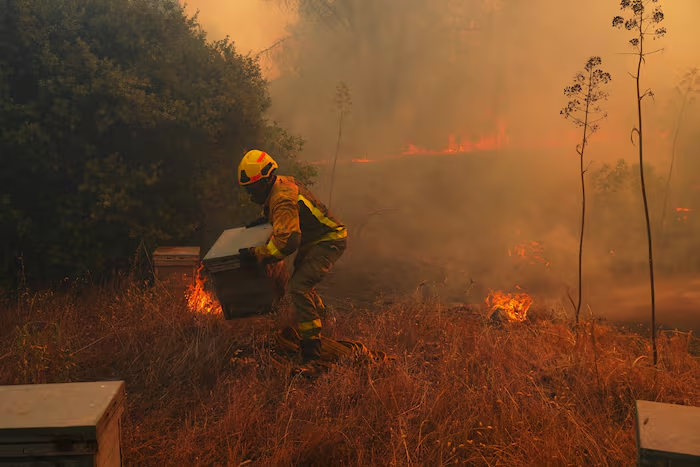
United Nations officials and climate scientists issued urgent warnings Friday about an accelerating El Niño pattern that has already set intensity records in its early stages and is poised to trigger severe weather disruptions globally. The Pacific Ocean region used to monitor El Niño strength reached its warmest level ever recorded for this point in its development cycle, according to researchers at Columbia University, signaling worse conditions ahead as the phenomenon strengthens over coming months.
The El Niño event, which represents a natural warming of equatorial Pacific waters that disrupts weather systems worldwide, is expected to persist through spring 2027 and peak sometime in late fall, the World Meteorological Organization stated. The UN agency projected the phenomenon will generate extreme heat waves, severe droughts and intense rainfall patterns well into 2024, compounding damage already inflicted by record-breaking summer temperatures and wildfires across Europe and other regions.
UN Secretary-General Antonio Guterres characterized the situation as “uncharted territory,” noting that the climate crisis has entered “overdrive.” He warned that El Niño’s effects will combine dangerously with long-term global warming caused by fossil fuel combustion, creating conditions unprecedented in human experience and requiring immediate governmental action to prepare vulnerable populations.
Most climate forecast models predict this El Niño will break historical intensity records when it peaks, though scientists cautioned predictions remain uncertain. The convergence of natural climate variability with human-caused warming will amplify heat release from oceans into the atmosphere, with temperature increases persisting even after this El Niño cycle concludes, Columbia scientist Jeffrey Shaman explained.
The WMO identified specific regions facing heightened drought and wildfire risk, including Indonesia, India, southern Australia and parts of South America and Africa. Conversely, the United States and Southern Europe are expected to experience above-average precipitation, creating a patchwork of climate extremes across the globe during the fall and winter months.
Guterres called for expanded early warning systems and infrastructure improvements to protect workers from dangerous heat, particularly in the garment manufacturing industry where 90 million employees, predominantly women, face escalating heat exposure. He emphasized that preventing future climate catastrophe requires governments and industries to phase out fossil fuel dependence rather than pursue additional coal, oil and gas development.


More Stories
Federal Prosecutors Convene Special Grand Jury to Investigate D.C. Schools’ Attendance and Graduation Practices
State Department Reissues Level 3 Travel Advisory for Israel Amid Terrorism and Armed Conflict Concerns
Republican Gubernatorial Candidate Byron Donalds Discusses Florida’s Future