



💛 A quick favor, if you've got a second.
We're really happy that you chose to read one of our stories and sincerely hope you'll stick around to read more. We took our paywall down — for now — but that won't last forever, and when the gate goes back up, we'd love for you to already be on the inside.
It's free. So please enter your email here and don't forget to like and follow us on all of your favorite Social Media platforms!
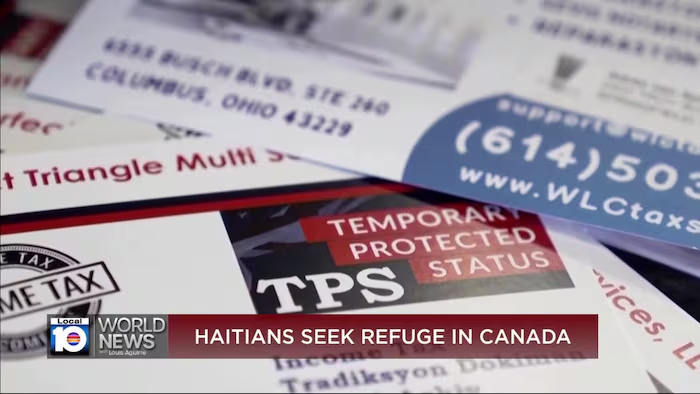
An 87-year-old Holocaust survivor in Sunny Isles Beach tearfully recounted her decade-long bond with her Haitian health aide, expressing devastation over their forced separation following the termination of Temporary Protected Status for Haitian nationals. Anna Fischbein told the Associated Press that losing her caregiver amounted to losing far more than an employee. “I lost a friend,” she said, describing a night without sleep after learning of the aide’s departure.
The Supreme Court’s decision cleared the way for the Trump administration to end TPS protections for Haitians, forcing Jewish Community Services of South Florida to terminate employment for Fischbein’s aide and 17 other caregiving staff members. CEO Miriam Singer characterized the policy as inflicting fresh trauma on individuals already bearing historical wounds, noting the agency’s home care division served predominantly Holocaust survivors and elderly clients.
Immigration attorney Lourna Rosembert-Joseph explained that TPS termination strips deportation protections entirely, enabling Immigration and Customs Enforcement to arrest and deport individuals who lack legal status. The loss of protection status occurs as conditions in Haiti have deteriorated substantially over the past decade, marked by surging gang violence that renders the nation unsafe for returnees, according to Leonie Hermantin, director of special projects at Sant La Haitian Neighborhood Center.
Facing potential deportation to a violence-plagued homeland, numerous TPS advocates have disclosed that families are exploring relocation to Canada. The Canada Border Services Agency reported that as of July 26, Haitian nationals constitute the largest group of asylum claimants currently processed at land border ports of entry, followed by American citizens.
However, legal barriers substantially complicate a Canadian pathway. The Safe Third Country Agreement between Canada and the United States presumes the U.S. constitutes a safe destination, limiting asylum eligibility except for unaccompanied minors and those with close Canadian family ties, explained Julia Sande, an Amnesty International Canada lawyer specializing in refugee and migrant rights.
Individuals crossing between official ports of entry face additional complications. While Canada avoids deporting such claimants back to the United States, their refugee applications become ineligible for consideration by Canada’s Refugee Protection Division, leaving applicants in “legal limbo” without pathways to formalize status or reunite with family members, Sande cautioned.
Amnesty International presently challenges the Safe Third Country Agreement in Canadian court, citing a 2023 Canadian Supreme Court ruling that constitutionality depends on availability of “safety valves” protecting people facing “real risk of unfair detention” upon U.S. return. Sande asserted that Canada has failed to establish such protections and characterized the U.S. asylum system as fundamentally unsafe under current administration policies.
Canada’s Border Services Agency maintains authority to impose Administrative Deferral of Removal when destination country conditions endanger individual safety. The federal government currently maintains such deferrals for Haiti and Venezuela, providing temporary protection against removal to countries experiencing humanitarian crises.


More Stories
Modern Science Finally Supports & Strengthens Biblical Account of the Crucifixion of Jesus Christ
Chicago Mayor Issues Executive Order Requiring Contractor Diversity Disclosures and ICE Ties Reporting
University of Pennsylvania Climate Scientist Demands Supreme Court Packing Pledge From Democratic Candidates