



💛 A quick favor, if you've got a second.
We're really happy that you chose to read one of our stories and sincerely hope you'll stick around to read more. We took our paywall down — for now — but that won't last forever, and when the gate goes back up, we'd love for you to already be on the inside.
It's free. So please enter your email here and don't forget to like and follow us on all of your favorite Social Media platforms!
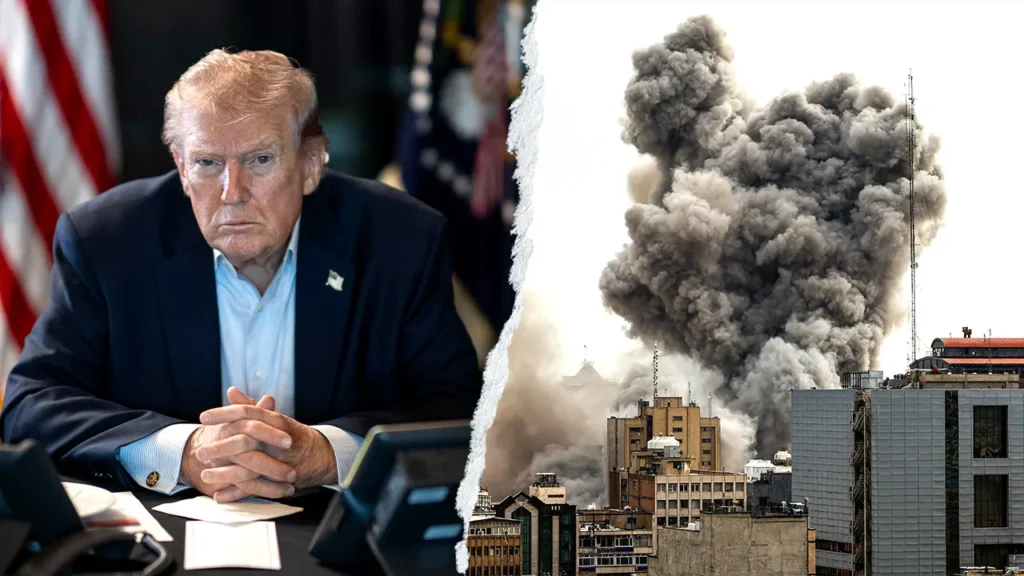
American forces conducted airstrikes inside Iranian territory Wednesday night as a direct response to Tehran’s ballistic missile assault on U.S. military personnel stationed across the Middle East. U.S. Central Command confirmed the operation had commenced, describing it as retaliation for the previous day’s attack by Iranian forces on American positions in the region.
The Iranian Islamic Revolutionary Guard Corps launched multiple ballistic missiles at approximately 5:45 p.m. Eastern Time Tuesday, according to military officials. All projectiles were successfully intercepted with no immediate reports of casualties or infrastructure damage, though the incident marked a significant escalation in an already volatile regional conflict spanning nearly five months.
President Donald Trump had signaled the impending military response earlier Wednesday, vowing forceful action against Tehran. The renewed strikes represented the first American attacks launched inside Iran since Trump halted a 13-night bombing campaign Friday to permit diplomatic discussions, a pause that lasted less than one week before hostilities resumed.
Behnam Ben Taleblu, senior director of the Iran program at the Foundation for Defense of Democracies, characterized Tehran’s unannounced attack as a strategic departure reflecting increased risk tolerance. He warned that despite military weaknesses, Iran demonstrated heightened confidence and willingness to challenge Washington directly, creating a more unpredictable adversary.
Ben Taleblu cautioned that intercepting missiles may prove insufficient to restore effective deterrence against future Iranian actions. He emphasized that successful defenses alone cannot reverse Tehran’s apparent calculation that it can launch attacks, absorb American retaliation and subsequently dictate whether conflicts conclude, calling this assessment a dangerous miscalculation Washington must address.
The escalation occurred amid broader regional instability, with Iran targeting commercial shipping in the Strait of Hormuz while American and Saudi forces jointly conducted strikes against Iranian-backed militia groups in Iraq. Saudi Arabia’s public acknowledgment of participating in the operation alongside the United States marked a notable shift in military cooperation and suggested potential expansion of conflict zones.
The latest exchange followed a more devastating Iranian strike on Muwaffaq Salti Air Base in Jordan during July that killed two American service members and wounded additional personnel. Negotiations regarding the Strait of Hormuz also deteriorated as Iran rejected an Omani proposal for joint regional waterway management, demanding expanded unilateral control over shipping corridors.


More Stories
Trump Threatens FCC Action Against NBC’s Welker Over Endorsement Coverage
Federal Prosecutors Convene Special Grand Jury to Investigate D.C. Schools’ Attendance and Graduation Practices
State Department Reissues Level 3 Travel Advisory for Israel Amid Terrorism and Armed Conflict Concerns