



💛 A quick favor, if you've got a second.
We're really happy that you chose to read one of our stories and sincerely hope you'll stick around to read more. We took our paywall down — for now — but that won't last forever, and when the gate goes back up, we'd love for you to already be on the inside.
It's free. So please enter your email here and don't forget to like and follow us on all of your favorite Social Media platforms!
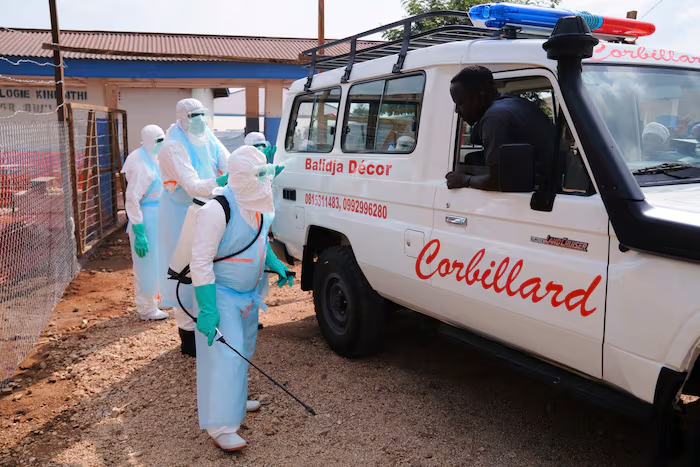
Health authorities in the Democratic Republic of Congo announced Thursday that the nation’s Ebola outbreak has claimed more than 1,500 lives, representing a dramatic 50 percent jump in fatalities over the course of a single week. The acceleration underscores how the disease continues to spread faster than response operations can contain it, according to government statistics released this week.
As of Tuesday, confirmed cases had reached 3,442 individuals, with 1,521 deaths documented, the latest government data indicated. The outbreak began May 15 and stems from the Bundibugyo virus strain, against which no vaccines or approved treatments currently exist. Meanwhile, 797 patients remain hospitalized or in isolation while 615 others have recovered from the infection.
Efforts to track disease transmission have fallen significantly short of goals, with approximately 78 percent of identified contacts under monitoring nationally compared to the 95 percent threshold epidemiologists deem necessary to halt spread. Nearly 90 percent of reported cases originate in Ituri province in eastern Congo, though infections have appeared across five provinces including Kisangani, one of the country’s major urban centers.
Uganda announced its freedom from Ebola on Tuesday following the recovery and discharge of its final patient in mid-June, marking the neighboring nation’s successful containment of the disease. The current outbreak represents an unprecedented acceleration in transmission compared to prior epidemics, including the 2014-2016 West African crisis that killed over 11,000 people from 28,000 cases—a toll that took approximately eight months to accumulate.
International aid organizations, including the World Health Organization and Africa CDC, temporarily suspended operations in Nyakunde health zone following a July 15 attack on a hospital and treatment facility that resulted from community tensions. Security conditions have reportedly stabilized since the incident, with officials urging international partners to resume assistance operations as soon as the following week.


More Stories
Federal Prosecutors Convene Special Grand Jury to Investigate D.C. Schools’ Attendance and Graduation Practices
State Department Reissues Level 3 Travel Advisory for Israel Amid Terrorism and Armed Conflict Concerns
Forest Service Proposes Steep Fee Increases at Lake Tahoe Recreation Sites