



💛 A quick favor, if you've got a second.
We're really happy that you chose to read one of our stories and sincerely hope you'll stick around to read more. We took our paywall down — for now — but that won't last forever, and when the gate goes back up, we'd love for you to already be on the inside.
It's free. So please enter your email here and don't forget to like and follow us on all of your favorite Social Media platforms!
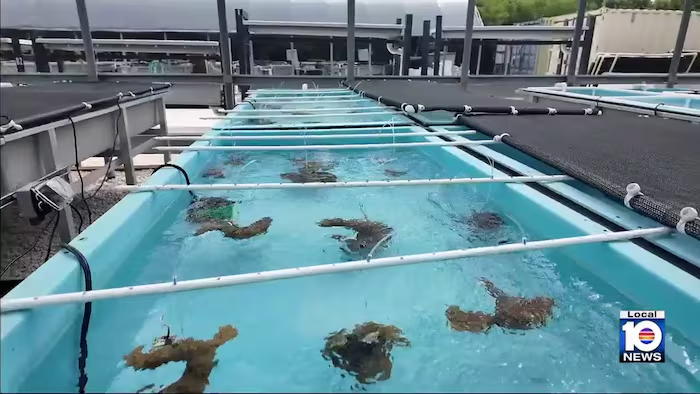
Rising ocean temperatures have prompted marine researchers to take extraordinary measures to protect Florida’s most endangered coral species before another severe bleaching event strikes the state’s reefs. Scientists from the University of Miami’s Lirman Coral Restoration Lab have collected 30 genetically diverse elkhorn coral specimens from offshore nurseries near Miami and transported them to a university hatchery for safekeeping.
Conditions this year mirror the devastating 2023 bleaching event, according to Dalton Hesley, program director of Rescue a Reef at the University of Miami. NOAA recently elevated its coral bleaching alert level for portions of the Florida Reef Tract as water temperatures reached critical thresholds, while South Florida has experienced 46 consecutive days of triple-digit heat indices.
Only approximately 100 original elkhorn corals remain in Florida’s wild waters today, a dramatic decline from thousands three decades ago. The 2023 bleaching event alone killed more than 90 percent of all wild and restored colonies, making the genetic material now in the hatchery invaluable for future reef restoration efforts.
Diego Lirman, associate professor of marine biology at the Rosenstiel School, emphasized the species’ critical ecological role as a primary reef-building organism in the Caribbean and Florida Keys. Elkhorn corals provide essential habitat for marine life and shield coastlines from erosion and storm damage, supporting billions of dollars annually in tourism, fishing, and recreation.
Early indicators suggest the rescue operation is succeeding, with collected corals displaying extended polyps, active feeding, and healthy coloration one week into the process. Scientists acknowledge that while relocation carries inherent risks, leaving the remaining genotypes in warming waters poses far greater danger of total loss.
Experts stress that emergency interventions alone cannot reverse reef decline without broader climate action. Meaningful reductions in greenhouse gas emissions at local, regional, and global levels remain essential to give surviving coral populations a genuine opportunity for long-term recovery and reef restoration.


More Stories
Forest Service Proposes Steep Fee Increases at Lake Tahoe Recreation Sites
Son Discovers Father Missing After Himalayan Disaster in Nepal-Tibet Border Region
Archaeologists Unearth 1,300-Year-Old Trading Hub Near Ancient Jaffa in Israel