



💛 A quick favor, if you've got a second.
We're really happy that you chose to read one of our stories and sincerely hope you'll stick around to read more. We took our paywall down — for now — but that won't last forever, and when the gate goes back up, we'd love for you to already be on the inside.
It's free. So please enter your email here and don't forget to like and follow us on all of your favorite Social Media platforms!
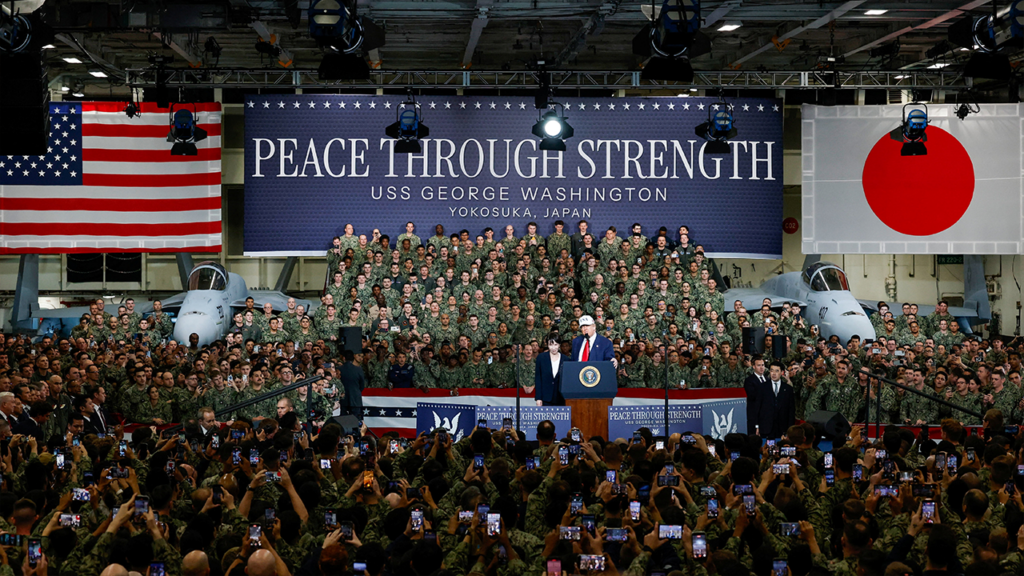
Japan has solidified its position as America’s most consequential global partnership, surpassing traditional allies in both military capacity and strategic alignment. The two nations are coordinating with unprecedented urgency to counter Chinese and Russian threats, strengthen supply chains, and maintain stability across the Indo-Pacific region. Tokyo has committed its resources and political capital to deepening ties with Washington, effectively betting its security future on American leadership in the region.
While the U.S.-UK relationship maintains deep historical and intelligence bonds, Japan now delivers greater military and economic value to American interests. The British alliance has diminished in strategic importance partly due to economic overtures toward Beijing and reduced capacity in the Indo-Pacific. Japan’s geographic position at the center of the first island chain makes it irreplaceable for constraining Chinese expansion and securing American access to vital markets across the region.
Japan scrambled fighter jets 366 times in the past year to respond to Chinese air incursions, a constant operational burden no other ally shoulders at comparable scale. Beyond Taiwan, Tokyo displays the most aggressive public support for defending the status quo across the Taiwan Strait, collaborating openly with Taipei while other nations avoid such engagement. The nation hosts approximately 60,000 U.S. military personnel and contractors alongside 35,000 civilians—America’s largest overseas military footprint—and covers roughly 75 percent of hosting costs through annual payments averaging $1.5 billion.
Japan’s defense spending reached $62.2 billion in 2025, reflecting a 9.7 percent increase, with spending hitting 2 percent of GDP in 2026 ahead of schedule under Prime Minister Takaichi’s leadership. The current five-year Defense Buildup Program allocates approximately $275 billion through 2027, marking the twelfth consecutive year of record defense budgets. This sustained investment demonstrates Tokyo’s commitment to meeting President Trump’s burden-sharing expectations and expanding its military capabilities.
Co-production agreements underscore Japan’s evolution from weapons consumer to defense industrial partner. The alliance is expanding co-production of AIM-120 AMRAAM missiles and quadrupling SM-3 Block IIA interceptor production within Japan. Integration of 400 Tomahawk missiles into Japan’s navy and the 2025 Typhon missile system deployment to mainland Japan enhance the Self-Defense Force’s counterstrike capabilities while improving interoperability with American forces.
Tokyo is undertaking historic intelligence reforms to develop world-class capabilities and potentially join the Five Eyes intelligence-sharing club, currently limited to the U.S., UK, Australia, Canada, and New Zealand. This represents a significant shift for a nation traditionally cautious about surveillance and intelligence operations given historical sensitivities. The move reflects mounting concerns about Chinese and Russian influence operations threatening the region.
Japan’s strategic reach extends far beyond its borders through critical minerals partnerships, development assistance, and regional diplomacy. Following the March Trump-Takaichi Summit, the alliance established mineral price floors and explored new mining ventures to secure supply chains. Japan has pledged $6 billion to Ukraine in 2026 alone with $8.7 billion in budget support since 2022, and committed $30 billion to Africa since 2022 through business-oriented trade partnerships.
Beijing has responded to the strengthening alliance through military pressure and economic coercion, repeatedly sailing into the Senkaku Islands and restricting critical mineral exports to Japan. Chinese authorities have detained Japanese businessmen in what amounts to hostage-taking operations, actions that have only hardened Tokyo’s resolve to coordinate more closely with Washington. The pattern of Chinese aggression has accelerated Japanese commitment to American partnership across all strategic domains.
Washington should formalize this alignment by admitting Japan to the Five Eyes intelligence partnership when appropriate, establishing multiple defense co-production facilities on Japanese soil, and collaborating with Tokyo to develop critical minerals processing infrastructure globally. The current moment presents a rare alignment of interests, capabilities, and political will that positions the U.S.-Japan alliance as the linchpin of regional stability and American strategic interests in the world’s most dynamic area.


More Stories
Chicago Mayor Issues Executive Order Requiring Contractor Diversity Disclosures and ICE Ties Reporting
Federal Prosecutors Convene Special Grand Jury to Investigate D.C. Schools’ Attendance and Graduation Practices
University of Pennsylvania Climate Scientist Demands Supreme Court Packing Pledge From Democratic Candidates