

💛 A quick favor, if you've got a second.
We're really happy that you chose to read one of our stories and sincerely hope you'll stick around to read more. We took our paywall down — for now — but that won't last forever, and when the gate goes back up, we'd love for you to already be on the inside.
It's free. So please enter your email here and don't forget to like and follow us on all of your favorite Social Media platforms!
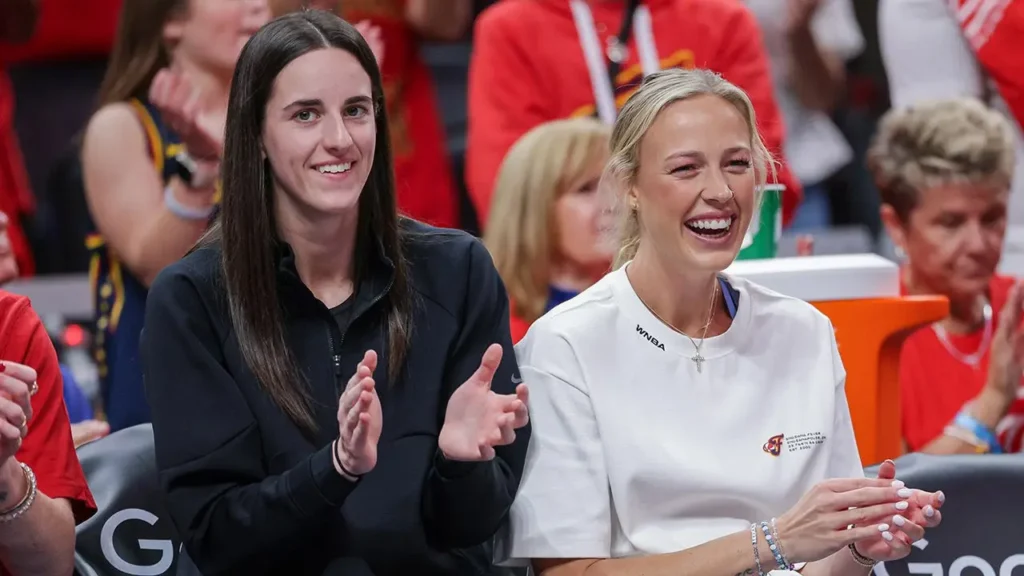
The question of whether biological men should compete in women’s sports has emerged as a divisive national debate that extends from government chambers to everyday conversations. Despite the prominence of this discussion, many of the world’s most accomplished female athletes have declined to take a public position, according to recent commentary. Some have actively endorsed transgender inclusion, while others have offered cautious statements carefully measured in tone.
WNBA player Sophie Cunningham distinguished herself by taking a firm stance advocating to preserve women’s sports exclusively for women. Her willingness to address the issue prompted questions about where other elite female athletes stand on the topic. The silence of many prominent competitors has become increasingly noticeable as the debate continues to dominate sports discourse.
Gymnast Simone Biles entered the conversation publicly in June 2025 following a dispute with activist Riley Gaines on social media. Biles criticized Gaines’ commentary on a Minnesota high school softball championship and argued that sports organizations should accommodate transgender athletes rather than exclude them. Though Biles apologized for personal attacks against Gaines, she maintained her support for inclusion policies.
Back-to-back WNBA MVP A’Ja Wilson has not made any known public statement regarding transgender participation in women’s or girls’ sports, despite frequently speaking about equality and diversity throughout her career. No confirmed record exists of major media outlets directly asking Wilson to address the issue.
Tennis legend Serena Williams has never publicly declared a definitive position on male participation in women’s competition. Comments she made during a 2013 appearance on David Letterman—stating she would lose to Andy Murray “6-0, 6-0 in five to six minutes”—have been widely cited in debates about biological differences between male and female athletes.
Olympic swimming gold medalist Katie Ledecky declined to take a position when directly asked about the topic by The New York Times in June 2024. Ledecky stated she “preferred not to weigh in” and emphasized her preference to focus on swimming rather than engage in controversial public debates.
Rising basketball star Caitlin Clark addressed the issue during a TIME Athlete of the Year interview in 2024, stating that “everybody should have the same rights” and that transgender individuals “deserve the same respect as anybody else.” However, Clark did not directly answer whether biological males should be permitted in women’s sports competition.
Tennis player Coco Gauff has supported LGBTQ communities and participated in Pride initiatives but has not publicly addressed transgender participation in women’s sports specifically. Activist Riley Gaines recently called on Gauff via social media to state whether women’s sports should remain exclusive to women, with no response forthcoming.
WNBA player Paige Bueckers has spoken extensively about racial justice and LGBTQ support but has remained silent on transgender participation in women’s and girls’ sports. She has advocated for equal opportunity in coaching positions without extending those arguments to athletic eligibility.
WNBA champion Sabrina Ionescu and Olympic sprinter Sha’Carri Richardson have not publicly stated positions on the issue. Richardson frequently discusses inclusion and individuality but has not addressed male athletes competing in women’s events, and no confirmed instance exists of media outlets asking her directly.
Olympic hockey captain Hilary Knight has publicly supported transgender inclusion in sports following international policy changes. Knight emphasized maintaining welcoming environments for transgender athletes while respecting governing body decisions, though she did not advocate for blanket exclusion policies.
Commentary suggests that as the debate intensifies, these athletes possess significant platforms to influence policy discussions. The observation raises questions about whether prominent female competitors will eventually address an issue that directly affects women’s competitive opportunities.

More Stories
Indiana coach Curt Cignetti tells restless Hoosiers fans not to gripe over 38-0 win
Packers Running Back Josh Jacobs Placed on Commissioner Exempt List Pending Misdemeanor Charges
Denver Broncos Linebacker Jonathon Cooper Placed on Commissioner’s Exempt List Amid Domestic Violence Charges