


💛 A quick favor, if you've got a second.
We're really happy that you chose to read one of our stories and sincerely hope you'll stick around to read more. We took our paywall down — for now — but that won't last forever, and when the gate goes back up, we'd love for you to already be on the inside.
It's free. So please enter your email here and don't forget to like and follow us on all of your favorite Social Media platforms!
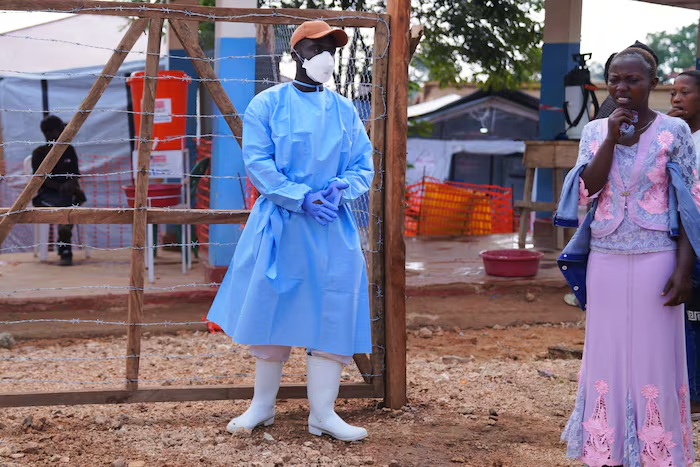
A strike by healthcare personnel at an Ebola treatment facility in eastern Congo on Saturday has severely hampered patient care operations in the outbreak’s most critical zone. The walkout at the Elikya Ebola Treatment Center in Bunia, Ituri province, was prompted by wage grievances affecting doctors, nurses, and security personnel who have gone unpaid for extended periods.
According to official figures released Friday, Congo has documented 2,973 confirmed Ebola cases resulting in 1,309 deaths, marking what authorities characterize as the fastest-spreading outbreak in the disease’s history. The Ituri province accounts for nearly 90 percent of all confirmed infections across the country.
Approximately one hundred healthcare workers staged a protest outside the treatment center, demanding resolution of two months in unpaid performance bonuses before resuming duties. Staff members stated that compensation arrears were severely damaging employee morale and compromising patient treatment quality.
The Bunia General Hospital, the region’s primary medical facility, experienced a similar labor action last week stemming from unpaid salaries. Some workers reported receiving no compensation since the outbreak began on May 15.
The World Health Organization reports that more than 100 healthcare workers have contracted Ebola since the outbreak commenced. The virus responsible, the rare Bundibugyo strain, differs from the more common Zaire variant for which vaccines exist.
Difficulties in containing transmission include the failure to identify the original patient, armed conflict disruptions, and mining-related population movements that complicate contact tracing efforts. A clinical trial examining two potential treatments recently launched in Ituri province.
Global health authorities assess the risk of international spread as low, citing Ebola’s dependence on direct bodily fluid contact rather than airborne transmission. Currently, 766 patients remain hospitalized or isolated while 540 have recovered.

More Stories
Colombia backs Trump security push while limiting U.S. role in anti-gang operations
Federal Prosecutors Convene Special Grand Jury to Investigate D.C. Schools’ Attendance and Graduation Practices
State Department Reissues Level 3 Travel Advisory for Israel Amid Terrorism and Armed Conflict Concerns