


💛 A quick favor, if you've got a second.
We're really happy that you chose to read one of our stories and sincerely hope you'll stick around to read more. We took our paywall down — for now — but that won't last forever, and when the gate goes back up, we'd love for you to already be on the inside.
It's free. So please enter your email here and don't forget to like and follow us on all of your favorite Social Media platforms!
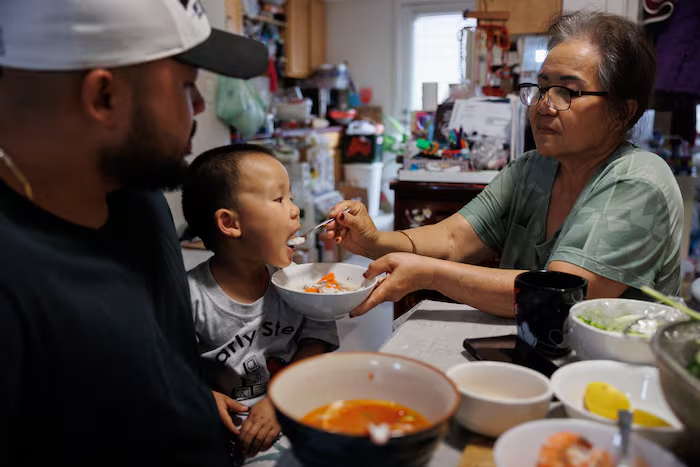
Grocery shoppers nationwide are fundamentally altering their purchasing decisions as food prices have climbed to levels unseen in decades. The cost of food consumed at home has surged 33% in American cities since early 2019, compared with just 6.4% growth in the seven-and-a-half years prior, according to government data. This historic inflation has forced millions to adopt new strategies including coupon hunting, store-switching and strategic meal planning.
Multiple factors contributed to the dramatic price escalation. Supply chain disruptions stemming from the coronavirus pandemic raised labor and transportation expenses, while weather events including droughts and hurricanes reduced production. Bird flu devastated poultry supplies, trade tariffs increased costs on imported goods like coffee and chocolate, and Russia’s invasion of Ukraine disrupted global oil and fertilizer markets. Renewed Middle East tensions have accelerated food inflation further during the current year.
Though wage growth for full-time workers has slightly outpaced grocery price increases since 2019, economists caution that broader financial pressures undermine consumer confidence. Jared Bernstein, a senior policy fellow at the Stanford Institute for Economic Policy, noted that households face simultaneous increases in housing and electricity costs. He emphasized that groceries carry particular psychological weight for consumers who track these prices closely.
The financial burden falls disproportionately on lower-income households. Families in the bottom fifth of earners spent 33% of pretax income on food in 2024, compared with the national average of 12.9%, according to the U.S. Department of Agriculture. Regional variations also persist, with San Francisco experiencing 6% year-over-year food inflation in June while St. Louis saw only 2%.
Ground beef exemplifies the price surge affecting American families. The cost per pound reached $6.82 in June, representing a 79% increase since early 2019, driven by cattle herd reductions, western droughts and elevated feed costs. Ada Torres, a Texas grandmother, said five pounds now costs nearly $20, forcing her family to shift toward chicken and cold cuts while abandoning traditional beef dishes like lasagna and fajitas.
Apral Jack, a Massachusetts shopper, now plans weekly menus around advertised sales and digital coupons rather than preferred items. She visits multiple stores to compare prices and has eliminated purchases she considers overpriced, including name-brand snacks. Market research executive Sally Lyons Wyatt observed that consumers are developing personalized strategies to navigate persistent financial pressure.
Jack Chang, a San Francisco barber supporting five household members on variable income, relies on federal food assistance through the Supplemental Nutrition Assistance Program. His family purchases generic brands and accepts surplus food from his daughter’s preschool. SNAP enrollment declined 12% year-over-year to 37 million participants as of April following tightened eligibility requirements under the Trump administration.
Hawaii residents confront especially acute price pressures due to dependence on distant food sources. Amanda Tabadero, a pastry chef on Oahu, noted that locally grown strawberries and blueberries jumped from $7.99 to $11 per pound, forcing her to purchase California and Mexican alternatives. Rising interisland shipping costs tied to Middle East tensions have made Hawaiian-grown products prohibitively expensive even for specialty ingredients like lychee.

More Stories
Colombia backs Trump security push while limiting U.S. role in anti-gang operations
Chicago Mayor Issues Executive Order Requiring Contractor Diversity Disclosures and ICE Ties Reporting
University of Pennsylvania Climate Scientist Demands Supreme Court Packing Pledge From Democratic Candidates