


💛 A quick favor, if you've got a second.
We're really happy that you chose to read one of our stories and sincerely hope you'll stick around to read more. We took our paywall down — for now — but that won't last forever, and when the gate goes back up, we'd love for you to already be on the inside.
It's free. So please enter your email here and don't forget to like and follow us on all of your favorite Social Media platforms!
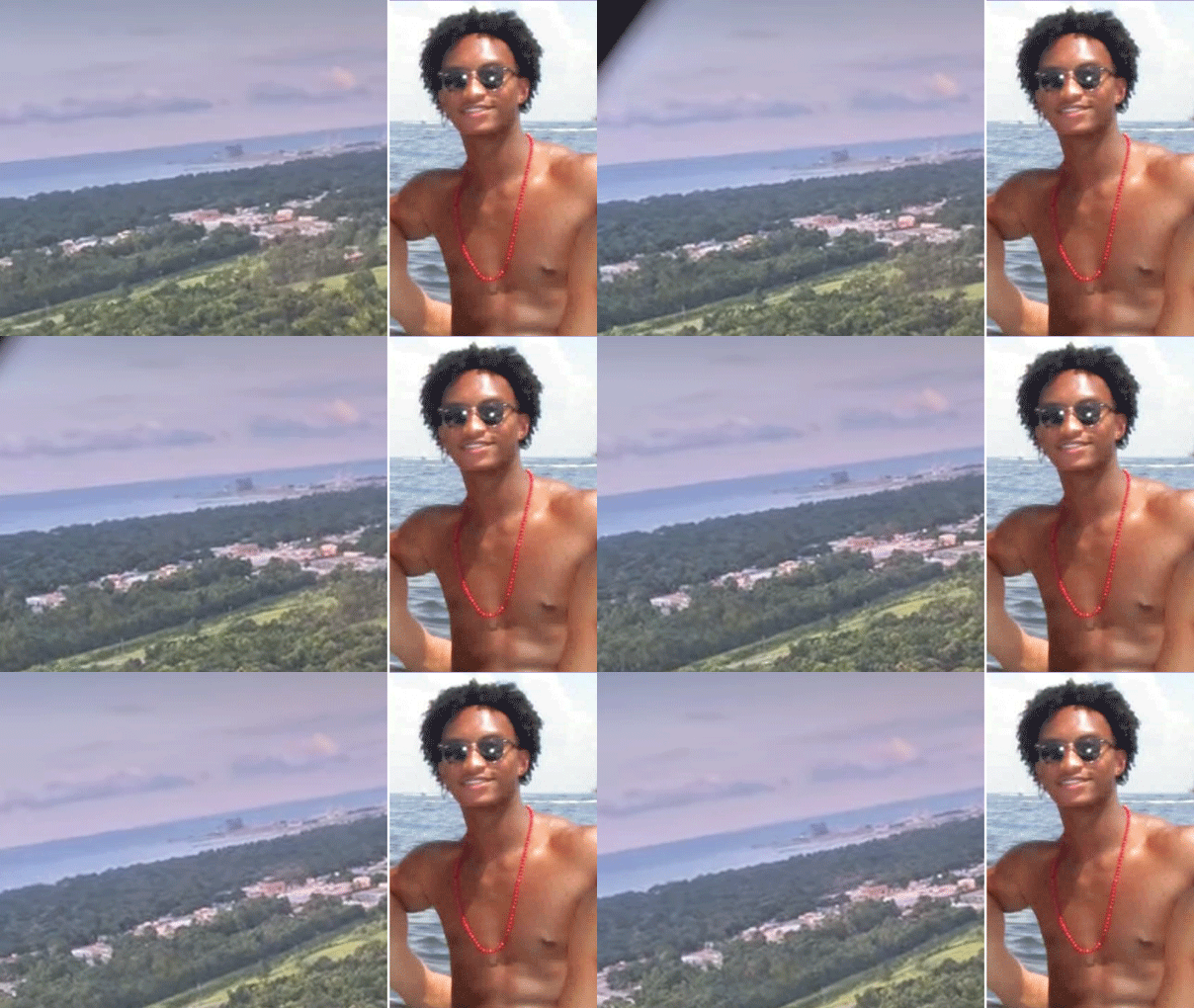
An official with the United Cajun Navy who participated in the search for Nolan Wells has described the waters near where the teenager’s body was discovered as exceptionally hazardous, citing powerful rip currents that have claimed numerous lives in the area. Wells, 18, vanished July 4 following a boat excursion to Horn Island, a barrier island off Mississippi’s Gulf Coast, and his remains were located two days later on July 6 by a National Park Service ranger.
The body of water separating Horn Island from the nearby Ship Island carries a grim local nickname—the “washing machine”—due to its powerful and unpredictable rip currents, according to United Cajun Navy Vice President Brian Trascher. Trascher told Fox News Digital that the water conditions on the day Wells disappeared were particularly severe, and that the area has experienced multiple drowning deaths previously.
Wells’ friends returned to the mainland without him that afternoon, and his mother only learned he was missing later that evening when contacted by one of his companions. Jackson County Sheriff John Ledbetter stated that investigators believe Wells chose to remain on the island, and authorities have indicated they do not suspect foul play in the case.
Even accomplished swimmers face grave danger in such currents, Trascher emphasized, noting that panic, sun exposure, and alcohol consumption can render even experienced swimmers vulnerable to being overpowered by strong rip activity. He highlighted that the water depth near the island’s northwestern tip transitions from shallow to deep within mere steps.
A significant gap remains in the timeline of Wells’ death, according to Trascher, who questioned what occurred between his last confirmed sighting around 4 or 4:30 p.m. on July 4 and the discovery of his body two days later. No eyewitness accounts, photographs, or video evidence have emerged showing Wells after that time, despite numerous people remaining on the island with daylight still available.
During a news conference Wednesday, attorney Ben Crump disclosed that an independent autopsy performed by Dr. Roger Mitchell identified a “red discoloration” on Wells’ head but could not determine a cause or manner of death pending further investigation. An official autopsy has not yet been completed.
Forensic pathologist Dr. Michael Baden assessed that the head injury does not suggest foul play, characterizing it as a superficial impact potentially caused by contact with debris in the water. Baden noted that such an injury could have occurred either before or after death and would not be consistent with criminal activity.
In his report, Mitchell stated he could not exclude the possibility that non-accidental factors may have contributed to Wells’ death, though no evidence of foul play has emerged from the investigation thus far.

More Stories
Christa Pike Survives Botched Double Execution Attempt; Tennessee Halts Remaining 2026 Executions
Tennessee’s Lone Death Row Female is Scheduled for Execution Wednesday for 1995 Torture/Murder
Modern Science Finally Supports & Strengthens Biblical Account of the Crucifixion of Jesus Christ