


💛 A quick favor, if you've got a second.
We're really happy that you chose to read one of our stories and sincerely hope you'll stick around to read more. We took our paywall down — for now — but that won't last forever, and when the gate goes back up, we'd love for you to already be on the inside.
It's free. So please enter your email here and don't forget to like and follow us on all of your favorite Social Media platforms!
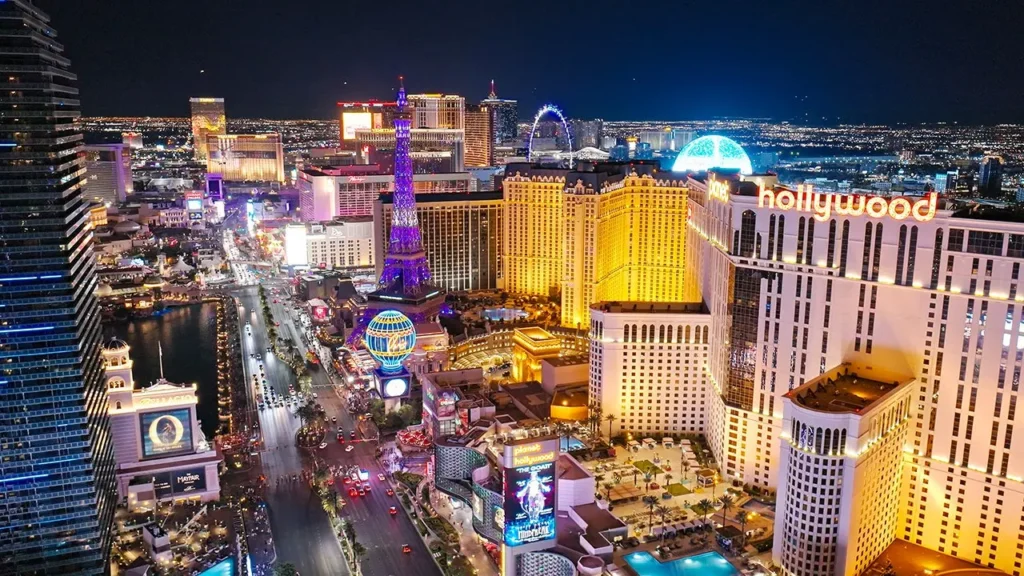
The iconic bargain buffet that once defined Las Vegas gaming culture is largely extinct, yet a handful of casino operators continue wagering that cheap meals drive profitable foot traffic. Michael Gaughan, who owns the South Point hotel and casino, told the Wall Street Journal that discounted buffets remain an effective lure, keeping customers in the property longer to gamble after eating. The South Point hemorrhages between $1.5 and $2 million monthly on its buffet operation while attracting roughly 3,000 daily visitors through its doors.
The South Point’s breakfast offering, which includes two bloody Marys, costs $16.95 for members, while the prime rib dinner buffet with peel-and-eat shrimp runs $37.95. Its Friday Seafood Night begins at 3 p.m. but draws lines before noon, featuring prime rib with two drinks for $57.95, or $52.95 with membership. The prime rib brunch with champagne and two mimosas starts at $32.95, according to the Wall Street Journal.
Circus Circus, a budget-focused property, operates a buffet starting at $19.95 on weekends and achieves profitability through creative cost management. The hotel generates between $50,000 and $80,000 in monthly buffet profits during summer by repurposing unsold prime rib from its steakhouse into buffet stews. The Excalibur Hotel charges $32.99 for weekday adult brunches and $43.99 on Saturdays and Sundays for its mimosa brunch offering.
The Las Vegas Strip once hosted more than a dozen traditional buffets in 2020, but only four remain today following pandemic disruptions and shifting visitor preferences. The COVID-19 pandemic’s social-distancing protocols accelerated the decline, while wealthier tourists increasingly demanded upscale dining establishments over all-you-can-eat venues. Budget casinos, which depend heavily on repeat local patrons and price-conscious gamblers, maintain buffets as a critical tool to drive casino floor traffic.
Luxury buffets have flourished as the city rebranded itself toward high-end experiences. Caesars’ Bacchanal buffet, priced at $87 and up, and the Wynn buffet, starting at $80 per person for dinner, regularly maintain extended wait times. Luxury travel expert Whytney Rawls explained to Fox News Digital that Las Vegas has fundamentally restructured its economic model, with gaming no longer the dominant revenue source.
Premium room rates, high-end restaurants, nightlife, entertainment, retail operations and large-scale events now generate substantially larger revenue shares than gaming, according to Rawls. The city has increasingly catered to affluent visitors through celebrity-chef restaurants, luxury hotels, stadium events and premium entertainment offerings. Las Vegas visitation declined to 38.5 million in 2025, down 7.5 percent from 2024, according to the Las Vegas Convention and Visitors Authority.
The demographic composition of Las Vegas tourists has shifted dramatically upward in wealth. In 2024, 64 percent of visitors earned $100,000 or more annually, while 2025 data showed 44 percent earned $150,000 or more, according to the Las Vegas Convention and Visitors Authority. Despite lower visitor numbers, direct spending reached a record $55.1 billion in 2024 as high-income travelers replaced traditional middle-class tourists.

More Stories
State Department Reissues Level 3 Travel Advisory for Israel Amid Terrorism and Armed Conflict Concerns
Looney Tunes’ ‘Coyote vs. Acme’ Debuts With $15.5 Million as ‘Spider-Man’ Holds Box Office Crown
Trump Calls NASA to Congratulate Agency on Roman Space Telescope Launch