


💛 A quick favor, if you've got a second.
We're really happy that you chose to read one of our stories and sincerely hope you'll stick around to read more. We took our paywall down — for now — but that won't last forever, and when the gate goes back up, we'd love for you to already be on the inside.
It's free. So please enter your email here and don't forget to like and follow us on all of your favorite Social Media platforms!
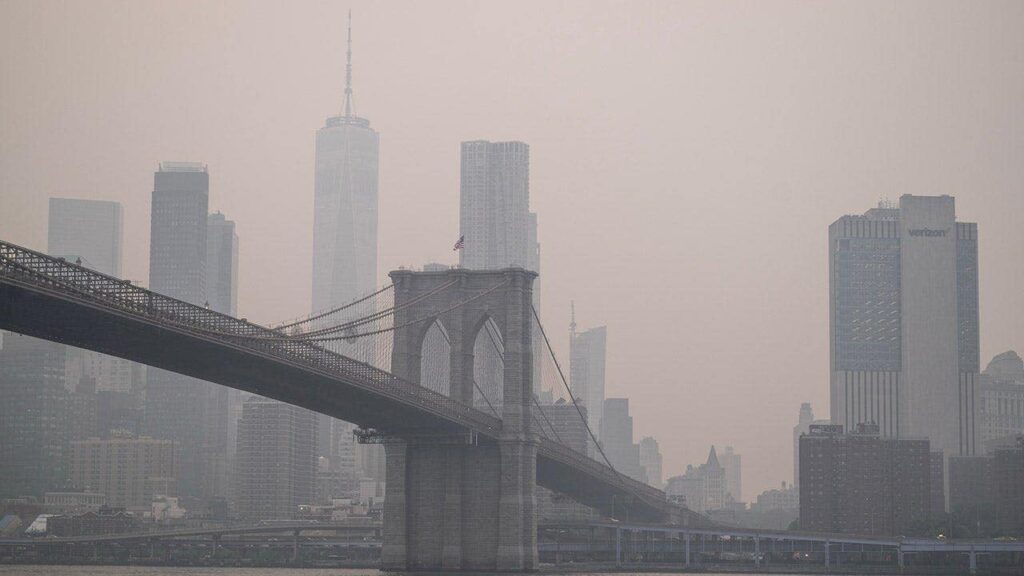
Millions of Americans faced unhealthy air quality conditions this week as smoke from hundreds of active wildfires in Canada drifted across the border, prompting air quality alerts from the Atlantic seaboard through the Midwest. Residents were advised to remain indoors while seniors, people with respiratory conditions, and children experienced disrupted outdoor activities. The transnational nature of the pollution underscores the challenge of addressing environmental hazards that do not respect political boundaries.
Current U.S. regulatory frameworks contribute to dangerous forest conditions by allowing dead trees and dense underbrush to accumulate over extended periods while environmental reviews delay forest management activities. Combined with intensifying drought conditions, these circumstances create ideal conditions for catastrophic wildfires that can ignite from a single lightning strike or spark. Critics argue this approach prioritizes bureaucratic caution over practical environmental stewardship and effective land management.
Two bipartisan legislative proposals aim to reform the nation’s wildfire response. The Fire Improvement and Reforming Exceptional Events (FIRE) Act would allow states to conduct prescribed burns, the most effective wildfire mitigation tool, without regulatory penalties. The act also directs the Environmental Protection Agency to conduct regional analyses when multiple states face impacts from the same wildfire event, reducing bureaucratic burdens and streamlining federal coordination.
The Foreign Emissions and Nonattainment Clarification for Economic Stability (FENCES) Act addresses the inequity of holding states accountable for pollution originating beyond their borders. The legislation clarifies that states should not face penalties under EPA air quality standards for emissions created outside the United States, protecting states and businesses from unwarranted compliance costs.
Proponents argue that preventing catastrophic wildfires represents an environmental and economic victory, avoiding the long-term costs of disaster response, community recovery, and environmental damage. They stress that Congressional passage of both measures is essential to protect American communities from recurring cross-border air quality crises.

More Stories
Federal voting arrest in New Jersey adds new pressure point in Sherrill-Trump standoff
Colombia backs Trump security push while limiting U.S. role in anti-gang operations
Former NFL cheerleader and ex-aide face off in close Rhode Island GOP primary