


💛 A quick favor, if you've got a second.
We're really happy that you chose to read one of our stories and sincerely hope you'll stick around to read more. We took our paywall down — for now — but that won't last forever, and when the gate goes back up, we'd love for you to already be on the inside.
It's free. So please enter your email here and don't forget to like and follow us on all of your favorite Social Media platforms!
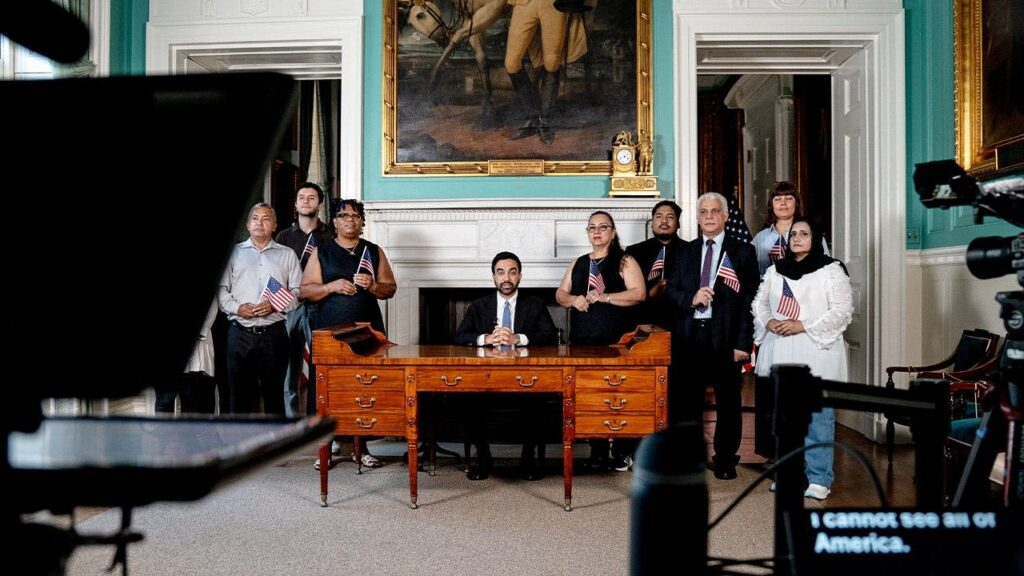
Progressive lawmakers backing wealth tax proposals are signaling plans that will eventually affect far more than just billionaires, according to critics who point to California Democrat Rep. Ro Khanna’s recent policy document as evidence. Khanna’s manifesto initially focused on taxing billionaires but progressively lowered the threshold to centimillionaires worth $100 million, then to those with $50 million in net worth, raising concerns about where such taxes might ultimately land.
The pattern mirrors the expansion of the federal income tax, which began in 1908 as a tax on the wealthy earning the equivalent of $15 million in today’s dollars but now affects roughly two-thirds of Americans starting at $15,000 in annual income. The marginal tax rate for high earners has climbed from the original 1-7% range to 35% for middle-class workers, with combined state, federal, and payroll taxes pushing rates to 50% in some states like California.
New York City Mayor Zohran Mamdani, a Democratic Socialist, campaigned on taxing billionaires but has already begun pushing tax increases on millionaires, demonstrating the tendency for wealth taxes to expand their scope once enacted. Critics contend that wealth taxes, even if limited to billionaires, would prove economically destructive since most billionaire wealth is invested in operating businesses rather than held as cash reserves.
A 5% annual wealth tax would essentially eliminate investment returns, critics argue, providing little incentive for billionaires to maintain capital in productive enterprises. The Heritage Foundation’s E.J. Antoni warns that broader proposals, including Khanna’s suggestion to fund universal basic income programs with wealth tax proceeds, amount to an unsustainable expansion of government spending.

More Stories
Colombia backs Trump security push while limiting U.S. role in anti-gang operations
Chicago Mayor Issues Executive Order Requiring Contractor Diversity Disclosures and ICE Ties Reporting
University of Pennsylvania Climate Scientist Demands Supreme Court Packing Pledge From Democratic Candidates