


💛 A quick favor, if you've got a second.
We're really happy that you chose to read one of our stories and sincerely hope you'll stick around to read more. We took our paywall down — for now — but that won't last forever, and when the gate goes back up, we'd love for you to already be on the inside.
It's free. So please enter your email here and don't forget to like and follow us on all of your favorite Social Media platforms!
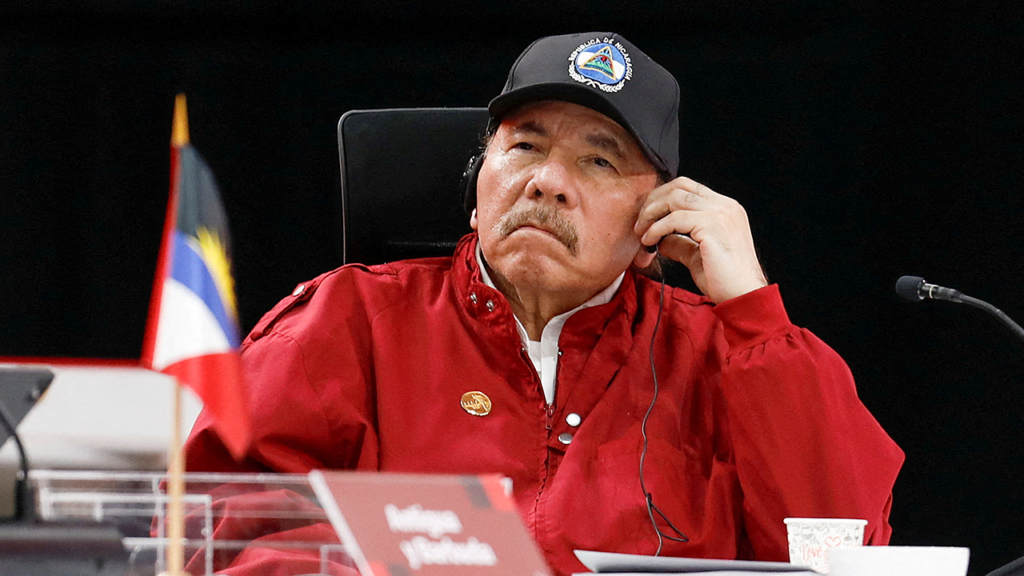
Nicaragua’s legislative body announced sweeping constitutional amendments Tuesday that would permanently eliminate elections from the Central American nation, translating President Daniel Ortega’s weekend proclamation into formal legal action. The parliament, controlled entirely by Ortega and his wife Rosario Murillo, framed the measure as necessary to preserve “peace, security and stability” while effectively sealing off any path for political opposition to challenge the government’s authority.
Ortega declared Sunday during ceremonies marking the 40th anniversary of the 1979 Sandinista revolution that Nicaragua would hold no further elections. He stated that “the days when parties backed by the Yankees and the Somocistas would return to power are over — never again,” referencing U.S.-backed forces and supporters of the former Somoza dictatorship that the Sandinistas overthrew.
The proposed constitutional overhaul represents the latest consolidation of executive power by the Ortega-Murillo administration, which already expanded its authority through sweeping reforms implemented in 2025. Those earlier changes extended the presidential term from five to six years and subordinated the legislative, judicial and electoral institutions to presidential control, giving the couple dominion over the armed forces, police and judiciary.
Ortega’s latest statement effectively cancels Nicaragua’s scheduled elections for November 2027, when his current term would have concluded. As Nicaragua’s longest-serving leader, Ortega has remained in power through early 2028 and has effectively eliminated meaningful electoral competition since 2011 through systematic measures.
International condemnation of the announcement was swift and forceful. U.S. Secretary of State Marco Rubio declared that the Ortega-Murillo regime has “abandoned even the pretense of popular consent” and called on the international community to impose consequences for what he characterized as a clear authoritarian turn.
The Trump administration previously designated the Ortega-Murillo government as a dictatorship and has imposed sanctions on government members and their associates. The State Department has also enacted visa restrictions affecting more than 2,350 Nicaraguan officials and family members tied to the regime.
United Nations High Commissioner for Human Rights Volker Türk condemned the legislative action Wednesday, stating that “people of all political viewpoints must be allowed to vote and run for office.” A UN expert group has previously accused the Ortega-Murillo government of systematically violating human rights and potentially committing crimes against humanity.
Prominent opposition figures have been imprisoned, exiled or stripped of citizenship under Ortega’s rule, while opposition parties and civic organizations have lost legal status. A violent government crackdown on anti-government protests in 2018 resulted in more than 300 deaths, according to international human rights groups.

More Stories
Federal voting arrest in New Jersey adds new pressure point in Sherrill-Trump standoff
Colombia backs Trump security push while limiting U.S. role in anti-gang operations
Former NFL cheerleader and ex-aide face off in close Rhode Island GOP primary