


💛 A quick favor, if you've got a second.
We're really happy that you chose to read one of our stories and sincerely hope you'll stick around to read more. We took our paywall down — for now — but that won't last forever, and when the gate goes back up, we'd love for you to already be on the inside.
It's free. So please enter your email here and don't forget to like and follow us on all of your favorite Social Media platforms!
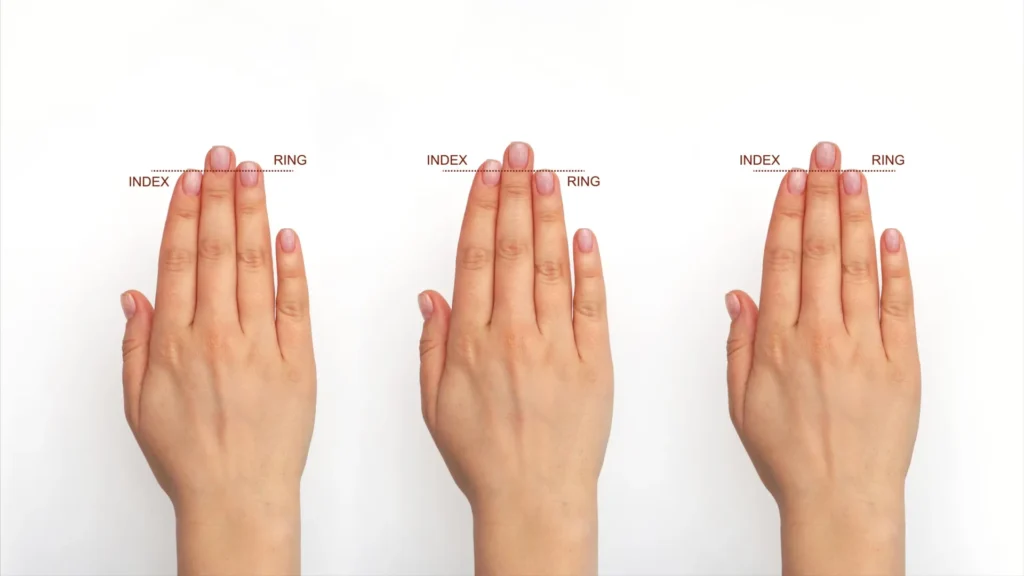
New research examining 225 infants has identified a potential biological mechanism underlying human brain evolution, pointing to prenatal estrogen as a significant factor. Scientists observed that male newborns displaying finger-length ratios indicative of heightened fetal estrogen exposure demonstrated larger head circumferences, a metric that correlates strongly with overall brain volume. The findings suggest a link between hormone levels in utero and neurological development.
The study found no comparable relationship between estrogen exposure and head size among female infants, limiting the scope of the hormone’s evolutionary impact. Head circumference serves as a reliable proxy for brain size in newborns, making it a standard measurement in developmental research. These results add to growing evidence that prenatal hormonal environments shape fundamental anatomical features.
The connection between digit ratios and fetal hormone exposure has been established in previous research, but this marks one of the first direct examinations of how such exposure may have influenced human cerebral evolution. If confirmed through larger studies, the findings could reshape understanding of how biological factors drive cognitive development and species-level brain expansion over evolutionary timescales.

More Stories
Christa Pike Survives Botched Double Execution Attempt; Tennessee Halts Remaining 2026 Executions
Tennessee’s Lone Death Row Female is Scheduled for Execution Wednesday for 1995 Torture/Murder
Modern Science Finally Supports & Strengthens Biblical Account of the Crucifixion of Jesus Christ