


💛 A quick favor, if you've got a second.
We're really happy that you chose to read one of our stories and sincerely hope you'll stick around to read more. We took our paywall down — for now — but that won't last forever, and when the gate goes back up, we'd love for you to already be on the inside.
It's free. So please enter your email here and don't forget to like and follow us on all of your favorite Social Media platforms!
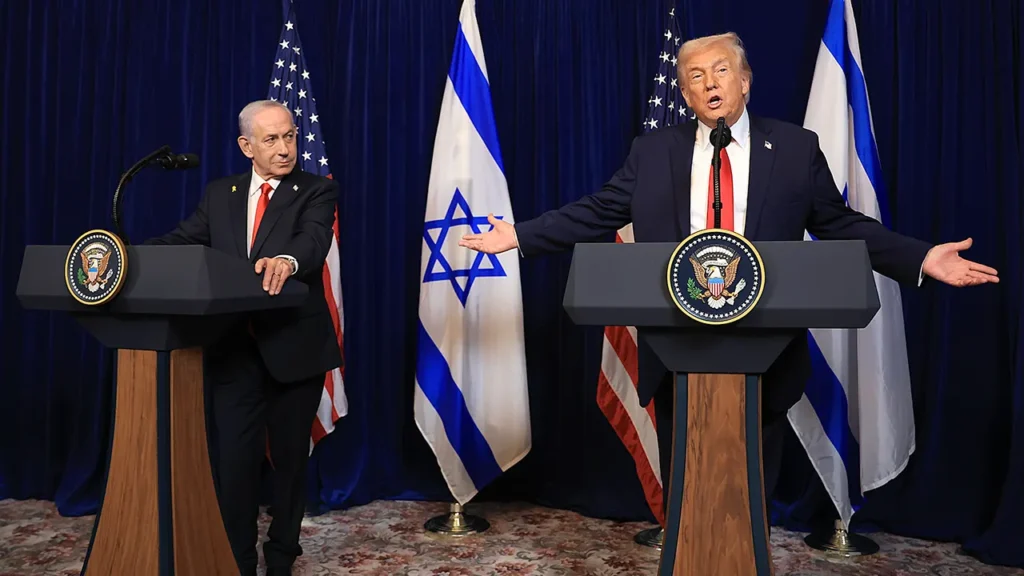
Senator Tim Sheehy of Montana has pushed back against what he characterizes as a coordinated misinformation effort targeting Section 1217 of the FY27 National Defense Authorization Act, which creates the United States-Israel Defense Technology Cooperation Initiative. Sheehy contends that the provision has become the focus of a campaign driven by antisemitic rhetoric and opposition to American global influence, rather than legitimate policy debate.
Critics of Section 1217 have claimed the measure effectively merges American and Israeli militaries, places U.S. troops under foreign command, and subordinates American national security interests to Israel’s priorities, according to Sheehy. The senator categorically rejects these assertions as factually baseless and strategically nonsensical, noting that the provision neither alters the constitutional chain of command nor places any American service member under Israeli authority.
Sheehy frames the partnership as a continuation of decades of intelligence sharing, defense research and technology cooperation between the two nations. He emphasizes that Israel’s security challenges are primarily regional, while American military responsibilities span global operations across every continent and ocean, making a unified command structure counterproductive for both nations.
The senator highlights Israel’s historical contributions to military advancement, including breakthroughs in missile defense, counter-drone technology, cyber defense and autonomous systems. He argues that American warfighters benefit from this technological knowledge just as Israel gains from American industrial capacity and military expertise, creating a mutually beneficial arrangement.
Sheehy contends that modern warfare—demonstrated by Ukrainian drone effectiveness against tanks and Middle Eastern missile defense interceptions—demands technological superiority and trusted alliances. He warns that China’s substantial investments in artificial intelligence, autonomous weapons and quantum computing pose existential challenges that the United States cannot address while refusing to collaborate with proven allies.
The Montana Republican rejects suggestions that Section 1217 prioritizes Israeli interests over American ones, asserting instead that every technological advancement resulting from the partnership directly enhances American military capability and saves American lives. He distinguishes between legitimate foreign policy debate and conspiracy theories rooted in antisemitic tropes, calling the latter unsuitable for serious national security discussion.

More Stories
Federal voting arrest in New Jersey adds new pressure point in Sherrill-Trump standoff
Colombia backs Trump security push while limiting U.S. role in anti-gang operations
Former NFL cheerleader and ex-aide face off in close Rhode Island GOP primary