


💛 A quick favor, if you've got a second.
We're really happy that you chose to read one of our stories and sincerely hope you'll stick around to read more. We took our paywall down — for now — but that won't last forever, and when the gate goes back up, we'd love for you to already be on the inside.
It's free. So please enter your email here and don't forget to like and follow us on all of your favorite Social Media platforms!
Lebanese President Joseph Aoun is scheduled to meet with U.S. President Donald Trump on Tuesday as the culmination of a four-day Washington visit aimed at securing long-term stability for a nation devastated by months of conflict between Israel and the Iran-backed Hezbollah organization. The meeting represents a significant moment in ongoing efforts to achieve peace through direct negotiations between Lebanon and Israel, facilitated by American diplomatic channels.
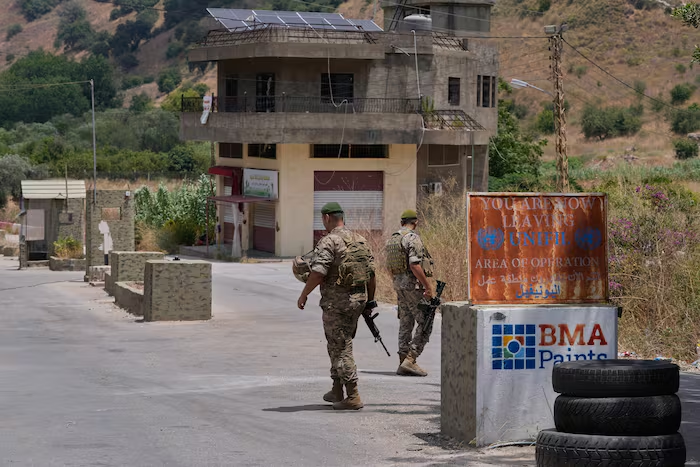
Central to Aoun’s discussions is securing Israeli withdrawal from occupied territories in southern Lebanon and enabling the Lebanese military to reassert authority over regions previously dominated by Hezbollah militants. Lebanon and Israel reached a “framework agreement” on June 26 that outlined plans for Israeli forces to leave southern Lebanon and for Hezbollah to disarm, marking a potential breakthrough in relations between nations that have technically remained at war for nearly 80 years.
The State Department announced Monday that operations commenced in three villages—Froun, Srifa, and Zawtar al-Gharbieh—designated as part of a “pilot zone,” though specifics were not disclosed. The Lebanese military has already increased deployments in anticipated pilot zones, establishing checkpoints and conducting patrols while awaiting Israeli troop withdrawals that have not yet materialized.
Secretary of State Marco Rubio met with Aoun on Sunday, characterizing the discussion as “very positive” and reaffirming U.S. commitment to implementing the framework agreement. Rubio emphasized that Lebanon cannot achieve lasting peace without resolving the Hezbollah situation and stressed that addressing the militia threat requires not only military action but also economic investment and international support to strengthen the Lebanese government.
Israeli officials have indicated plans to maintain a long-term military presence in a designated “security zone” in southern Lebanon, complicating withdrawal expectations. Hezbollah has rejected the direct negotiations and instead called for U.S. discussions with Iran to end the broader regional conflict, while Lebanon’s government—which took office in early 2025 on a reform platform—faces significant internal opposition but insists that Israeli withdrawal and foreign financial assistance are essential for sustainable security.

More Stories
Federal voting arrest in New Jersey adds new pressure point in Sherrill-Trump standoff
Colombia backs Trump security push while limiting U.S. role in anti-gang operations
Former NFL cheerleader and ex-aide face off in close Rhode Island GOP primary