


💛 A quick favor, if you've got a second.
We're really happy that you chose to read one of our stories and sincerely hope you'll stick around to read more. We took our paywall down — for now — but that won't last forever, and when the gate goes back up, we'd love for you to already be on the inside.
It's free. So please enter your email here and don't forget to like and follow us on all of your favorite Social Media platforms!
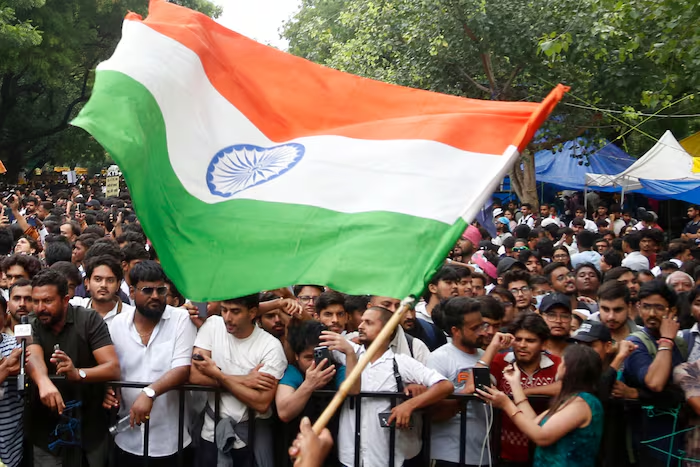
Protesters backing India’s Cockroach movement declared Tuesday they would maintain their demonstration at New Delhi’s Jantar Mantar, a designated protest site, following a forceful police response that left hundreds injured. The youth-driven campaign, which emerged two months ago as a satirical effort before transforming into a nationwide movement, centers on exam leaks, joblessness and governmental transparency. Organizers demanded Education Minister Dharmendra Pradhan’s resignation alongside sweeping examination reforms and compensation for families affected by student suicides linked to test irregularities.
Monday’s clash between demonstrators and police marked a turning point for the movement, with officers deploying tear gas and batons to prevent thousands from marching toward Parliament. Delhi Police reported nearly 180 people sustained injuries in the confrontation, comprising 118 security personnel and 60 demonstrators. Social media footage documenting officers striking young protesters and dragging them away generated widespread outrage and renewed calls for government accountability.
Abhijeet Dipke, founder of the Cockroach Janta Party, pledged the movement would not relent despite police action. “We are going to continue our protest,” he stated, claiming authorities violated agreements by resorting to force after inviting representatives for negotiations Monday. Sona Bisht, a 20-year-old participant, expressed renewed determination, saying the police response had galvanized younger generations rather than discouraged them.
Amnesty International condemned the police tactics as suppression of legitimate dissent, citing violations of constitutional rights and international human rights standards. The confrontation underscores mounting criticism of Prime Minister Narendra Modi’s administration regarding its handling of public demonstrations and use of force during his third term. The movement gained additional momentum after activist Sonam Wangchuk, whose three-week hunger strike became a protest symbol, was forcibly hospitalized by police.
Beyond core activists, broader segments of society have joined the campaign. Rabina Kashyap, a 26-year-old professional, decided to participate Tuesday after witnessing police deploy tear gas against students, describing it as an obligation to stand with fellow citizens against perceived government overreach.

More Stories
Federal voting arrest in New Jersey adds new pressure point in Sherrill-Trump standoff
Colombia backs Trump security push while limiting U.S. role in anti-gang operations
Former NFL cheerleader and ex-aide face off in close Rhode Island GOP primary