


💛 A quick favor, if you've got a second.
We're really happy that you chose to read one of our stories and sincerely hope you'll stick around to read more. We took our paywall down — for now — but that won't last forever, and when the gate goes back up, we'd love for you to already be on the inside.
It's free. So please enter your email here and don't forget to like and follow us on all of your favorite Social Media platforms!
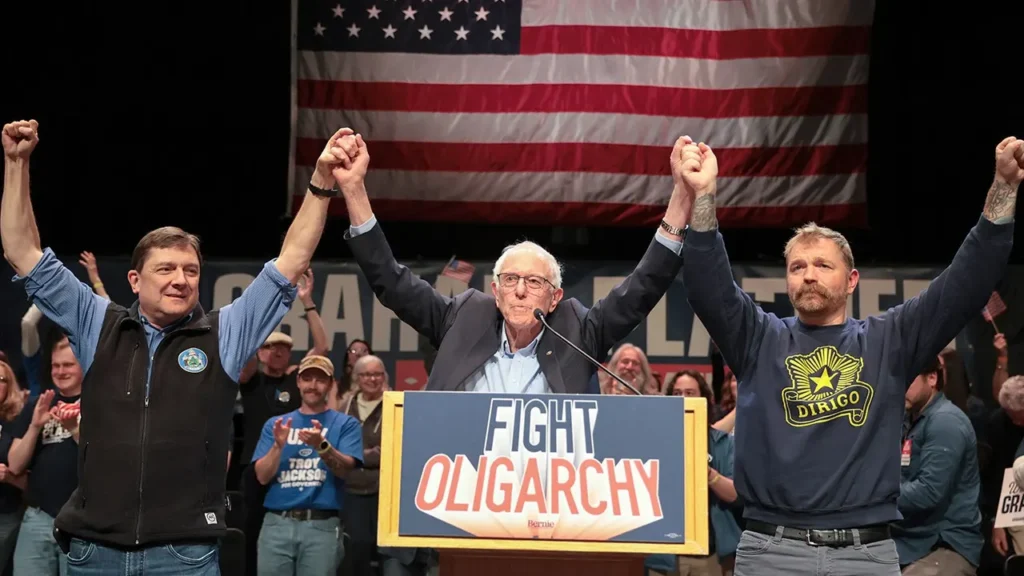
Recent victories by Democratic Socialist and progressive insurgent candidates have reignited debate about whether the nation is shifting leftward. From Mayor Zohran Mamdani’s ascent in New York to Graham Platner’s campaign momentum in Maine, and now Democrats considering Troy Jackson, a self-identified “pickup truck progressive,” to fill a vacant seat, political observers have attributed these wins to rising liberal sentiment. However, the pattern reflects something more fundamental than ideological realignment.
The underlying driver of these electoral surprises is not a surge in socialist or progressive ideology but rather a collapse of public confidence in established institutions. Millions of Americans have withdrawn trust from the organizations and systems traditionally responsible for solving problems, generating economic opportunity and ensuring functional governance. This erosion of institutional legitimacy creates fertile ground for any candidate promising to disrupt existing power structures, regardless of their position on the political spectrum.
Gallup’s recent institutional confidence data underscores the severity of this crisis. Congress holds the confidence of merely 9 percent of Americans, while trust in the criminal justice system, organized religion, higher education and corporate America has deteriorated sharply over the past generation. This systematic loss of faith extends across multiple sectors simultaneously, indicating a breakdown in the broader institutional framework rather than isolated failures.
The distinction matters significantly for understanding contemporary politics. Voters evaluate candidates not solely through their policy proposals but also by assessing whether supporting institutions possess the capacity to implement and sustain those policies. Once voters lose faith in institutional effectiveness, they cease rewarding incrementalist politicians and instead gravitate toward candidates positioned as genuine outsiders challenging the status quo.
Platner’s campaign exemplified this dynamic before its collapse. His appeal transcended specific policy positions; voters were selecting him as a repudiation of conventional political arrangements. Mamdani generated similar support by embodying institutional resistance. Even Jackson’s “pickup truck progressive” branding represents an attempt to position himself as an anti-establishment alternative championing ordinary workers against entrenched power.
This anti-establishment demand manifests differently across the ideological spectrum. Right-wing populism and democratic socialism, while distinct in their policy platforms, both emerge from identical voter frustration: the conviction that existing institutions cannot address citizens’ concerns. Both movements gain traction not because Americans suddenly adopted new beliefs but because they abandoned faith in traditional remedies.
The most significant division reshaping American politics is no longer the traditional Democrat-Republican or liberal-conservative axis. Rather, the central fault line now separates establishment from anti-establishment forces, institutionalists from outsiders. This realignment will persist as long as institutional confidence remains depleted. Until Americans regain genuine belief that their institutions are fundamentally legitimate, capable of self-correction, fairly enforcing rules and delivering tangible results, expect additional insurgent candidacies to emerge across the political landscape.

More Stories
Christa Pike Survives Botched Double Execution Attempt; Tennessee Halts Remaining 2026 Executions
Tennessee’s Lone Death Row Female is Scheduled for Execution Wednesday for 1995 Torture/Murder
Federal voting arrest in New Jersey adds new pressure point in Sherrill-Trump standoff