


💛 A quick favor, if you've got a second.
We're really happy that you chose to read one of our stories and sincerely hope you'll stick around to read more. We took our paywall down — for now — but that won't last forever, and when the gate goes back up, we'd love for you to already be on the inside.
It's free. So please enter your email here and don't forget to like and follow us on all of your favorite Social Media platforms!
Ashley Dreahn’s financial circumstances deteriorated rapidly after she completed her undergraduate degree at Texas Woman’s University and pursued additional education to advance her career. A failed job opportunity in chemical processing, combined with Hurricane Harvey, job loss, and vehicle repairs, left her with no choice but to file for bankruptcy in 2022. What she believed would provide relief instead created a new crisis when she discovered her student debt had grown to $94,298 with accumulated interest, requiring immediate repayment despite her previous bankruptcy filing.
The scale of the student loan crisis has reached unprecedented proportions across the United States. An Associated Press analysis found that defaulted loan accounts increased by more than 4.2 million borrowers between April 2025 and March 2026, surpassing the previous record of 8 million borrowers in default set in December 2019. Approximately 9.5 million borrowers, representing more than one in five, now carry defaulted loans, with an additional 870,000 accounts between 181 and 270 days overdue and teetering on the brink of default status.
The spike in delinquencies directly follows the expiration of pandemic-era payment suspension policies in late 2024. The federal government had frozen loan payments as a relief measure through 2023, then extended a grace period through the Biden administration that concluded in fall 2024. Once borrowers missed nine months of payments, their accounts entered default status, triggering cascading consequences including wage garnishment, Social Security payment seizures, and credit score damage.
Alan Collinge, founder of Student Loan Justice and author of “The Student Loan Scam,” described observing unprecedented emotional distress among affected borrowers. “I am seeing despair and outrage and despondency and just a very wide mix of pretty extreme emotions, the likes of which I have not seen before,” he said. The Trump administration announced in January that it would defer wage garnishment collection efforts, though a Moody’s Analytics report predicted collection activities would resume within the coming year.
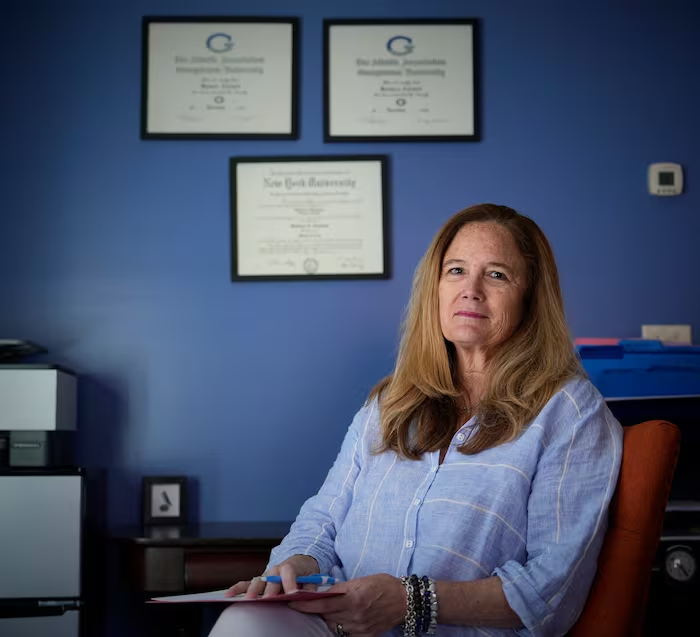
Barbara Howaniec, a 63-year-old psychiatric nurse practitioner from Auburn, Maine, exemplifies the frustration many borrowers experience navigating an increasingly complex system. After borrowing approximately $62,000 for a master’s degree from New York University completed in 2001, she still owes roughly $67,000 despite two decades of payments. When she discovered her repayment timeline would extend to age 91, she abandoned her payment obligations, though she feared potential consequences.
Shannon Khan, a 46-year-old mental health professional from Webster, Texas, faces monthly payment increases from $847 to $1,683 after being shifted from the SAVE income-driven repayment plan to an alternative arrangement. The Education Department’s dismantling of SAVE, its most affordable repayment option, threatens millions of borrowers with substantially higher monthly obligations. Khan reported spending numerous hours on telephone calls seeking clarification about her payment obligations and forgiveness timeline.
Data reveals disparities in default rates across educational institutions. Federal figures show that 33 percent of borrowers attending for-profit schools carried payments at least 90 days overdue, more than double the rate for public institution borrowers. Career Education Colleges and Universities, representing private trade schools, acknowledged the crisis and established a task force to encourage loan repayment awareness among students.
Student loan discharge through bankruptcy remains exceptionally rare, requiring borrowers to demonstrate “undue hardship” through a cumbersome legal process that few successfully navigate. Dreahn mistakenly believed her bankruptcy filing had eliminated her debt after receiving messages indicating 100 percent repayment on her consolidated loans—notifications that sometimes appear when accounts transfer between servicers regardless of actual repayment status. This misunderstanding led her to believe she could rebuild her life until default notices arrived.
Dreahn now pursues Public Service Loan Forgiveness eligibility by working as a prison supervisor, requiring 10 years of qualifying payments while employed by a government or nonprofit organization. She grapples with fundamental financial choices, recognizing that resources previously allocated toward personal health needs must now service her escalating debt obligations. The career opportunity she lost years earlier—a six-figure position rescinded because of weight restrictions on safety equipment—represents the income trajectory that might have enabled debt management.

More Stories
Federal voting arrest in New Jersey adds new pressure point in Sherrill-Trump standoff
Colombia backs Trump security push while limiting U.S. role in anti-gang operations
Former NFL cheerleader and ex-aide face off in close Rhode Island GOP primary