


💛 A quick favor, if you've got a second.
We're really happy that you chose to read one of our stories and sincerely hope you'll stick around to read more. We took our paywall down — for now — but that won't last forever, and when the gate goes back up, we'd love for you to already be on the inside.
It's free. So please enter your email here and don't forget to like and follow us on all of your favorite Social Media platforms!
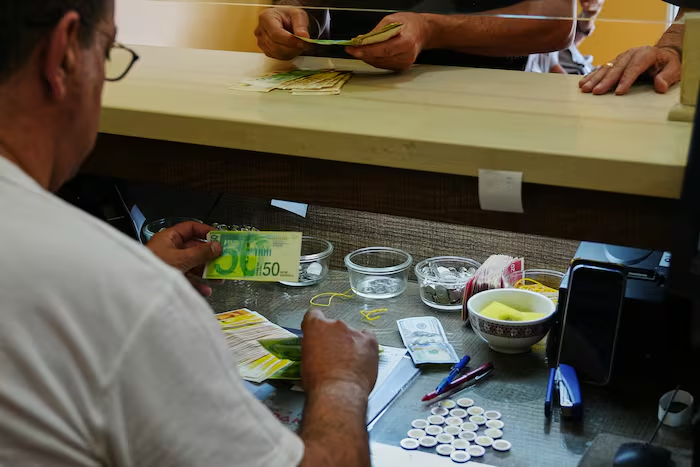
A liquidity crisis is gripping the West Bank’s financial system as Palestinian banks accumulate far more Israeli shekels than they can manage or deposit. The Bank of Israel caps the amount of physical currency it accepts back from the territory at 18 billion shekels annually, yet banks now accumulate an estimated 30 billion shekels per year, creating a dangerous cash surplus that threatens economic stability.
The imbalance stems from structural economic arrangements dating to the 1990s. Palestinian workers employed in Israel and Israeli settlements receive wages in cash, while Israeli citizens purchasing goods in the West Bank bring additional shekels into the territory, creating constant inflows that exceed outflows permitted by Israeli policy.
Mohammad Manasra, deputy governor of the Palestinian Monetary Authority, characterized the situation as “economic warfare,” noting that banks lack the ability to convert excess physical currency into electronic balances needed to process transfers or extend credit. This prevents them from facilitating essential payments for fuel, electricity and water imports.
Commercial banks now refuse deposits from customers due to vault space limitations, forcing businesses and households to seek alternative storage methods. A 2022 International Monetary Fund study found excess cash reduced Palestinian bank profits by approximately 20 percent, a figure economists believe has worsened considerably since then.
Cash-dependent businesses including gas stations and retail chains operated by companies like Al-Huda Group face operational paralysis. Unable to deposit earnings or make electronic payments to suppliers, some businesses have resorted to taking loans or purchasing foreign currency while incurring storage and insurance costs on their surplus shekels.
Israeli Finance Minister Bezalel Smotrich threatened in September 2025 to employ “all available tools” to prevent Palestinian statehood, including “economic strangulation.” Israel has also revoked most Palestinian work permits and withheld tax revenues since the October 2023 Hamas attack, further destabilizing the territory’s economy.
Business leaders warn that continued cash accumulation will eventually prevent West Bank companies from importing critical goods. Al-Huda Group executive manager Hussni Jaber stated plainly: “All sectors will collapse if the cash problem is not resolved.”

More Stories
Colombia backs Trump security push while limiting U.S. role in anti-gang operations
Federal Prosecutors Convene Special Grand Jury to Investigate D.C. Schools’ Attendance and Graduation Practices
State Department Reissues Level 3 Travel Advisory for Israel Amid Terrorism and Armed Conflict Concerns