



💛 A quick favor, if you've got a second.
We're really happy that you chose to read one of our stories and sincerely hope you'll stick around to read more. We took our paywall down — for now — but that won't last forever, and when the gate goes back up, we'd love for you to already be on the inside.
It's free. So please enter your email here and don't forget to like and follow us on all of your favorite Social Media platforms!
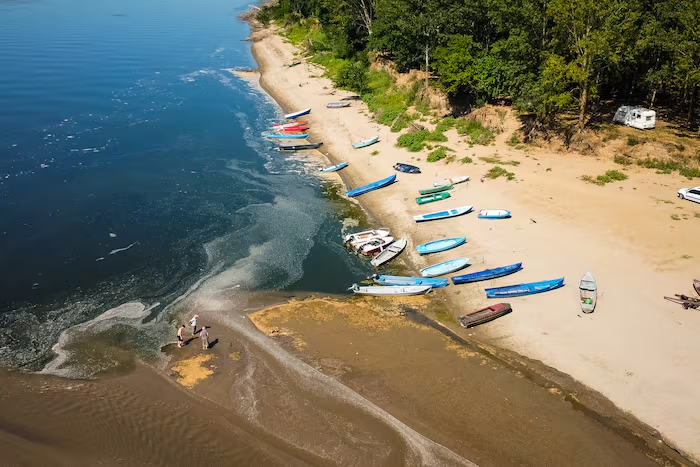
A severe drought gripping Central Europe has pushed the Danube River to unprecedented low levels, creating widespread disruption to commerce, tourism and power generation across the continent. The waterway, which flows through 10 countries from Germany to the Black Sea, has receded so dramatically that previously submerged rocks, sandbars and World War II-era shipwrecks now lie exposed along much of its course.
Budapest’s water authority documented the river at just 23 centimeters on Wednesday morning, shattering the previous record low of 33 centimeters set in 2018. Forecasters predict further decline in coming days as temperatures are expected to exceed 38 degrees Celsius across the region with no meaningful precipitation anticipated.
The historic low has crippled river commerce and tourism operations. Passenger cruise ships have been forced to dock far upstream of Budapest, while cargo vessels have nearly ceased operations entirely, according to Hungary’s Ministry of Transport and Investment. In Bulgaria, authorities evacuated 186 tourists from the Viking Ullur after it ran aground near Vidin, with the ship’s 52 crew members potentially stranded pending refloating efforts.
Serbia’s Danube sections near Novi Sad now feature hundreds of immobilized small boats and dozens of marooned cargo ships. One local boat operator reported the water had withdrawn 15 to 20 meters from its normal shoreline, effectively ending the summer season for river excursions.
Nuclear power plants across the region have been forced offline due to insufficient cooling water. Romania shut down a reactor at Cernavoda after Danube flow fell to roughly one-third of typical July levels, while Hungary’s Paks facility, which generates nearly half the nation’s electricity, began powering down reactors due to restricted water access.
The receding waters have also exposed hazards alongside opportunities. Budapest authorities closed Margaret Bridge after a World War II bomb surfaced at its base, while treasure hunters have taken advantage of the conditions to recover historical artifacts from the riverbed using magnets.


More Stories
Federal Prosecutors Convene Special Grand Jury to Investigate D.C. Schools’ Attendance and Graduation Practices
State Department Reissues Level 3 Travel Advisory for Israel Amid Terrorism and Armed Conflict Concerns
Looney Tunes’ ‘Coyote vs. Acme’ Debuts With $15.5 Million as ‘Spider-Man’ Holds Box Office Crown