



💛 A quick favor, if you've got a second.
We're really happy that you chose to read one of our stories and sincerely hope you'll stick around to read more. We took our paywall down — for now — but that won't last forever, and when the gate goes back up, we'd love for you to already be on the inside.
It's free. So please enter your email here and don't forget to like and follow us on all of your favorite Social Media platforms!
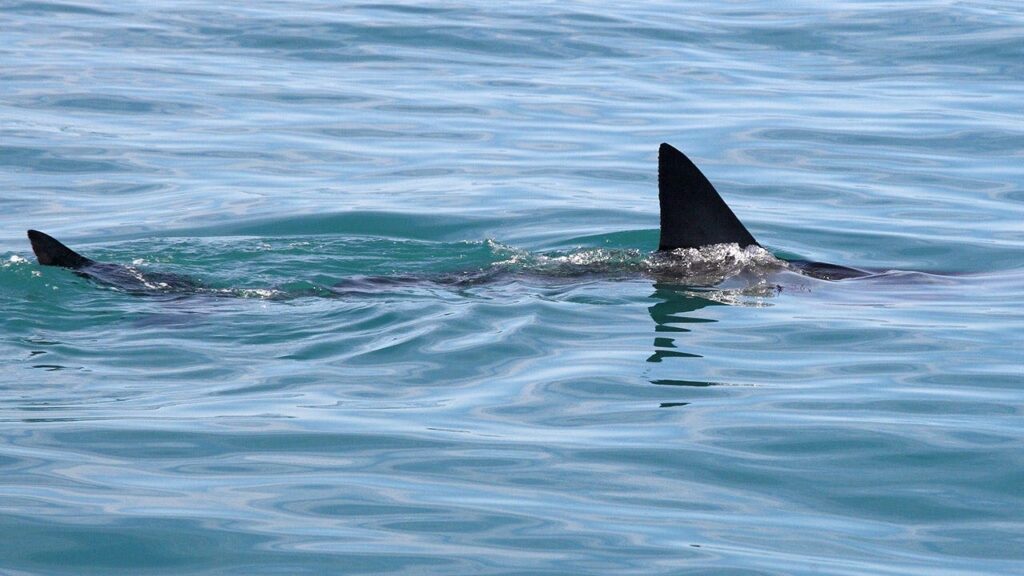
Though shark attacks remain statistically uncommon, victims face potentially fatal consequences requiring immediate intervention. The first five minutes following an attack determine survival odds, with rapid response proving decisive. Dr. Kenneth J. Perry, an emergency medicine specialist in South Carolina, outlined essential protocols bystanders and injured parties must execute before paramedics arrive on scene.
Extracting the victim from water represents the initial priority, whether to shore or vessel, to prevent additional injuries and aspiration. After removal, medical attention shifts toward hemorrhage management. “Shark bites differ in their characteristics, yet all demand aggressive bleeding control,” Perry stated to Fox News Digital.
Shark teeth readily lacerate critical vasculature and connective tissue, making uncontrolled hemorrhage the foremost life threat. Tourniquets become essential for severe extremity wounds, though improper application undermines effectiveness. The device must sit proximal to injury and compress firmly enough that distal pulses vanish completely, Perry explained.
For an elbow bite, the tourniquet encircles the upper arm and tightens until the wrist pulse ceases entirely. “Discomfort accompanies this measure, yet it remains necessary,” Perry cautioned. The American College of Surgeons’ Stop the Bleed program endorses this standard, requiring forceful compression to arrest arterial flow.
Tourniquet application carries time constraints due to tissue oxygen deprivation risks. A two-hour window exists before cellular death begins. When immediate transport proves unavailable in isolated locations, pressure dressings offer an alternative, combining folded gauze application with tight wrapping to reduce—though not eliminate—blood loss while minimizing tissue damage.
Bystanders contribute critically by keeping victims calm and stationary. Panic elevates heart rate and blood pressure, accelerating hemorrhage. Unconsciousness following attacks signals multiple possibilities: hypotension and stress-induced syncope, or rapid ascent-related diving injuries like arterial gas embolism requiring specialized treatment.
Beyond immediate hemorrhage control, long-term survival hinges on combating marine bacterial infection. Aquatic wounds breed aggressive pathogens causing cellulitis and other severe soft-tissue infections. Hospital treatment typically involves fluid resuscitation, blood transfusion, and intensive antibiotic therapy.


More Stories
Modern Science Finally Supports & Strengthens Biblical Account of the Crucifixion of Jesus Christ
Nurse Killed in Hit-and-Run Collision in Brooklyn
Jeff Kent Encourages Barry Bonds to Pursue Hall of Fame Induction During Giants Ceremony