



💛 A quick favor, if you've got a second.
We're really happy that you chose to read one of our stories and sincerely hope you'll stick around to read more. We took our paywall down — for now — but that won't last forever, and when the gate goes back up, we'd love for you to already be on the inside.
It's free. So please enter your email here and don't forget to like and follow us on all of your favorite Social Media platforms!
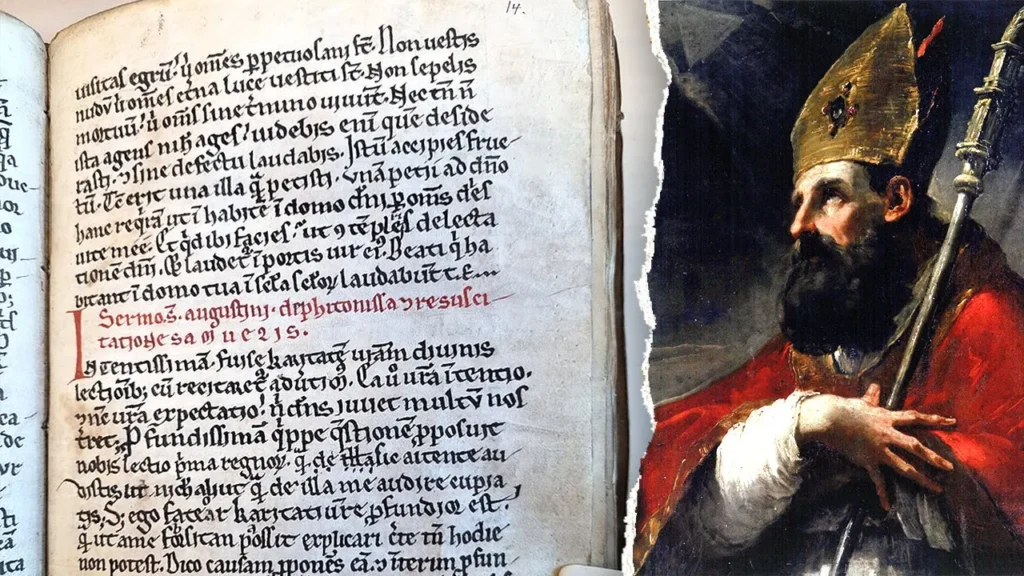
Two previously unrecorded sermons attributed to St. Augustine have been verified as authentic by scholars, offering theological perspectives that do not appear in any of his known surviving texts. The manuscripts were identified by Christian Tornau, a Latin professor at Germany’s University of Würzburg, who discovered them while examining a medieval document held at Bad Doberan Abbey. The original manuscript was transcribed during the 12th century, likely based on an earlier version that has since been lost to history.
Augustine, who lived from 354 to 430 A.D. and served as bishop of Hippo Regius in present-day Algeria, remains one of Christianity’s most influential theologians and Church Fathers. His prolific written legacy continues to shape scholarly discourse across the discipline. Tornau has spent nearly two years analyzing the texts and plans to publish them in a formal scholarly edition.
The discovery process began in 2024 when officials from the monastery’s preservation association requested Tornau’s expertise in deciphering the manuscript. Among six sermons contained in the document, two were previously unknown to academic records. Both address the Old Testament narrative of the Witch of Endor, wherein King Saul seeks counsel from a seer before battling the Philistines and receives a prophecy of his impending defeat.
Augustine’s sermons grapple with the theological question of theodicy—why an omnipotent God would permit seemingly demonic acts—while exploring the possibility that Saul achieved redemption and repentance after receiving Samuel’s prophecy. Tornau delivered the first sermon during a Sunday service, concluding with the theodicy dilemma, while a second sermon delivered Wednesday analyzed potential resolutions to this theological tension.
The interpretation suggesting Saul’s ultimate salvation represents the “most remarkable element” in the newly discovered texts, according to Tornau. This conclusion diverges sharply from prevailing views in Augustine’s era and ancient Christianity generally, which portrayed Saul unfavorably. Tornau indicated that Augustine either independently developed this perspective or drew from Jewish rabbinic traditions that viewed Saul more sympathetically.
Tornau emphasized that the sermons demonstrate Augustine’s intellectual independence and conviction that salvation through divine grace remained possible for all individuals, regardless of their apparent moral standing. The professor noted that textual analysis reveals the author possessed familiarity with Augustine’s theological framework without merely reproducing it, a pattern consistent with authentic authorship. Late Antique liturgical practices evident in the texts, particularly a concluding prayer reflecting North African Christian traditions, provide additional confirmation of their historical period.
Tornau acknowledged initial skepticism during the authentication process, as certain passages initially seemed inconsistent with Augustine’s typical writing style. Following intensive textual examination and comparative analysis, researchers concluded that no substantial objections to Augustine’s authorship remained valid. The manuscript itself cannot be reliably traced earlier than the 12th century, though the sermons’ content and style definitively predate the medieval period.


More Stories
Modern Science Finally Supports & Strengthens Biblical Account of the Crucifixion of Jesus Christ
Federal Prosecutors Convene Special Grand Jury to Investigate D.C. Schools’ Attendance and Graduation Practices
Tuskegee University President Defends Dress Code Policy as Pathway to Student Success