



💛 A quick favor, if you've got a second.
We're really happy that you chose to read one of our stories and sincerely hope you'll stick around to read more. We took our paywall down — for now — but that won't last forever, and when the gate goes back up, we'd love for you to already be on the inside.
It's free. So please enter your email here and don't forget to like and follow us on all of your favorite Social Media platforms!
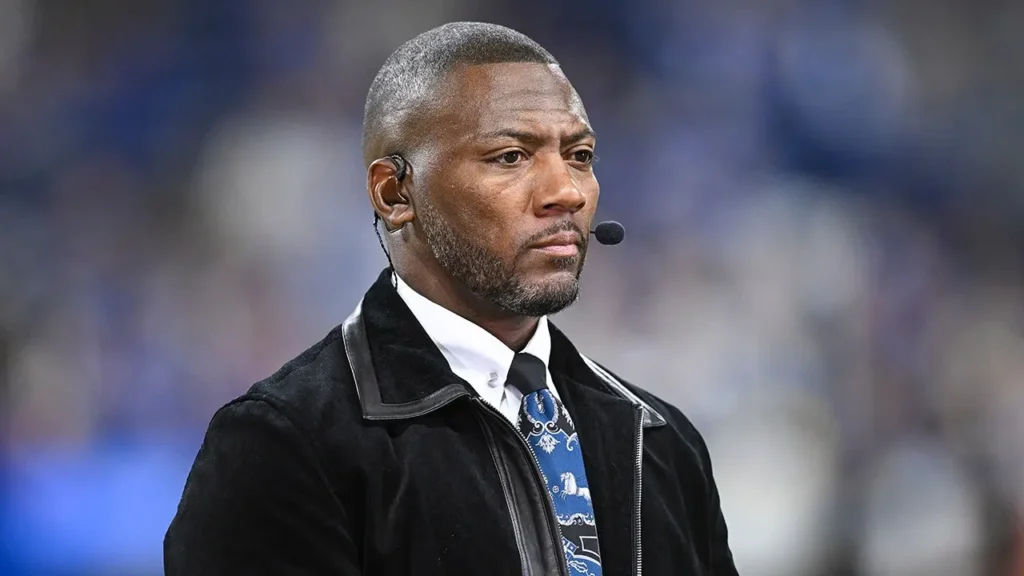
Andrew Marchand, a sports-media columnist for The Athletic, recently offered guidance to fellow journalists about the distinction between informed reporting and unfounded speculation while commenting on ESPN’s termination of NFL analyst Ryan Clark. In offering this counsel, Marchand inadvertently illuminated a broader problem: why substantial portions of the American public have grown skeptical of press institutions.
Marchand’s directive to “write what you know, not what you think” was sound in principle. The difficulty emerged when he detailed his own conduct, revealing he had known about Clark’s impending departure since February, possessed a completed story by that time and held a strong indication of the firing approximately one week before ESPN announced it. Yet he published nothing during that period.
On his podcast, Marchand explained his silence by saying he wanted to allow ESPN to inform Clark directly first. He noted the story became competitive only when another outlet threatened to publish, at which point he rushed out a two-paragraph report with a typographical error. This account, rather than demonstrating journalistic responsibility, exposed what industry observers call the access-journalism arrangement.
Sports radio personality Dan Patrick recently raised similar concerns about ESPN’s Adam Schefter, who reported on San Francisco 49ers head coach Kyle Shanahan’s serious car accident one minute after the team disclosed it publicly. Patrick questioned whether Schefter and ESPN possessed the information earlier but withheld publication until the organization authorized its release.
The central issue Patrick identified concerns the public value of privileged knowledge when the source institution controls disclosure timing. This arrangement functions as public relations rather than independent journalism, allowing corporations to dictate when information reaches the public rather than reporters determining newsworthiness.
The Ryan Clark sequence illustrates this dynamic precisely. OutKick contacted ESPN at 4 p.m. Eastern Time on Monday with a prepared story, offering the network one hour to respond. ESPN requested a delay until 5:45 p.m. to investigate. When OutKick declined but pledged to include ESPN’s response, the network reversed course at 4:49 p.m., apparently recognizing the information would become public regardless. Marchand published his abbreviated report 14 minutes later, followed by OutKick’s more comprehensive version one minute after that.
Marchand subsequently acknowledged that he possessed the story for approximately one week and withheld publication specifically to honor ESPN’s timeline. He described this deference as evidence of responsible journalism and suggested that being a good reporter and a good person “go hand-in-hand.” This framing presented corporate accommodation as moral superiority.
The distinction between responsible journalism and access journalism centers on control. Responsible journalism grants interview subjects opportunity to respond before publication. Access journalism grants subjects the power to determine when information becomes public. Marchand’s conduct exemplified the latter, not the former.
Marchand further demonstrated the access bargain’s second component by defending ESPN’s intentions despite criticizing its execution. Though he acknowledged the company’s handling was “horrendous,” he repeatedly insisted ESPN was “trying to do the right thing” and that its “hearts were in the right place.” This reluctance to aggressively scrutinize a primary source of exclusive information reveals the incentive structure underlying the arrangement.
A reporter dependent on a single corporation for regular scoops possesses a powerful motivation to avoid alienating that source. Marchand’s sustained criticism has targeted Pat McAfee, an independent personality ESPN cannot fully control, while he waited to scrutinize Ryan Clark and executive Lee Fitting only after they had been removed from positions of power. Those still controlling access received favorable treatment.
The consequences intensify when access-journalism arrangements involve government officials rather than sports networks. Newly released diary entries from Dr. Anthony Fauci revealed the extent of personal relationships between himself and prominent journalists including CNN’s Jake Tapper, Dana Bash and others. Fauci documented dinners at reporters’ homes, providing interview questions and receiving private encouragement and apologies.
While friendly source relationships can yield important information, these interactions illustrate how access, ideological alignment and personal friendship can erode necessary distance between reporter and subject. During a consequential public-health crisis, journalists covering one of the country’s most powerful officials may have begun viewing him as an ally rather than a subject requiring skepticism.
The Fauci diaries demonstrate access journalism in its most consequential form. Information can be factually accurate while functioning as strategic communications for the source. Leaked selectively and timed strategically, such information benefits the institution providing it rather than the public receiving it.
Many insider scoops offer limited public value because news like firings, trades and personnel moves becomes public regardless. The insider’s advantage often involves speed rather than discovery. In an era of social media, the marginal benefit of publishing minutes earlier than competitors remains minimal.
The Founding Fathers protected press freedom not so journalists could distribute corporate announcements ahead of competitors or launder government messaging from powerful officials. They enshrined the free press to establish an institution standing between the public and concentrated power, exposing what authorities wanted concealed and demanding answers they preferred to avoid.
When journalists instead permit corporations and government officials to control timing, framing and scrutiny of information, they abandon this founding role. Only 28 percent of Americans told Gallup last year that they trusted newspapers, television and radio to report news fully, accurately and fairly—the lowest figure Gallup has recorded. Media organizations blame polarization and misinformation for this collapse without examining the institutional arrangements they created.
Marchand evidently believed his explanation established journalistic superiority. Instead, it revealed the unspoken understanding: a powerful institution supplies information to a favored reporter, the reporter protects the institution’s preferred timeline and rarely threatens those providing access, and when outside outlets disrupt the arrangement, the insider publishes quickly while defending the original source and continuing the relationship.
The unofficial corollary to Marchand’s advice appears to be: write what you know, provided the corporation that told you approves of publication.


More Stories
Trump Threatens FCC Action Against NBC’s Welker Over Endorsement Coverage
Looney Tunes’ ‘Coyote vs. Acme’ Debuts With $15.5 Million as ‘Spider-Man’ Holds Box Office Crown
Trump Calls NASA to Congratulate Agency on Roman Space Telescope Launch