



💛 A quick favor, if you've got a second.
We're really happy that you chose to read one of our stories and sincerely hope you'll stick around to read more. We took our paywall down — for now — but that won't last forever, and when the gate goes back up, we'd love for you to already be on the inside.
It's free. So please enter your email here and don't forget to like and follow us on all of your favorite Social Media platforms!
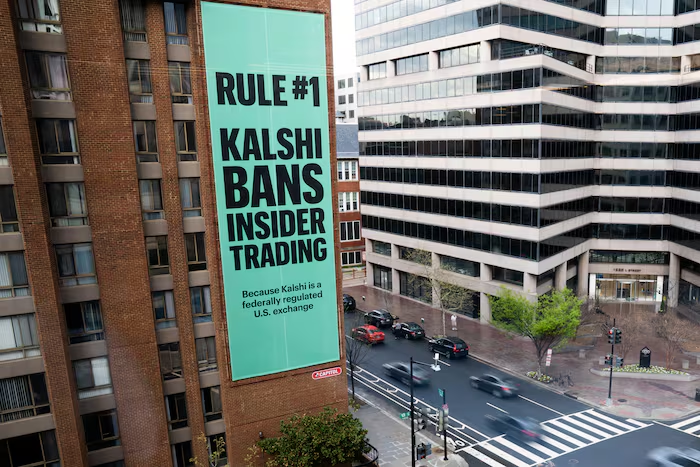
A federal judge in Minnesota has issued a temporary restraining order preventing the state’s prediction market ban from taking effect this Saturday, marking another legal victory for operators Kalshi and Polymarket in their dispute with state regulators. U.S. District Judge Katherine Menendez ruled that the Commodity Futures Trading Commission and the two platforms would likely succeed in challenging the law and that blocking it was necessary to prevent “irreparable harm” to the operators.
Minnesota’s ban, scheduled to activate over the weekend, would have criminalized the creation, operation and administration of prediction markets. The injunction leaves the law suspended indefinitely while litigation continues, delivering the latest in a series of setbacks for states attempting to regulate or prohibit the rapidly expanding prediction market sector.
The CFTC, Kalshi and Polymarket argue that federal law grants the commission exclusive authority over “event-contract transactions” and that states lack the power to ban federally regulated instruments. Minnesota’s attorney general, Keith Ellison, countered that the platforms primarily operate as illegal sports betting services, which states retain jurisdiction to regulate under gambling laws.
Ellison characterized prediction markets as “gambling, plain and simple” and stated Minnesota possesses the authority to exclude such activities from its borders. Despite disagreeing with the court’s decision, the attorney general indicated his office would persist in defending the state’s legal position given the complex jurisdictional questions involved.
The dispute reflects broader regulatory tensions, with the Trump administration’s CFTC chief declaring in February that the agency would no longer tolerate state efforts to regulate or ban prediction markets that fall under federal oversight. Meanwhile, Connecticut, Arizona and Illinois face federal lawsuits challenging their regulatory attempts, while New York has sued cryptocurrency platforms Coinbase and Gemini over their prediction market operations.
The American Gaming Association estimates states have forgone more than $1.2 billion in tax revenue from prediction market wagers since the platforms introduced sports event contracts. Native American tribal leaders and state gambling regulators have similarly opposed the platforms, contending that wagering on sporting events, elections and other outcomes violates federal gambling prohibitions.


More Stories
Former NFL cheerleader and ex-aide face off in close Rhode Island GOP primary
Trump Threatens FCC Action Against NBC’s Welker Over Endorsement Coverage
Chicago Mayor Issues Executive Order Requiring Contractor Diversity Disclosures and ICE Ties Reporting