


💛 A quick favor, if you've got a second.
We're really happy that you chose to read one of our stories and sincerely hope you'll stick around to read more. We took our paywall down — for now — but that won't last forever, and when the gate goes back up, we'd love for you to already be on the inside.
It's free. So please enter your email here and don't forget to like and follow us on all of your favorite Social Media platforms!
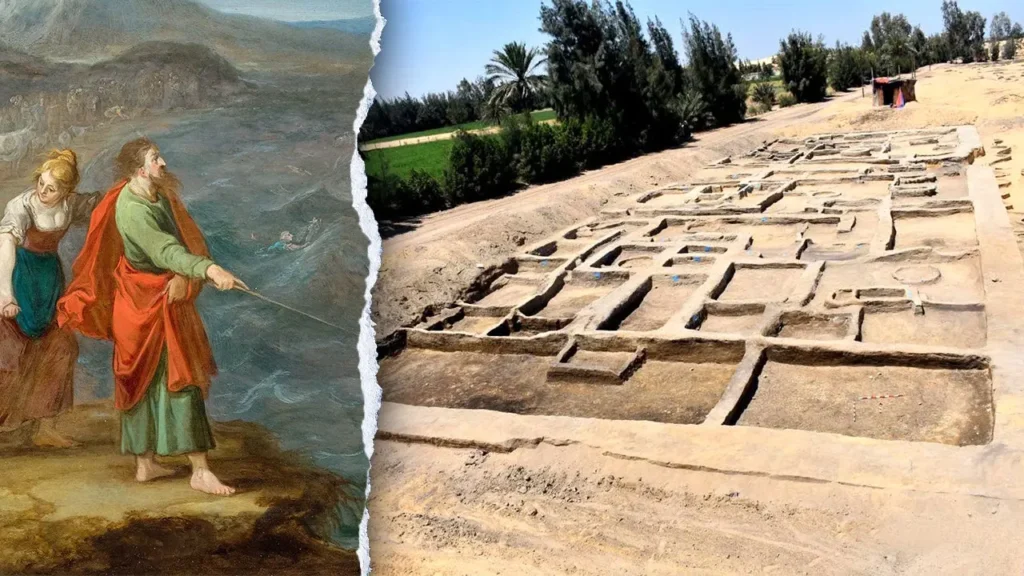
Researchers working in Egypt have identified an ancient settlement belonging to the Second Intermediate Period, a historical era that scholars have long examined in connection with discussions about the biblical account of the Exodus. The Egyptian Ministry of Tourism and Antiquities formally announced the discovery in late June at the Tell el-Koua site, located within the Wadi Tumilat region, which historically served as a vital passageway between the eastern Nile Delta and Egypt’s eastern border regions.
The excavation revealed evidence spanning from the 15th Dynasty through the 18th Dynasty, capturing the crucial transition as Hyksos rulers were supplanted and the New Kingdom emerged. The Hyksos, foreign powers who dominated northern Egypt approximately 3,600 years ago, were eventually expelled by Egyptian forces, an event some scholars have proposed may correlate with biblical narratives of the Exodus.
Fieldwork at the settlement yielded 10 mudbrick tombs, residential structures, production ovens, grain storage facilities and a fortified residential quarter. Artifacts recovered include scarab amulets, bronze implements, pottery vessels, alabaster containers used for cosmetics and human skeletal remains, supplemented by animal bones suggesting both subsistence patterns and funeral practices.
Archaeologists also exposed a substantial residential complex measuring approximately 98 by 197 feet, containing large interior spaces, kilns and additional grain storage structures positioned east of the primary settlement area. Notably, researchers documented human burials positioned outside the mudbrick tombs in crouched configurations, an interment method requiring additional analysis.
Minister of Tourism and Antiquities Sherif Fathy characterized the findings as evidence of a fully developed community encompassing residential zones, storage areas, manufacturing spaces and burial grounds. The pottery assemblage demonstrated intensive daily occupation, with household tableware representing the dominant artifact category, followed by vessels related to food preparation.
This discovery complements recent archaeological findings from Egypt’s Second Intermediate Period. In 2025, researchers uncovered a rare pharaoh’s tomb dating to 3,600 years ago buried 23 feet beneath sand near Abydos, furthering understanding of this significant historical era.

More Stories
Colombia backs Trump security push while limiting U.S. role in anti-gang operations
Modern Science Finally Supports & Strengthens Biblical Account of the Crucifixion of Jesus Christ
Federal Prosecutors Convene Special Grand Jury to Investigate D.C. Schools’ Attendance and Graduation Practices