


💛 A quick favor, if you've got a second.
We're really happy that you chose to read one of our stories and sincerely hope you'll stick around to read more. We took our paywall down — for now — but that won't last forever, and when the gate goes back up, we'd love for you to already be on the inside.
It's free. So please enter your email here and don't forget to like and follow us on all of your favorite Social Media platforms!
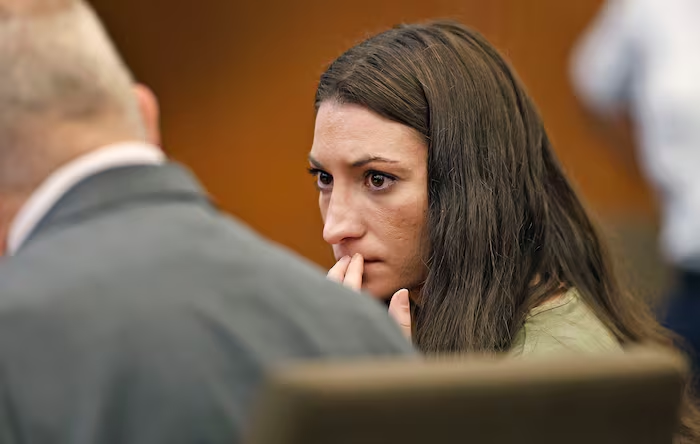
Jury selection began Monday in Plymouth, Massachusetts, for the trial of Lindsay Clancy, a former labor and delivery nurse accused of killing her three children in January 2023. Opening statements are expected to reveal a fundamental dispute over Clancy’s mental state and criminal responsibility in the deaths of Cora, 5, Dawson, 3, and Callan, 8 months.
The prosecution will contend that Clancy deliberately planned and executed the killings after deliberately sending her then-husband Patrick out on errands. Clancy’s defense team argues she was experiencing postpartum psychosis, a rare but severe mental illness that can follow childbirth and cause hallucinations, delusions, and intrusive thoughts about harming oneself or others.
Clancy sought psychiatric care for approximately four months before the January 24, 2023 incident. On the day of the killings, according to her attorney Kevin Reddington, she reported hearing voices commanding her to kill her children as a means to end her own life. After strangling the three children, she jumped from a second-story window and sustained a spinal injury resulting in paralysis from the waist down.
Postpartum psychosis affects an estimated 1 to 2 per 1,000 women following delivery, significantly rarer than postpartum depression. However, mental health experts emphasize that most women experiencing this condition do not harm their children, and many believe their actions are protective rather than harmful.
A conviction on murder charges carries a mandatory life sentence without possibility of parole. A verdict of not guilty by reason of insanity would result in commitment to a state mental health facility rather than incarceration.
The case echoes previous high-profile infanticide trials involving postpartum psychosis. Andrea Yates drowned her five children in Texas in 2001; her murder conviction was reversed on appeal and she was found not guilty by reason of insanity at retrial. Similarly, Dena Schlosser was found not guilty by reason of insanity in 2006 after killing her 10-month-old daughter in Texas.
Both Clancy and her former husband have filed lawsuits against her medical providers, alleging inadequate diagnosis and treatment of her psychiatric condition. Illinois remains the only state with legislation explicitly allowing postpartum depression or psychosis to serve as a mitigating factor in sentencing decisions.
The trial is expected to span several weeks, with legal experts noting the verdict will hinge on how jurors assess Clancy’s intent and mental capacity at the time of the killings.

More Stories
Federal voting arrest in New Jersey adds new pressure point in Sherrill-Trump standoff
Colombia backs Trump security push while limiting U.S. role in anti-gang operations
Former NFL cheerleader and ex-aide face off in close Rhode Island GOP primary