



💛 A quick favor, if you've got a second.
We're really happy that you chose to read one of our stories and sincerely hope you'll stick around to read more. We took our paywall down — for now — but that won't last forever, and when the gate goes back up, we'd love for you to already be on the inside.
It's free. So please enter your email here and don't forget to like and follow us on all of your favorite Social Media platforms!
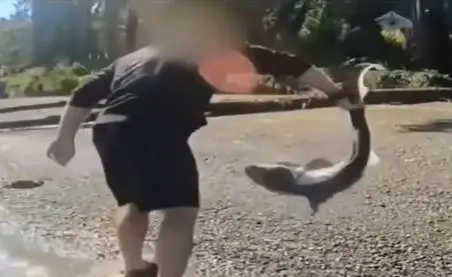
An Oregon resident has been charged with multiple violations following an extensive investigation by the Washington state Department of Fish and Wildlife into the illegal capture and handling of protected shark species in Puget Sound. Connor Seifert, 27, was confronted by a wildlife officer in Pierce County in June, with body camera footage documenting the encounter now released by state authorities.
According to charging documents, Seifert allegedly removed or partially removed bluntnose sixgill and broadnose sevengill sharks from the water on multiple occasions. Wildlife officials documented instances where Seifert allegedly sat on sharks’ backs, held their mouths open, and wrestled the animals to shore—actions that expose the creatures’ gills to air and cause severe stress to pregnant females.
The investigation spanned several months and involved officers monitoring Seifert’s social media activity before establishing surveillance that ultimately caught him making an illegal catch. The department received 14 complaints about Seifert’s activities, predominantly centered on his targeting of these protected species.
Seifert faces nine counts of unlawful recreational fishing in the second degree and one count of making a false or misleading statement to a public servant. The misdemeanor charges carry penalties of up to $1,000 and 90 days in jail, while the gross misdemeanor carries up to $5,000 and one year in jail.
Both shark species are listed as “Species of Greatest Conservation Need” in Washington State. Bluntnose sixgills are classified as “near threatened” while broadnose sevengills are rated “vulnerable” by the International Union for Conservation of Nature, making Puget Sound a critical nursery habitat for the species.


More Stories
Packers Running Back Josh Jacobs Placed on NFL Commissioner’s Exempt List Following Domestic Arrest
Federal Prosecutors Convene Special Grand Jury to Investigate D.C. Schools’ Attendance and Graduation Practices
Denver Broncos Linebacker Jonathon Cooper Placed on Commissioner’s Exempt List Amid Domestic Violence Charges