


💛 A quick favor, if you've got a second.
We're really happy that you chose to read one of our stories and sincerely hope you'll stick around to read more. We took our paywall down — for now — but that won't last forever, and when the gate goes back up, we'd love for you to already be on the inside.
It's free. So please enter your email here and don't forget to like and follow us on all of your favorite Social Media platforms!
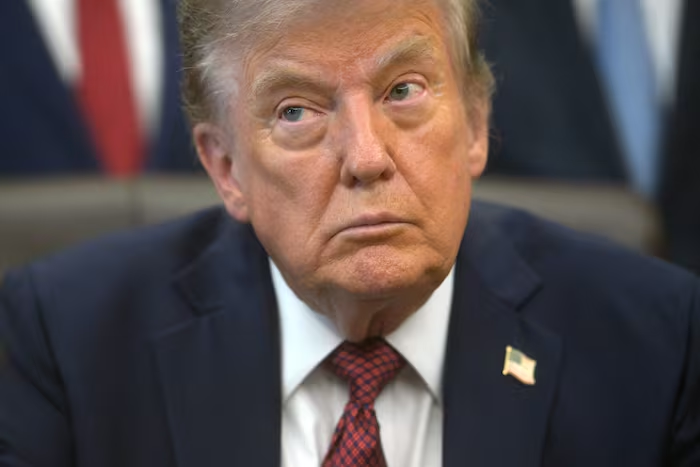
After nearly two weeks of escalating military operations, the United States has halted its bombing campaign against Iran while simultaneously advancing diplomatic negotiations to prevent further escalation. The pause comes as the five-month conflict approaches a critical juncture, with President Donald Trump oscillating between threats of renewed strikes and declarations of active peace talks.
Regional mediators report serious diplomatic engagement underway, with both nations signaling a willingness to return to an interim ceasefire agreement reached in June. According to officials involved in the negotiations, discussions center on allowing Iranian vessels to transit the Strait of Hormuz with reduced restrictions on shipping—a compromise now being formalized between the two countries.
The strategic waterway has become the conflict’s focal point since Iran initiated a blockade by attacking commercial tankers when fighting began on February 28. The disruption has severely impacted global oil supplies, with approximately 20 percent of the world’s petroleum normally flowing through the corridor. Elevated fuel prices have become politically sensitive domestically, potentially affecting Republican electoral prospects in November’s midterm elections.
Michael Singh, managing director at the Washington Institute for Near East Policy, cautioned against reading too much significance into the temporary halt. He noted that the lull could represent either a tactical operational pause or genuine diplomatic window, while uncertainty persists about whether progress will materialize into sustained negotiations.
Israeli Prime Minister Benjamin Netanyahu’s planned Washington visit next week adds another variable to negotiations. Israel jointly initiated military operations alongside the U.S. but has notably abstained from recent American strikes, a distinction analysts suggest may signal strategic intent to constrain the conflict’s scope.
Trump maintained an ambiguous posture during Friday discussions with national security officials, presenting two potential paths forward: incremental military degradation of Iranian capabilities or accelerated strikes, both paired with ongoing diplomatic overtures. He stated Iran remains unprepared for a comprehensive agreement but acknowledged the regime may be growing more receptive to negotiations.
Complications persist from Iran’s fragmented leadership structure, with competing factions viewing American accommodation as potentially threatening their internal political standing. Both nations require the strait’s reopening for economic survival, yet their divergent visions regarding control mechanisms and operational conditions continue obstructing stable resolution.

More Stories
Federal voting arrest in New Jersey adds new pressure point in Sherrill-Trump standoff
Colombia backs Trump security push while limiting U.S. role in anti-gang operations
Former NFL cheerleader and ex-aide face off in close Rhode Island GOP primary